Nov8
Canada’s forgotten war in Russia continued after the Armistice
As Canadians celebrated the end of the First World War, their soldiers were still fighting in Russia. Thousands more were sent to Siberia as Allied governments intervened against the Bolshevik revolution. Day 7 explores Canada's military and commercial ambitions, the resistance of conscripts, Sarnia's postwar labour struggles and why the intervention has largely faded from remembrance.
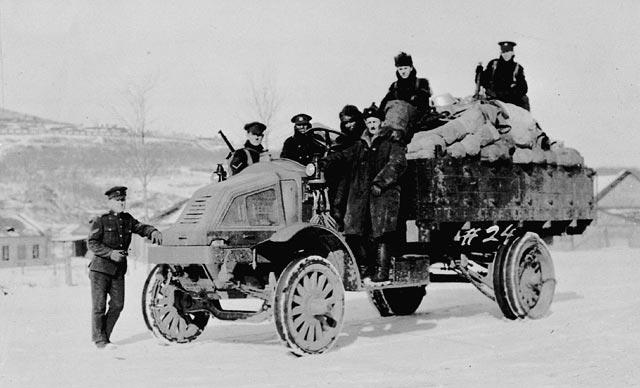
On November 11, 1918, as Canadians celebrated the end of fighting on the Western Front, Canadian artillerymen were fighting for their lives in northern Russia.
Near the village of Tulgas, along the Dvina River, Bolshevik forces attacked an Allied position supported by Canadian gunners. The attackers advanced through the woods behind the Canadian guns, forcing artillery drivers to take up rifles and hold them back while the gun crews repositioned their weapons.
Two Canadians were killed that day: Corporal Stanley Belben Wareham, 38, and Gunner Walter Conville, 36. The fighting continued for several more days.
Their deaths came on the very day that Canadians elsewhere were celebrating peace. Both men are commemorated in Canada’s First World War Book of Remembrance, yet the campaign in which they died has received little attention in familiar accounts of that war.
Thousands more Canadian soldiers were being sent across the Pacific to Siberia, where Allied governments were intervening in a revolution that threatened to overturn the political and economic order of the former Russian Empire.
The intervention would end without overthrowing the revolutionary government. Canadian soldiers would return from a conflict that produced no celebrated victory, whose objectives changed while they were overseas, and whose political justification was disputed even within Canada’s government.
It became one of the least remembered chapters of Canada’s military history, raising a question seldom heard during Remembrance Day: why were Canadian soldiers sent to intervene in another country’s revolution, and what happened to the history of their service?
Russia entered the First World War in 1914 under Tsar Nicholas II. By 1917, military defeats, food shortages, inflation and worsening conditions for workers and peasants had brought the country to the point of collapse. Millions of Russian soldiers had been killed, wounded or captured in a war that placed enormous burdens on a society already marked by inequalities in land ownership, wealth and political power.
In March 1917, following strikes, demonstrations and the refusal of soldiers to suppress protesters, Nicholas abdicated. A Provisional Government assumed authority but continued Russia’s involvement in the war despite growing demands for peace.
Workers and soldiers had also established councils known as soviets, creating competing centres of political power. In November, revolutionaries belonging to the Bolshevik Party, led by Vladimir Lenin, overthrew the Provisional Government, promising peace, land redistribution and political power exercised through the soviets.
The revolution did not produce a unified Russia. Nor was the ensuing civil war simply a contest between democracy and dictatorship.
The Bolsheviks sought to consolidate their revolutionary government, increasingly suppressing political opponents, including other socialists. Opposing White armies brought together military officers, monarchists, conservatives and others determined to remove the Bolsheviks, but divided over what should replace them. Socialist Revolutionaries, anarchists, independent peasant movements and national independence movements pursued their own political objectives, sometimes fighting both the Reds and the Whites.
Across the former empire, peoples seeking independence or autonomy confronted competing claims to their territories. For millions of civilians, the consequences were devastating: forced recruitment, food seizures, displacement, disease, political repression and violence by armed groups claiming authority over their communities.
The revolution also presented the powers fighting Germany with an immediate military problem.
On March 3, 1918, the Bolshevik government signed the Treaty of Brest-Litovsk, withdrawing Russia from the First World War and accepting sweeping territorial concessions to Germany and its allies.
Russia’s withdrawal allowed Germany to concentrate more forces on the Western Front. Allied governments feared that military supplies previously shipped to Russian ports might fall into German hands, while Russian territory, railways and natural resources could be used to support the Central Powers.
There was also the Czechoslovak Legion, a force composed largely of Czech and Slovak soldiers seeking independence from Austria-Hungary. Attempting to cross Russia and leave through the Pacific port of Vladivostok, the Legion became involved in fighting with Bolshevik forces and seized important stretches of the Trans-Siberian Railway.
Protecting Allied supplies, helping the Legion and potentially reopening an eastern front against Germany became principal justifications for foreign intervention.
British, French, American, Japanese and other forces entered Russia during 1918, although their governments did not share identical ambitions. The United States emphasized railway security and assistance to the Czechoslovak troops. Japan sought greater influence in the Russian Far East. Britain and France, concerned about strategic interests and Russia’s political future, increasingly supported forces fighting the Bolsheviks.
The intervention’s original military objectives were becoming entangled with the Russian Civil War. After Germany’s defeat in November, the justification for rebuilding a front against Germany disappeared, but support for the anti-Bolshevik struggle continued.
For some Allied leaders, the revolution threatened more than military alliances. The Bolshevik government had challenged private ownership of industry and land, repudiated the former Russian government’s debts and threatened established international economic interests.
Britain’s support for the White armies became an important part of the intervention. Yet these were not necessarily forces committed to parliamentary government or national self-determination. Among their leaders were military authoritarians who opposed both Bolshevism and other revolutionary or democratic movements.
Canada became involved through a political decision made by Prime Minister Robert Borden’s government.
In August 1918, the federal cabinet authorized the formation of a Canadian expeditionary force for Siberia. The decision was made without a separate parliamentary debate on intervention in Russia. Borden had considered Britain’s request while in London, but Canada’s participation was not simply an obligation imposed by the British government.
Borden also saw opportunities to expand Canadian commercial interests in Siberia, a territory whose forests, mines, agricultural resources and transportation needs attracted attention from Canadian businesses.
Canadian trade commissioner Conradin F. Just promoted the region’s potential as a market for Canadian railway equipment, agricultural machinery, industrial products and expertise in resource development. The government established an economic commission to investigate commercial opportunities and help develop trade.
One proposal suggested that Canadian military officers and non-commissioned officers could identify potential markets for Canadian manufacturers while serving overseas.
Canadian policymakers hoped a military presence would help establish relationships and influence that might later benefit Canadian exporters and investors. Historian Gaddis Smith, examining Borden’s correspondence and government records, identified these expectations as a significant factor in Canada’s participation.
Approximately 4,000 Canadians were eventually dispatched to Siberia, including infantry, engineers, medical personnel, transportation units and a mounted contingent of the Royal North West Mounted Police. A smaller Canadian force, numbering several hundred personnel, served in northern Russia, where artillerymen were assigned to British-led operations.
In northern Russia, Canadian artillerymen operated around Archangel, supporting Allied and anti-Bolshevik forces along remote river and railway positions. Their 67th and 68th field batteries faced difficult terrain, severe winter conditions and direct attacks.
At Tulgas on Armistice Day, Canadian gunners helped repel Bolshevik troops who had advanced close enough to threaten their gun positions. Further fighting followed around Shenkursk and elsewhere during the winter and spring of 1919.
The Canadian artillery brigade in northern Russia recorded seven deaths during the campaign: five killed in action, one who died of wounds and one from illness. The fighting and its consequences continued long after the end of the war in Western Europe.
In Siberia, most Canadian soldiers had a different experience.
Stationed around Vladivostok, they guarded installations, maintained equipment, transported supplies, provided medical care and performed other military duties. A small Canadian detachment travelled inland to Omsk, where anti-Bolshevik forces were gathering under Admiral Aleksandr Kolchak.
Kolchak, who established a military dictatorship in November 1918, represented one of the most powerful White movements. His forces received Allied assistance while also carrying out severe repression against political opponents and suspected Bolshevik sympathizers.
Canadian troops generally remained near Vladivostok rather than joining the main fighting in the interior. In April 1919, approximately 200 Canadians participated in an Allied operation against insurgents near Shkotovo, where local partisans were threatening coal supplies and railway connections. By the time the Allied troops arrived, the insurgents had withdrawn.
Most Canadian deaths in Siberia resulted from illness and other non-combat causes. Although most of the force saw little fighting, its presence was not politically neutral. The Canadian deployment helped sustain an international intervention opposing the Bolshevik government and supporting its enemies.
The Canadian government nevertheless resisted British pressure to commit its Siberian force more deeply to the conflict. Ottawa insisted on retaining control over Canadian troops, and disagreements with British commanders helped restrict their involvement in fighting inland.
Canada had chosen to participate, but its government did not always agree with Britain about how Canadian soldiers should be used.
Among the Canadians whose lives were drawn into the intervention was Thomas Irvine of Sarnia.
According to historical material published by Lambton Heritage Museum, Irvine followed his older brother Harold into the Canadian military medical services. He subsequently served in Russia and returned to Canada in 1919.
His experience provides a local connection to a campaign that occupies little space in Lambton’s familiar military history. It also illustrates the range of work performed by expeditionary forces. Medical personnel, drivers, railway workers, cooks and others sustained military operations far from the battlefields most commonly associated with Canadian remembrance.
Not every Canadian soldier accepted the Russian intervention, however.
The decision to continue sending troops after the Armistice provoked opposition within Canada, including among members of Borden’s own government.
Acting prime minister Sir Thomas White warned that Canadians were unlikely to support further deployments, particularly when some of the men were conscripts called into service under wartime legislation. The war against Germany had ended, and the justification for compulsory military service in a Russian civil war was increasingly contested.
Borden nevertheless insisted that the expedition proceed, maintaining that Canada’s international responsibilities and interests justified its continued participation.
On December 21, 1918, French-Canadian conscripts from the 259th Battalion refused orders to continue marching toward a troopship in Victoria, British Columbia.
The soldiers were being sent overseas weeks after the Armistice, into a conflict whose purpose they did not necessarily share. Their resistance followed growing public opposition, including meetings organized by labour activists under the demand to keep foreign armies out of Russia.
Officers used force to restore the march. Loyal troops were ordered to use their canvas belts against the resisting men, and soldiers identified as participants in the mutiny subsequently faced military proceedings.
Their refusal did not establish that they all supported the Bolsheviks. Opposition to conscription, exhaustion after years of war and unwillingness to participate in another country’s civil conflict were powerful reasons in themselves.
The incident exposed a contradiction in Canada’s intervention. A government that had celebrated the end of the war against Germany was compelling some of its citizens to serve in another military campaign whose political objectives remained disputed.
Those disputes were not confined to the military.
The Russian Revolution had intensified political struggles throughout the industrialized world. For workers demanding better wages, shorter hours and greater control over their workplaces, it demonstrated that established economic and political institutions could be challenged. For governments and employers, it raised fears that revolutionary movements might spread beyond Russia.
Canada entered the postwar years facing inflation, labour unrest, unemployment and demands for industrial reform. Authorities increasingly invoked the threat of Bolshevism to discredit militant labour movements, sometimes treating demands for collective bargaining and improved working conditions as evidence of revolutionary subversion.
These anxieties became part of what is remembered as the First Red Scare.
In May 1919, workers in Winnipeg launched a general strike involving approximately 30,000 people. The immediate dispute concerned wages, working conditions and recognition of collective bargaining rights, but opponents portrayed the movement as a threat to the country’s political order.
Federal authorities intervened against the strike. Labour leaders were arrested, and on June 21, mounted police charged demonstrators in a confrontation that ultimately claimed two lives and left dozens injured. The confrontation became known as Bloody Saturday.
The conflict between organized labour and employers was also unfolding in Sarnia.
At Imperial Oil’s Sarnia refinery, workers were organizing around wages, working hours and their ability to negotiate collectively. Historical research by H.M. Grant, published in the journal Labour/Le Travail, documents a unionization drive at the refinery in January 1919, involving workers from several trades.
The refinery employed approximately 1,600 workers, and contemporary estimates suggested that between half and three-quarters belonged to unions during the organizing campaign.
Imperial responded with an industrial relations plan that included a joint council of employee and management representatives. Workers could raise employment concerns through the council, but the arrangement also provided the company with an alternative to dealing with independent unions.
An employee elected to the joint council brought forward union wage demands and was dismissed, only to be reinstated after workers threatened a walkout.
At a meeting organized by the Employees Federation, a coalition of unions active at the refinery, approximately 400 to 500 Sarnia workers voted to pursue their wage demands through their unions rather than through the company’s industrial council.
Harry Steel, president of the local Trades Council, told the federal Royal Commission on Industrial Relations that management dominated the council’s discussions. Other workers questioned whether the arrangement was intended to weaken independent union organization.
Imperial subsequently introduced an eight-hour day, a six-day workweek and wage increases, but the struggle over independent worker representation continued.
The national political climate was reflected in Imperial’s own leadership. During the Winnipeg General Strike, company president C.O. Stillman characterized the unrest as the work of “a handful of extremists, largely of foreign birth” who sought to establish what he called a new despotism.
Sarnia refinery workers, however, were pursuing concrete demands over wages, working conditions and representation.
The connection lay in the broader political climate. While Canada’s government participated in an intervention against a revolutionary movement overseas, employers and political leaders at home were increasingly invoking the threat of Bolshevism in debates over labour organization and industrial authority.
The struggle over Russia’s political future was unfolding alongside conflicts over economic power in communities such as Sarnia, although the participants and immediate causes were not the same.
In Russia, meanwhile, civilians continued to endure the violence of a civil war in which no major faction possessed a monopoly on brutality.
The Bolshevik government employed political police, imprisonment and executions against opponents, including rival socialists and striking workers. White forces and regional military commanders also committed atrocities, including executions and violent repression of peasants and political opponents.
Across Ukraine, several competing armed movements perpetrated anti-Jewish pogroms, killing and terrorizing Jewish civilians on a massive scale. White armies, nationalist formations, independent warlords and some Red Army units were among those responsible.
Communities were subjected to repeated changes of authority, food requisitions and forced recruitment. Refugees fled advancing armies, while disease and hunger spread through a country whose transportation and agricultural systems had been devastated.
Foreign intervention added further armies and competing strategic interests to an already fractured landscape.
For the Allied governments, the political and military costs of continuing the expedition became increasingly difficult to justify.
Canada began withdrawing its forces from Siberia in April 1919. The last major Canadian contingent departed Vladivostok in June. The principal Canadian artillery units also left northern Russia that summer, with the remaining Canadian personnel withdrawn by September.
Those who had served returned to a country whose public attention had already turned toward demobilization, reconstruction and the memory of the much larger war in Europe.
The intervention did not overthrow the Bolshevik government.
Kolchak’s forces were eventually defeated, and his regime collapsed. The White armies failed to unite their competing political interests or secure sufficient popular support to defeat their opponents. Allied governments, divided over their objectives and unwilling to sustain the effort indefinitely, withdrew their soldiers.
The civil war continued after the Canadians departed. Its consequences included mass displacement, repression, famine and profound social and economic destruction. The Bolsheviks ultimately consolidated control over much of the former Russian Empire, and the Soviet Union was established in 1922.
For Canada, the intervention left no celebrated military victory. The economic opportunities that had helped make Siberia attractive to Borden’s government failed to materialize on the scale its proponents anticipated, while the broader campaign against the Bolsheviks ended in defeat.
Unlike the Western Front campaigns that came to dominate remembrance of the First World War, the intervention offered no obvious triumph to commemorate. Its political controversies and limited military achievements may help explain its relative obscurity.
The intervention also illustrates how dramatically international alliances could change. In 1918, Canadian artillerymen fought against Bolshevik forces. Just over two decades later, after Nazi Germany invaded the Soviet Union in June 1941, Canada and the revolutionary state’s successor found themselves fighting on the same side. The Red Army, once an opponent of Allied intervention, became essential to the defeat of Nazi Germany.
Thomas Irvine and the other Canadians who served in Russia belonged to that history, alongside the civilians whose lives were transformed by revolution, civil war and foreign intervention, and the soldiers who resisted being sent into another conflict.
Remembrance cannot be limited to victories, familiar battlefields or wars whose purposes are easily celebrated. Remembering those who served also means examining why they were sent.
About this reporting
This article is part of The Sarnia Journal’s 11 Days of Remembrance series, examining military conflicts through the histories of people who lived in the region now known as Sarnia-Lambton.
Research draws on Department of National Defence historical reports on Canadian operations in northern Russia and Siberia, the Canadian War Museum, Benjamin Isitt’s research on Canada’s Siberian Expedition, and Gaddis Smith’s Canada and the Siberian Intervention, 1918–1919, published in The American Historical Review.
The deaths of Corporal Stanley Belben Wareham and Gunner Walter Conville are documented by Veterans Affairs Canada. Information about Thomas Irvine’s military service and connection to Sarnia comes from Lambton Heritage Museum’s published Sarnia history.
The Sarnia labour history draws on H.M. Grant’s Solving the Labour Problem at Imperial Oil: Welfare Capitalism in the Canadian Petroleum Industry, 1919–1929, published in Labour/Le Travail, including evidence presented to the 1919 Royal Commission on Industrial Relations. The treatment of civilian violence draws on historical scholarship, including Sciences Po’s research on mass violence during the Russian Civil Wars.
More to read
 Former Salvation Army thrift store plans free merchandise giveaway Saturday
 County plans Nov. 9 opening celebration for Kathleen Avenue housing
 Sarnia election results 2026: Mayor, council and trustees

Events
Nov8
cineSARNIA presents The President’s Cake
Sun, Nov 8 · 2:00 pm
Sarnia Public Library Theatre 124 Christina St. S Sarnia, ON
Nov8
Nov8
Nov8