Nov2
Scottish Country Dancing
Mon, Nov 2 · 7:00 pm
St Andrew’s Presbyterian Church 261 Christina St N Sarnia, ON
In 1812, warriors from communities along the St. Clair River joined Tecumseh’s confederacy to resist American expansion into Indigenous homelands. Their struggle continued long after Britain and the United States made peace. Day 2 of our 11 Days of Remembrance series traces local leaders through war, land negotiations and an Indigenous veteran’s struggle to secure his farming community in Lambton County.
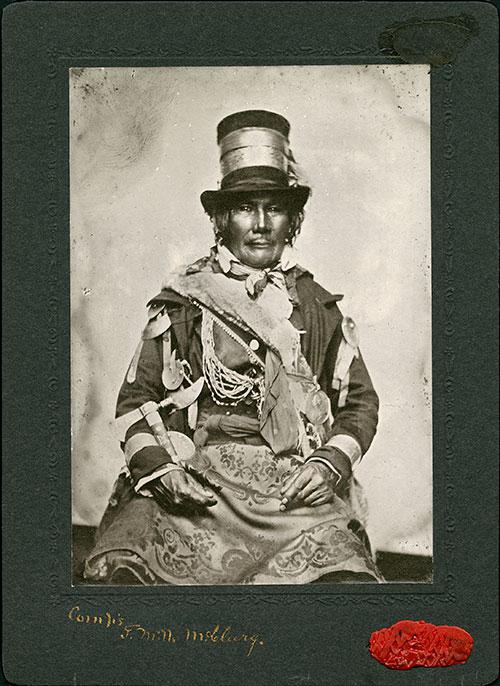
In the summer of 1812, Indigenous warriors gathered along the St. Clair River before travelling south to join a conflict that would help determine the future of their homelands.
They came from communities along Lake Huron, the Sydenham River and both sides of the St. Clair, following waterways that had connected their people long before an international border divided the territory.
Among them was Red Sky, an Ojibwe war chief associated with the Black River community near present-day Port Huron. According to Aamjiwnaang historian David D. Plain, warriors from Bear Creek and the Lake Huron shoreline joined Red Sky and other leaders as they made their way toward Amherstburg in early August.
Aamjiwnaang First Nation’s published history also identifies Rabbit, Wawanosh and Old Salt among the warriors who went to join the Shawnee leader Tecumseh.
The coalition they joined would help force the surrender of the American army at Detroit. For the people travelling down the St. Clair River, the campaign belonged to a longer struggle against American expansion into Indigenous territories, one that had already involved their families for generations.
Red Sky’s father, Little Thunder, had participated in an earlier confederacy of Indigenous nations resisting American expansion into the Ohio Country. According to Aamjiwnaang’s historical account, Little Thunder and his sons Red Sky and Anchau led warriors south during the 1790s to join the resistance.
The confederacy defeated American armies in 1790 and 1791 before suffering a major defeat at Fallen Timbers in 1794. British soldiers at nearby Fort Miamis refused to shelter their retreating Indigenous allies, and the following year’s Treaty of Greenville recognized extensive American territorial claims.
Those experiences shaped the decisions Indigenous leaders faced in 1812. Britain remained a potential military partner against American expansion, despite having previously abandoned Indigenous allies when its own interests demanded it.
Tecumseh’s confederacy emerged from that continuing struggle.
Together with his brother Tenskwatawa, whose spiritual and political movement attracted followers across several nations, Tecumseh sought to organize resistance to the loss of Indigenous territory. He challenged the American practice of acquiring land through separate agreements with individual nations or leaders, arguing that territory held collectively could not legitimately be surrendered without broader consent.
Tecumseh sought to preserve Indigenous authority over land and political affairs. British officials wanted to defend their remaining North American colonies against the United States. Their alliance served both purposes for a time, although the two sides approached the conflict with different objectives.
Indigenous nations also made different decisions about participating. Some fought alongside the British, others supported the Americans, and some attempted to remain neutral. Anishinaabe historian Alan Corbiere has documented how individual communities weighed the threats facing their families and territories, making decisions that cannot be reduced to loyalty to either colonial power.
Indigenous participation was especially important around the upper Great Lakes, where British forces depended heavily on their allies.
In July 1812, a force composed largely of Indigenous warriors, alongside British soldiers and Canadian voyageurs, captured the American post at Michilimackinac, between Lakes Huron and Michigan. The following month, Indigenous forces assembled with British troops around Detroit, where American commander William Hull surrendered his army on August 16.
The surrender interrupted American military operations in the region, but the wider struggle over Indigenous territory continued.
In September 1813, an American naval victory on Lake Erie disrupted British supply lines. British commander Henry Procter ordered his forces to abandon Amherstburg and Detroit and retreat eastward along the Thames River.
The withdrawal threatened Indigenous communities that had committed themselves to the alliance, including families who had gathered near British military positions expecting supplies and protection.
Tecumseh opposed the retreat.
In a speech attributed to him by British officer and writer John Richardson, Tecumseh challenged the assurances British commanders had made and recalled earlier occasions when Britain had abandoned its Indigenous allies. Although the surviving account cannot be treated as a verbatim record, it reflects the concerns surrounding the withdrawal: the security of Indigenous families and the danger of leaving their territories exposed.
On October 5, 1813, American forces defeated the retreating British and Indigenous army at the Battle of the Thames, near Moraviantown. Tecumseh was killed during the fighting.
His death severely weakened the confederacy. Indigenous warriors continued participating in the war elsewhere, but the coalition capable of pressing Tecumseh’s broader territorial demands had suffered a devastating setback.
When Britain and the United States negotiated peace in 1814, British representatives initially sought an Indigenous territory separating the United States from British North America. They eventually abandoned the demand.
The Treaty of Ghent, signed on December 24, restored peace between the two countries without establishing the independent territory Tecumseh’s confederacy had sought.
Article IX required both governments to end hostilities with Indigenous nations and restore the possessions, rights and privileges they had enjoyed or been entitled to in 1811, subject to conditions. Indigenous nations were not parties to the negotiations, however, and the agreement offered no lasting guarantee against further American expansion.
In September 1815, representatives of eight Indigenous nations negotiated a separate peace with American officials at Spring Wells, near Detroit. The agreement reaffirmed the Treaty of Greenville and subsequent treaties. Participating Chippewa, Odawa and Potawatomi representatives also agreed to accept American protection rather than that of another power.
Along the St. Clair River, Indigenous leaders continued negotiating with colonial authorities as settlement expanded into their territories.
Aamjiwnaang’s history records that Red Sky and his father, Little Thunder, attended a council at Amherstburg in 1818 concerning the proposed surrender of the Huron Tract.
Little Thunder was by then an elderly leader. Together, father and son had lived through the western wars of the 1790s, the alliance with Britain in 1812 and the defeat of Tecumseh’s confederacy.
The community account records their agreement to the proposed land surrender. The wider negotiations also reveal the conditions Indigenous leaders sought for their communities’ futures.
According to historian Karen Jean Travers, chiefs from the St. Clair, Bear Creek and Thames River regions negotiated for reserves on lands of their choosing, sufficient territory for agriculture and hunting, cash payments, and assistance with farming and trades.
A leader named Chawme sought five reserves, the ability to purchase additional land, annual payments consisting of cash and clothing, a blacksmith and a farming instructor.
These were proposals for how their communities could maintain livelihoods and economic independence as settlers occupied more of the surrounding territory. The choice of reserve locations, access to additional land, and the form of compensation all mattered.
When colonial officials subsequently proposed making the payments entirely in goods, the chiefs refused to sign that arrangement. Negotiations continued for years, with Indigenous leaders pressing for terms they believed would better serve their communities.
The final Huron Tract Treaty, known as Treaty 29, was signed at Amherstburg on July 10, 1827.
The written agreement described approximately 2.2 million acres, including much of the land that would become Lambton County. It set aside four reserved parcels and provided an annual distribution of goods valued at £1,100, rather than the combination of cash and clothing Chawme had sought.
The agreement did not encompass every Indigenous territory in the region. Bkejwanong, on Walpole Island, had a distinct history and remained unceded.
Territorial changes were also unfolding across the river. In 1836, chiefs representing the Swan Creek and Black River bands signed a treaty with the United States surrendering approximately 8,320 acres in Michigan, including reserved lands near present-day Port Huron.
Within a generation of the War of 1812, agreements with both colonial powers had reshaped landholding around the St. Clair River. Indigenous leaders continued pursuing their communities’ interests, increasingly within legal and administrative systems that restricted their control over land.
The consequences reached beyond the treaties themselves, affecting Indigenous veterans and the communities they attempted to establish after the fighting ended.
One of them was Quakgwan, also known as Feather, a St. Clair River leader whose later experience in Lambton County is preserved in an unusually detailed collection of historical records.
Travers, whose 2015 study examined Indigenous communities in Lambton County through extensive archival research, identifies Quakgwan as a War of 1812 veteran who sustained serious injuries during the conflict. British officials subsequently recognized his military service, and he participated in the Huron Tract treaty process.
After the war, Quakgwan sought to establish an independent agricultural settlement.
In 1840, he and his brother Ashqugonaby arranged to purchase approximately 100 acres in Bosanquet Township, southeast of present-day Stony Point, from Sampson Ward, a settler who had previously purchased the property from the Canada Company.
The agreement called for payments over ten years. Quakgwan collected contributions from other community members toward the purchase, and together they began developing the property.
They built homes, cleared land, cultivated crops and raised livestock. Travers estimates that approximately 45 other people lived on the property with Quakgwan.
He also participated in the civic affairs of the surrounding township. He voted in local elections, was selected as a path master responsible for overseeing road maintenance, and joined neighbouring residents in a petition concerning a local school.
His community farmed, traded and established working relationships with neighbouring settlers while maintaining its own identity and economic activities.
Yet Quakgwan could not obtain the legal deed to the land he believed they had purchased.
Ward held the documented title to the property. Quakgwan had entered into an arrangement to buy it, but the paperwork needed to establish his ownership was never secured. The surviving records leave uncertainty about whether a deed intended for Quakgwan was lost, withheld or never properly completed.
By the late 1840s, colonial officials were pressuring the community to relocate. Indian Department authorities questioned the funds used to acquire and improve the property and intervened in its disposition.
Travers found that no general law in 1849 prohibited Quakgwan from privately owning the off-reserve land. Instead, administrative policy and official interference prevented him from obtaining the deed.
Without it, he could neither secure the property for his community nor independently arrange its sale.
In February 1850, Quakgwan reluctantly agreed to relinquish the property and move to Walpole Island. But the subsequent transfer did not follow the arrangement he and his family understood had been made.
Ward transferred the property directly to Allen Kennedy, a local postmaster and magistrate, in 1850. Kennedy began making payments the following year. Quakgwan died in the spring of 1851, before the land transaction was legally completed.
When Kennedy applied for a Crown patent in 1855, the document that would complete his legal title, officials discovered that the formal Indigenous land surrender they considered necessary had never been obtained.
On September 27, 1855, four years after Quakgwan’s death, chiefs of the Sarnia reserve signed a surrender of the property to the Crown, allowing the government to complete Kennedy’s title.
The dispute continued into the next generation.
In 1880, Quakgwan’s son Wilson Jacob hired a lawyer to pursue money his family believed was still owed from the transaction. According to the family’s account, part of the payment had been intended to support Quakgwan’s relocation, provide him with a house and establish a fund for his children.
Officials could find no written agreement confirming those arrangements and rejected the claim.
Travers found that Quakgwan and the people who had lived with him were largely absent from the conventional land records and histories of Bosanquet Township. The Ward and Kennedy families remained identifiable in those records, while the Indigenous community that had occupied and cultivated the property received little recognition.
Quakgwan’s experience was not the story of every Indigenous veteran, and the political changes following the War of 1812 affected communities in different ways. His life nevertheless demonstrates how Indigenous people continued establishing settlements, negotiating agreements and pursuing their own economic and political futures, even as colonial institutions increasingly constrained their choices.
The war had ended decades earlier, but the questions of land, authority and independence that had brought warriors from the St. Clair River into the conflict remained. Their communities continued working to determine their own futures within a colonial order that was transforming the region around them.
This article is part of The Sarnia Journal’s 11 Days of Remembrance series, examining military conflicts through the histories of people who lived in the region now known as Sarnia-Lambton.
Accounts of Red Sky, Little Thunder and local warriors draw on historical material published by Aamjiwnaang First Nation and the writings of Aamjiwnaang historian David D. Plain. The article also draws on the research of Anishinaabe historian Alan Corbiere.
The account of Quakgwan is drawn principally from historian Karen Jean Travers’s 2015 dissertation, Seeing With Two Eyes: Colonial Policy, the Huron Tract Treaty and Changes in the Land in Lambton County, 1780–1867, which examines contemporary correspondence, municipal records, land transactions and Indigenous petitions.
The peace settlements and land agreements were examined through the Treaty of Ghent, the 1815 Treaty of Spring Wells, the 1827 Huron Tract Treaty and the 1836 treaty with the Swan Creek and Black River bands.
The article distinguishes community historical accounts from individual military service documented in surviving colonial records. It also distinguishes the written terms of treaties from Indigenous interpretations and expectations. Not every named warrior’s participation in individual engagements has been independently verified.
 Sarnia election results 2026: Mayor, council and trustees

 The election is over. What happens to Sarnia’s police board now?
 Before Canada existed, Pontiac’s War reached the St. Clair River

Mon, Nov 2 · 7:00 pm
St Andrew’s Presbyterian Church 261 Christina St N Sarnia, ON