


Oct29
EarlyON-Nature Park Program
Thu, Oct 29 · 9:30 am
Bridgeview Park 4241-4299 Petrolia Line Petrolia, ON
Cathy Dobson Robyn Kopriva’s introduction to neurofeedback training was as a client.
Cathy Dobson
Robyn Kopriva’s introduction to neurofeedback training was as a client.
“I have struggled with my own mental health and was looking for something holistic, an alternative to medication, to ease my anxiety and high stress level,” said the 32-year-old social worker.
At her counsellor’s suggestion she tried neurofeedback twice a week.
“After a few sessions I started to feel more at ease,” Kopriva said. “I found I had the ability to manage sudden change and my anxiety better.”
Neurofeedback training is not a treatment for the brain. Rather, Kopriva said, it’s a general wellness tool that is helping a growing number of people who want to learn to self-regulate naturally.
It’s been around more than 30 years but isn’t widely known or understood, she said.
“When we’re stressed, our brain becomes inefficient. The neurofeedback system listens for sudden shifts in electrical activity and provides feedback to the brain so it can adapt and learn from itself.”
Kopriva likens neurofeedback to a rumble strip on a road. When drivers feel the rumble they’re alerted to make the optimal move, she said.
“Therefore, the rumble strip did not tell you what to do next; it simply provided you information and feedback on your driving.”
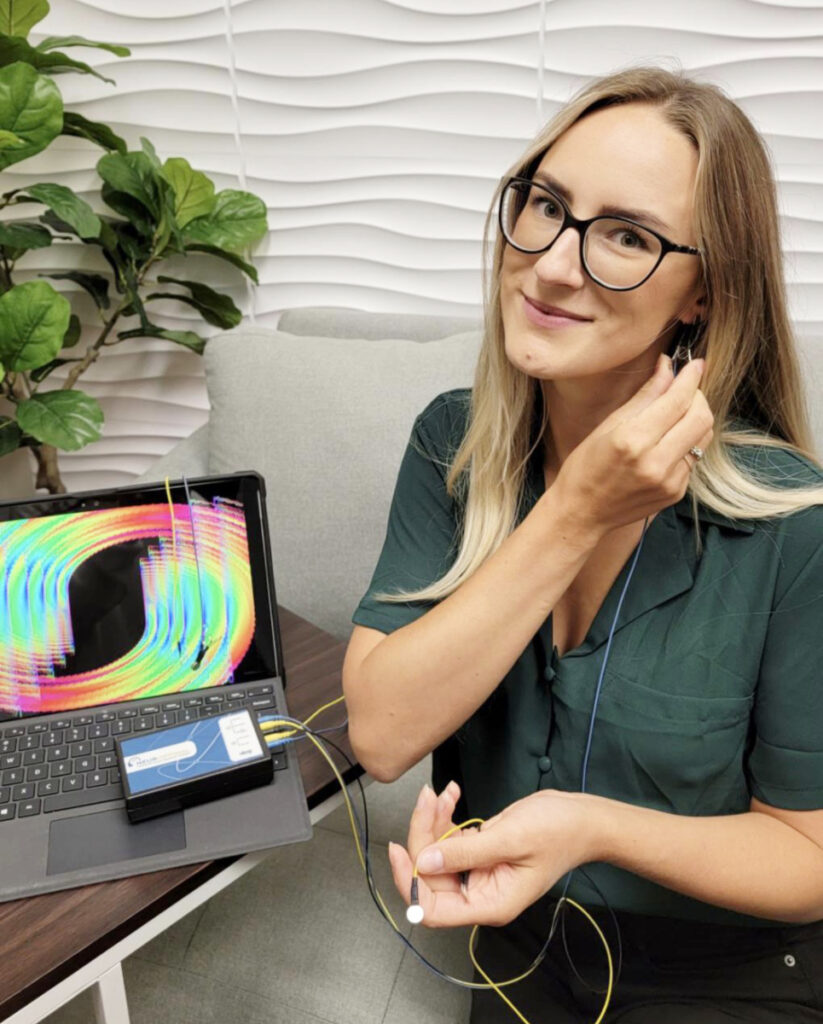
Treatments involve listening to calming music with small sensors connected to the scalp. When a change is detected in the client’s electrical activity, the music skips audibly.
“This skip acts like the rumble strip and alerts you to the present moment, where your central nervous system can decide its most efficient and optimal path moving forward.”
Kopriva’s personal success with neurofeedback motivated her to take the training to become certified as a NeurOptimal technician and licensed to use NeurOptimal neurofeedback brain training equipment.
“I wanted to make neurofeedback more accessible,” she said. “I knew the power of it and felt as soon as people tried it, they’d love it.”
She’d also just turned 30 and knew she wanted to be an entrepreneur. Market research convinced her that a network of social and wellness workers in Sarnia would refer patients for neurofeedback training.
With a $16,000 (U.S.) investment, Kopriva bought her first NeurOptimal system and opened Great Lakes Neurofeedback at 140 Front St. South just as the pandemic started.
“I had to close for the first lockdown and it was tough,” said Kopriva. But she teamed up with a supervisory psychologist and became an essential service that could remain open for subsequent lockdowns.
Kopriva continues to work fulltime as a social worker and said she is slowly growing her business.
Since opening, she has purchased two more neurofeedback systems that she rents out for a month at a time.
“My clients report that it’s incredible what this does for their nervous systems. They are less agitated, more regulated.
Each 33-minute session at her office costs $110 and is often covered by extended healthcare benefits. Her rental neurofeedback systems cost $1,100 per month for unlimited at-home sessions for up to four people.
The rentals have been booked solid since she purchased them last year, Kopriva said.
“The market is definitely there. Whole families that feel too busy, too stimulated, often rent the system and say they feel more relaxed, less anxious.”
She estimates a third of her clientele also gets counselling from other professionals while they receive neurofeedback training. COVID-19 has caused a myriad of mental health concerns and increased the number of referrals to Kopriva’s office.
“I’m just at the point when I need to decide if I’m going to hire someone else,” she said.
Great Lakes Neurofeedback is located at 140 Front St. South and can be reached at 519-466-8689 or by visitinggreatlakesneurofeedback.com.
Got a great idea for a business story? Send it to [email protected]
Thu, Oct 29 · 9:30 am
Bridgeview Park 4241-4299 Petrolia Line Petrolia, ON
Thu, Oct 29 · 11:00 am
The Lawrence House Centre for the Arts 127 Christina St. South Sarnia, ON