




Oct28
St. Clair conservation authority raises transparency concerns over provincial merger
The St. Clair Region Conservation Authority has directed staff to seek legal advice over confidentiality requirements introduced during Ontario's conservation authority restructuring. Similar concerns have prompted objections from other conservation boards and resignations from provincial merger committees. St. Clair directors are scheduled to consider a formal response Thursday.
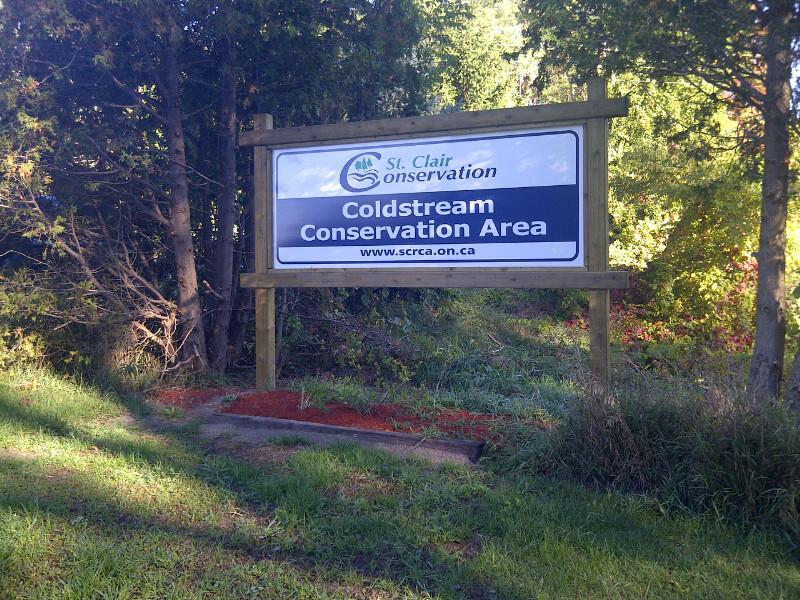
The St. Clair Region Conservation Authority has directed staff to seek legal advice about confidentiality requirements presented to members of a provincial merger committee, raising concerns about how representatives can keep local boards and municipalities informed during Ontario’s conservation authority restructuring.
The concerns come as the province prepares to consolidate its 36 conservation authorities into nine regional organizations on February 1, 2027. The St. Clair authority will merge with the Upper Thames River, Lower Thames Valley and Essex Region authorities to form the Western Lake Erie Regional Conservation Authority.
The restructuring will also change how local communities are represented. The St. Clair authority currently has directors appointed by 17 participating municipalities, including Sarnia, Point Edward, Petrolia and St. Clair Township. Under the new system, appointments will be made by upper-tier and single-tier municipalities rather than individual lower-tier municipalities.
An earlier provincial proposal would give Lambton County two seats on the new 22-member Western Lake Erie board.
As those changes approach, existing conservation authorities are participating in transition committees responsible for preparing the new regional organizations, including their governance, staffing, assets and operations.
According to draft minutes from its September 17 board meeting, St. Clair directors reviewed a confidentiality undertaking and terms of reference received from the Ontario Provincial Conservation Agency on September 11.
Following a closed session, the board reported concerns about transparency and its responsibility to keep stakeholders informed.
Directors passed a motion instructing staff to seek a legal opinion on the requirements in relation to Ontario’s Municipal Act. They also directed staff to prepare correspondence supporting recommendations made by the Upper Thames River Conservation Authority, which had raised similar concerns.
The proposed correspondence is scheduled for consideration at a special St. Clair board meeting Thursday, October 29. Directors also requested that their motion and the approved response letter be distributed to participating municipalities and the media.
The issue had already prompted a formal response from Upper Thames, where board chair Brian Petrie questioned the scope of the confidentiality requirements in a September 15 letter.
Petrie described the proposed undertaking as covering transition committee discussions, meeting materials, presentations and related records. He argued that the restrictions could interfere with representatives’ ability to report on the committee’s work to their existing conservation authority boards.
He also pointed to earlier provincial correspondence indicating that transition committees were expected to collaborate closely with existing conservation authority boards throughout the restructuring.
Following a closed session to receive legal advice, the Upper Thames board voted September 15 to request amendments to the undertaking based on recommendations from its lawyer.
The authority’s October 6 meeting minutes provide further details of the disagreement.
A resolution adopted that day states that committee representatives had been asked to sign an undertaking preventing them from discussing committee deliberations with their boards, staff and municipalities without authorization from the regional project executive.
Upper Thames had requested a clarification letter addressing the definition of confidential information, representatives’ potential personal liability and their ability to communicate with municipal and conservation authority officials.
At the October 6 meeting, directors authorized their representatives to sign the undertaking and accompanying clarification letter in whatever form they considered appropriate. The board also agreed to indemnify current and former appointees against liabilities associated with their transition committee service.
The same meeting’s minutes record Petrie’s resignation from the transition committee, which was publicly reported October 7.
In an undated resignation letter appended to those minutes, Petrie said the revised confidentiality undertaking remained too broad and had not adequately addressed the concerns he previously raised.
Similar concerns have emerged elsewhere in Ontario.
On October 22, Ed McGugan, chair of the Maitland Valley Conservation Authority, resigned from the transition committee overseeing the separate Lake Huron regional merger.
McGugan said the extent of the confidentiality requirements had not been communicated to him before his appointment. In his letter, he also questioned whether those requirements were compatible with his responsibilities as an elected official to report to conservation authority boards and municipal councils.
The concerns raised by the representatives do not, by themselves, establish that the requirements are unlawful.
The Ontario Provincial Conservation Agency is responsible for overseeing the restructuring and coordinating the transition committees.
In its published explanation of the consolidation, the agency says the changes are intended to improve consistency, reduce administrative duplication and strengthen conservation services while maintaining local knowledge and environmental protections. Those general objectives do not directly address the concerns raised about confidentiality.
At the October 6 Upper Thames meeting, Western Lake Erie project executive Davin Heinbuck told directors that a consultation period on the regional transition plan was expected, most likely in January 2027, when the plan would be circulated for review and comment.
Provincial legislation also establishes requirements for distributing finalized transition plans.
Under section 1.10 of the Conservation Authorities Act, the finalized plans must be provided to the existing conservation authorities, while participating municipalities are guaranteed summaries. The legislation does not prohibit the release of additional information.
Ontario also intends to establish local watershed councils to provide community input into the larger regional authorities. Their membership, appointment procedures and responsibilities have not yet been finalized.
A provincial consultation opened October 22 is seeking public input on those arrangements until December 6.
The merger itself is established in legislation, but planning for the new organizations continues.
It remains unclear from the publicly available records whether the Ontario Provincial Conservation Agency has provided further clarification or amended the confidentiality requirements in response to the concerns raised by existing conservation authorities.
For the St. Clair authority, the immediate question is how representatives can participate in that planning while continuing to keep their boards and municipalities informed.
Its directors are scheduled to consider their formal response Thursday, as the province moves closer to the February consolidation.
More to read
Events
Oct28
Oct29
EarlyON-Nature Park Program
Thu, Oct 29 · 9:30 am
Bridgeview Park 4241-4299 Petrolia Line Petrolia, ON
Oct29
Oct29
Sarnia Artists’ Workshop Awards/ Peg Kivi Solo Exhibition
Thu, Oct 29 · 11:00 am
The Lawrence House Centre for the Arts 127 Christina St. South Sarnia, ON