


Oct29
More Murder, More Mayhem Historic Trolley Tour
Thu, Oct 29 · 5:30 pm
Port Huron Museums Carnegie Museum
Roughly one-third of the Butler’s gartersnake’s occupied Canadian range is in Sarnia-Lambton, where the tiny reptile has found an unlikely home among prairie remnants, drainage ditches, vacant land and industrial corridors.
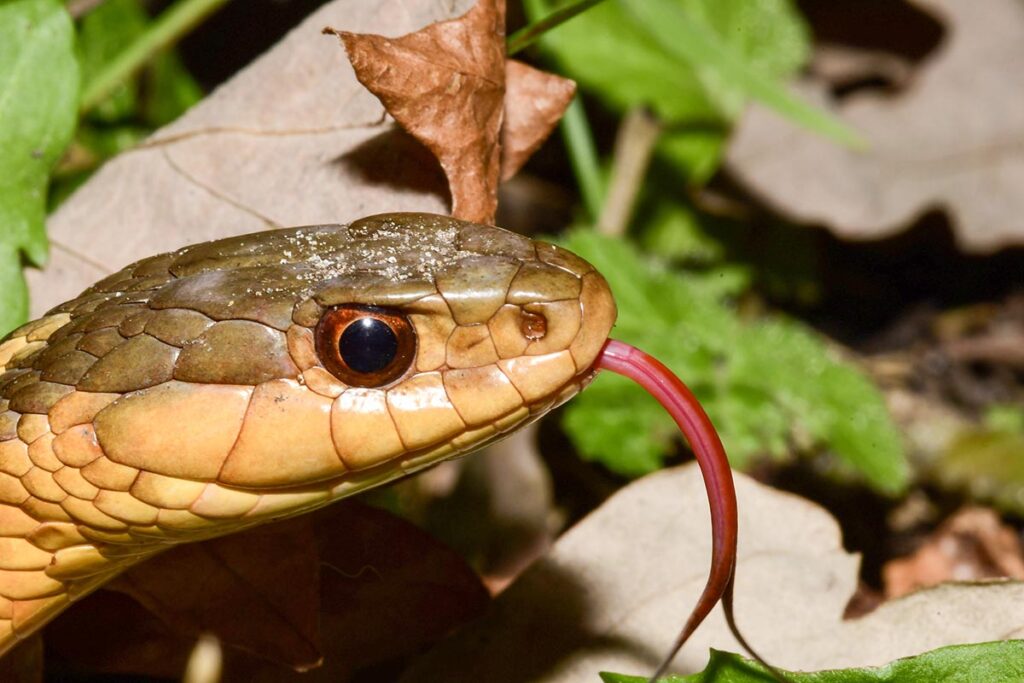
In patches of long grass, old fields and seemingly unremarkable vacant land around Sarnia lives one of Canada’s more unusual species at risk.
It is small, secretive and easy to overlook. It rarely grows longer than 69 centimetres, spends much of its life beneath grass, rocks, boards and other cover, and feeds overwhelmingly on earthworms.
But Sarnia-Lambton is one of the most important places left for the Butler’s gartersnake in Canada.
The snake remains legally listed as endangered under the federal Species at Risk Act, and its Canadian range has been reduced to just three separated populations in southwestern Ontario: Windsor-Essex, Sarnia-Lambton and Luther Marsh.
According to the newest federal assessment of the species, Sarnia-Lambton alone accounts for an estimated 32 to 37 per cent of its occupied Canadian range. The assessment specifically identifies Aamjiwnaang First Nation as supporting a “sizeable amount” of Butler’s gartersnake habitat near Sarnia.
That means one of Canada’s major remaining strongholds for a snake many local residents have probably never heard of is quite literally in our backyard.
And for more than a decade, Aamjiwnaang has been working to keep it there.
At first glance, a Butler’s gartersnake can resemble the more familiar gartersnakes found throughout Ontario. It is usually brown or olive, with three yellowish or cream-coloured stripes running the length of its body, but it is smaller and more compact, with a noticeably short head.
Its global range is unusually restricted, confined to portions of the Great Lakes region in Ontario and several U.S. states. Canada contains only about 16 per cent of that range.
The animal also has one particularly memorable dietary preference: Butler’s gartersnakes really like worms.
Biologists describe them as facultative vermivores, animals that feed predominantly on earthworms. Studies of snakes collected in Lambton and Essex counties found earthworms dominating their diet, and experiments with newborn snakes found that the smell of earthworms produced a stronger feeding response than fish, amphibians, slugs, leeches or mice.
They will eat other small prey, but worms are their specialty.
There is an odd historical twist to that relationship. The earthworm species identified in Ontario Butler’s gartersnakes were introduced species, part of the largely Eurasian earthworm fauna now common across southern Ontario. Researchers have suggested that before those earthworms became widespread after European settlement, the snakes may have depended more heavily on native prey such as leeches, frogs and salamanders.
Their idea of good real estate is equally unusual.
When people picture habitat for an endangered animal, they might imagine untouched forest or remote wilderness. Butler’s gartersnakes generally prefer almost the opposite.
They favour open meadows, tallgrass prairie, old fields, grassy drainage areas and other places with dense vegetation, plenty of thatch, moist soil and abundant worms. They have also been documented in naturalized city parks, vacant commercial properties and heavily disturbed industrial land.
A scruffy strip of long grass beside a drainage ditch or industrial property can therefore be far more valuable to a Butler’s gartersnake than a manicured lawn.
One highly disturbed Sarnia-Lambton study site produced roughly 500 observations of Butler’s gartersnakes in 2008 and 2009, compared with just one eastern gartersnake and no other snake species.
Even their winter accommodation is unconventional. Butler’s gartersnakes can disappear underground into crayfish burrows, small-mammal tunnels, ant mounds, loose fill and old foundations to survive the cold.
Maintaining that habitat is more complicated than simply leaving the grass alone.
Mowing too frequently, or at the wrong time of year, can kill snakes directly and strip away the vegetation they rely on. But allowing every open field to eventually turn into dense shrubland or forest can make the habitat unsuitable as well. Protecting the species can require active management, controlling invasive plants and carefully timing mowing or other vegetation work to preserve open grassland without killing the animals living in it.
The snakes are also poorly equipped to simply move somewhere else when their habitat disappears.
Most have very small home ranges. In one Sarnia study, 77 per cent of recaptured snakes had moved no more than 300 metres, while some were repeatedly found beneath the same piece of cover. One travelled 1.2 kilometres, but researchers regarded that as an exceptional movement.
For an animal that may spend much of its life within an area small enough to walk across in minutes, a new road, parking lot or development can be a substantial barrier. A suitable field several kilometres away may effectively be another world.
That helps explain why Aamjiwnaang began paying attention to the species years before the newest federal assessment quantified just how important the local population had become.
Community records show dedicated Butler’s gartersnake education and conservation work going back to at least 2014. By that year, Aamjiwnaang’s Environment Department was pursuing a project focused specifically on quantifying Butler’s gartersnakes and studying their habitat use in and around the First Nation, with the stated goal of helping protect rare species and their habitat from future destruction.
Canada’s 2018 recovery strategy later formally recognized Aamjiwnaang’s work, including snake surveys and monitoring, habitat restoration, road-crossing signs and public education.
Some of that work became very hands-on.
In a 2017 interview with Anishinabek News, Aamjiwnaang Species at Risk Technician Dennis Plain described intervening when pipeline work was taking place without snake-exclusion fencing. According to Plain, the work stopped and fencing was installed.
At another development site, he said work was halted while the property was searched. Plain reported relocating 18 Butler’s gartersnakes and finding several others dead.
Finding somewhere safe to move displaced snakes presented another problem. Plain described family members agreeing to restore about 19 hectares of native prairie habitat, along with the construction of an artificial hibernaculum intended to give snakes another place to overwinter.
Aamjiwnaang also began the William’s Drive Habitat Enhancement Project, removing invasive plants and re-establishing native prairie species including cordgrass, Indian grass, big and little bluestem, butterfly milkweed and purple coneflower.
Those efforts matter because despite scientists becoming better at finding Butler’s gartersnakes, parts of their range continue to disappear.
The newest federal assessment found an approximately 29 per cent decline in historically occupied sites across Sarnia-Lambton and Windsor-Essex combined since the previous assessment in 2010. Within Sarnia-Lambton, six four-square-kilometre areas previously considered occupied are now considered extirpated.
Researchers have also identified snakes in additional local areas that were not included in the older assessment, but caution that this largely reflects improved surveying rather than the species expanding into new territory.
Development, roads and utility corridors remain among the principal threats.
That relationship is especially complicated in Sarnia-Lambton, where pipeline and utility corridors can unintentionally create the open grassy habitat Butler’s gartersnakes prefer, while excavation and maintenance of those same corridors can destroy habitat or kill animals.
Of 12 documented transportation or service-corridor incidents examined in the latest federal assessment, 10 occurred in Sarnia-Lambton, most involving pipeline excavation, maintenance or construction.
The species’ official status can also be confusing. Butler’s gartersnake remains legally endangered federally, although COSEWIC reassessed it as threatened in 2024 and Ontario changed its provincial classification to threatened this year.
That change did not reflect a dramatic recovery. Federal reporting says it resulted largely from changes in how assessment criteria were applied, while the same scientific assessment continues to document shrinking habitat, fragmented populations and ongoing threats.
Whatever label governments ultimately place beside its name, the geography is hard to ignore.
Butler’s gartersnakes have adapted remarkably well to a landscape transformed around them. They can live in prairie remnants, vacant lots, drainage ditches and industrial corridors. They can survive largely on earthworms introduced from another continent. They can make a home in places that most people might barely recognize as wildlife habitat.
What they cannot easily do is move somewhere else when those places disappear.
And in Sarnia-Lambton, those scattered patches of long grass now make up roughly a third of the species’ occupied Canadian range.
At Aamjiwnaang, people have been treating those seemingly ordinary spaces as something worth protecting for more than a decade.
Thu, Oct 29 · 5:30 pm
Port Huron Museums Carnegie Museum
Thu, Oct 29 · 6:00 pm
Port Huron Museums Carnegie Museum
Thu, Oct 29 · 7:00 pm
Refined Fool Brewing Co. Refined Fool Brewing Co Kids with Fur, 1308 London Rd, ON N7S Sarnia, ON
Thu, Oct 29 · 7:00 pm
Black Gold Brewery 395 Fletcher St. Petrolia, ON