



Oct29
BURGER BINGO/NAME THAT TUNE at Refined Fool
Thu, Oct 29 · 7:00 pm
Refined Fool Brewing Co. Refined Fool Brewing Co Kids with Fur, 1308 London Rd, ON N7S Sarnia, ON
Ontario farmers warn Sarnia grain terminal could face operational risks from nearby residential development.
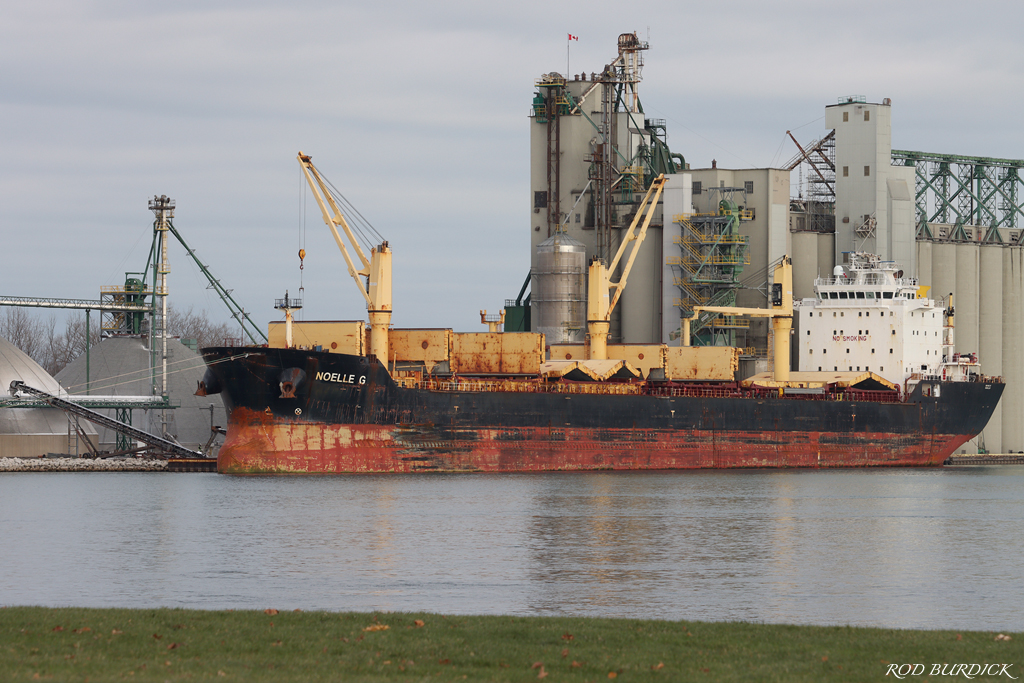
The debate over Cargill’s request for a Minister’s Zoning Order (MZO) is increasingly becoming a question of whether one of Ontario’s key grain export terminals can keep operating long-term if residential development moves in next to its Sarnia site.
The Ontario Federation of Agriculture (OFA) is backing Cargill Limited’s request for provincial zoning protection around its Exmouth Street grain terminal, warning that nearby sensitive land uses could create conflicts that put the terminal’s future at risk.
Cargill submitted the MZO application in late 2025. The company is asking the province to prohibit sensitive land uses, including residential buildings, hospitals and daycares, within 300 metres of the terminal. Its earlier proposal also included a second zone from 301 to 650 metres, where certain developments would require technical studies and mitigation measures.
The request comes as new residential projects are being considered or advanced near Sarnia’s waterfront and the Point Edward boundary.
The OFA says the Sarnia terminal is not just a local industrial site. It handles about 35 per cent of Ontario’s export grain capacity and supports the movement of wheat, soybeans and corn. It also receives fertilizer inputs used across nearly 400,000 acres of farmland in southwestern Ontario.
In its letter to Ontario’s Minister of Municipal Affairs and Housing, Rob Flack, the OFA said the terminal is a significant part of Ontario’s agri-food infrastructure, connecting farmers to processors, export markets, livestock feed operations, marine shipping and rail networks.
The organization says the risk is not that residential development would immediately shut down the terminal. The concern is that placing homes and other sensitive uses near a working grain operation could lead to long-term pressure over noise, dust, truck traffic, rail activity, odour and 24-hour operations.
Those are normal features of a grain terminal. They are also the kinds of impacts that can trigger complaints when residential development moves closer to established industrial or agricultural operations.
The OFA argues those complaints can create regulatory and political pressure over time, even when an operation was there first. That pressure can limit how a facility operates, increase costs, restrict future investment and create uncertainty for farmers and the broader supply chain.
Cargill’s Sarnia terminal dates back to 1927. The company has said it employs about 50 people through the operation. It is located at 101 Exmouth Street and remains one of a limited number of export grain terminals in southern Ontario.
The OFA’s position is that the terminal should be protected from incompatible development before the conflict becomes more difficult to manage.
The issue has already created tension between Cargill, the City of Sarnia and the Village of Point Edward.
In January, Sarnia Mayor Mike Bradley said the company’s move to seek an MZO came as a surprise to the municipality. He raised concerns that a provincial order would override local planning authority and affect waterfront development decisions.
Point Edward Mayor Bev Hand also raised concerns about the potential impact on lands north of the terminal, including a proposed 184-unit townhouse development.
At the time, Cargill’s correspondence to both municipalities said the company was seeking a two-tiered buffer to manage new sensitive land uses near the terminal. Municipal maps showed the proposed zones extending into areas where development has been considered.
The debate has continued as development applications move forward.
On Monday, Sarnia council approved official plan and zoning bylaw amendments for Tricar’s proposed 14-storey residential tower on Harbour Road. That approval came despite Cargill’s pending MZO application.
A proposed residential development on Exmouth Street remains in limbo while stakeholders wait for a decision from the province.
Support for Cargill’s application has also come from several agricultural and municipal voices, including the County of Lambton Agricultural Advisory Committee, the Christian Farmers Federation of Ontario, the Lambton Federation of Agriculture, St. Clair Township, the Town of Plympton-Wyoming and the Township of Enniskillen.
The OFA is comparing the Sarnia issue to other land-use conflicts involving food and agricultural infrastructure in Ontario, including concerns around residential encroachment near the Ontario Food Terminal in Toronto.
Its argument is that food infrastructure is difficult to replace once it is compromised. Grain terminals require access to transportation networks, including marine and rail shipping. They also depend on room to operate in ways that may not be compatible with nearby residential expectations.
For farmers, the concern is practical. If a terminal that handles a major share of Ontario’s export grain capacity faces operational restrictions or long-term uncertainty, the effects would extend beyond Sarnia. It could affect how crops move, how farmers access markets and how the agricultural supply chain functions across southwestern Ontario.
The province has not yet made a final decision on Cargill’s MZO request.
Thu, Oct 29 · 7:00 pm
Refined Fool Brewing Co. Refined Fool Brewing Co Kids with Fur, 1308 London Rd, ON N7S Sarnia, ON
Thu, Oct 29 · 7:00 pm
Black Gold Brewery 395 Fletcher St. Petrolia, ON