Nov5
Indwell wins George Street appeal after years of resistance to supportive housing
Indwell’s tribunal victory on George Street follows years of organizing, organized opposition and an earlier housing opportunity lost on Victoria Street.
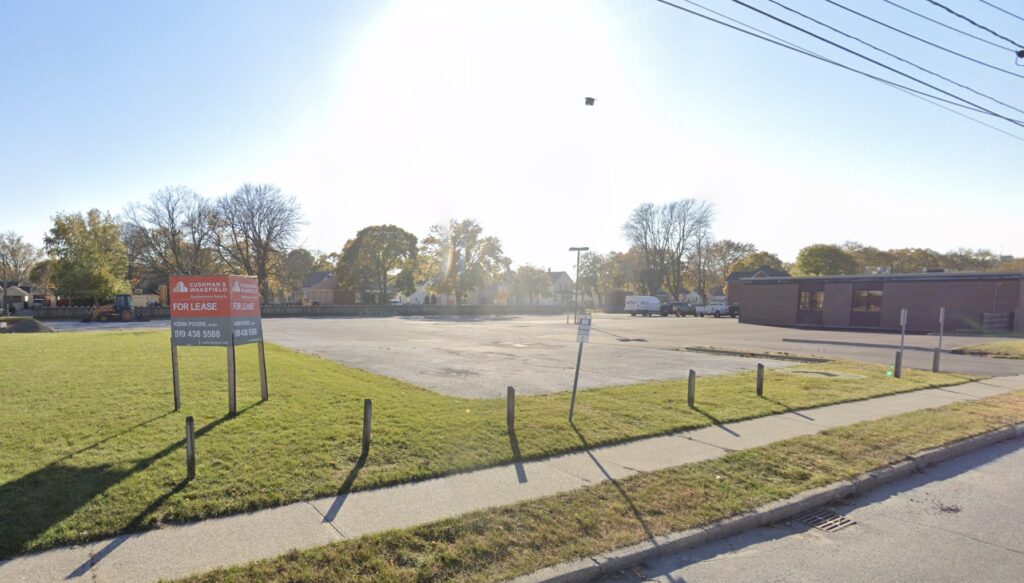
Sarnia city council voted to spend public money defending the rejection of a supportive housing development its own planners recommended approving. On November 3, the Ontario Land Tribunal overturned that rejection.
The Nov. 3 decision authorizes the variances needed for a five-storey building with affordable apartments and supportive services at 353 George St. Tribunal member Eric S. Crowe found the proposal met the applicable planning tests and would not overdevelop the site.
The ruling is a significant step toward permanent housing for people who need both an affordable home and help to remain housed. It also raises a public accountability question: why did a project supported by municipal planners have to survive months of litigation before it could move forward?
The answer extends beyond the committee hearing. The George Street proposal encountered organized neighbourhood opposition, a council-led public meeting outside the statutory planning process, arguments over whether supportive housing belonged in existing zoning categories, and a political decision to retain outside experts to defend its rejection.
A housing effort years in the making
The project grew out of a sustained local effort to bring supportive housing to Sarnia-Lambton. In May 2023, Michael Kooy, John DeGroot, Heather Martin and Brian Mundt were seeking land and working to build community support. The group had already contacted Indwell, the Hamilton-based non-profit housing provider.
In June 2025, the County of Lambton announced a land donation beside its George Street EMS station. The initial concept called for approximately 50 supportive apartments.
The County’s announcement identified practical reasons for choosing the site: transit connections, nearby services and amenities, and a location along an arterial street already accommodating multiple residential and other uses. The proposal was intended to address an identified gap in the local housing system.
By November 2025, the HOME supportive housing campaign had reached the $1-million mark toward a $5-million goal covering George Street and other anticipated Indwell projects. That was a milestone in community organizing and fundraising, rather than confirmation that this building was fully financed.
Before George Street, there was Victoria Street
George Street followed an earlier attempt to use the municipal parking lot at 115 Victoria St. N. for housing. In May 2024, council declared the entire lot surplus and directed staff to initiate its donation to Lambton County. Subsequent discussions centred on retaining public parking and the terms of a transfer.
On Oct. 28, 2024, staff recommended donating the northern portion for affordable housing and negotiating an agreement. Council instead voted 7–2 to receive and file the report, leaving that recommendation unapproved. By May 2025, the County’s updated housing plan stated that Victoria Street was no longer available and that staff were working with Indwell to refocus on other sites.
The stalled Victoria Street effort became part of a wider debate over barriers to supportive housing. It was a separate site and decision, but part of the same wider effort to find land and deliver homes. The eventual George Street approval came after an earlier opportunity had already fallen away.
The opposition to Victoria Street included the Downtown Business Collective. Contemporary reporting described the group’s Oct. 24 open letter opposing the loss of parking for downtown workers and customers. It also questioned the location’s suitability, citing a lack of grocery stores and budget retailers and concerns involving nearby bars and restaurants. That was the collective’s position, rather than an established consensus among all downtown businesses.
Political opposition extended beyond parking. At County council in June 2024, Bill Dennis argued against a development of that scale downtown and said it “attracts the wrong sort,” according to Sarnia News Today. The language went beyond the loss of parking and framed the proposed development as a threat to downtown.
The Oct. 28 minutes identify who voted to receive and file the donation report: Dave Boushy, Terry Burrell, Bill Dennis, Anne Marie Gillis, Chrissy McRoberts, George Vandenberg and Brian White. Burrell moved that motion and Vandenberg seconded it. Adam Kilner and Mayor Mike Bradley voted against it. White acknowledged the public opposition while explaining that supportive housing could help address local problems; Bradley questioned the accuracy of information circulating about the proposal.
Public consultation and organized opposition
The opposition was visible well before the variance decision. Lawn signs opposed the development, and residents challenged its location, scale and intended use.
On Aug. 11, 2025, city council held a special public information meeting following a motion seeking consultation with neighbours and stakeholders. Mayor Mike Bradley made clear that it was not a statutory planning hearing and that no rezoning application was before council.
The distinction matters. The meeting gave residents a forum to speak, but it was not the process through which the building’s compliance with planning rules would be decided.
The nearly three-hour meeting brought sharply divided views. Opponents raised concerns about safety and neighbourhood impacts. Resident Chris Beausoleil told the meeting that neighbours would continue fighting the project and argued that its intended residents’ mental health and addictions needs made it unsuitable. Supporters included nearby residents, service providers and a parent who described how an Indwell apartment had helped her daughter regain stability after a mental health crisis. Council heard from 35 presenters and took no vote.
The meeting also included confrontations over who lived in the neighbourhood and who should have a say. Those exchanges exposed a problem with treating housing primarily as a contest between existing residents: the people who might eventually live in the proposed building have an interest in the neighbourhood too.
Organized resistance continued into 2026. An April 15 column describing an opposition meeting at the Lochiel Kiwanis Community Centre the previous evening reported fundraising for planning and legal assistance and an emphasis on height, green space and parking arguments for the tribunal process.
Residents are entitled to organize and challenge planning applications. Technical objections also deserve scrutiny on their merits. But opposition to supportive housing cannot establish a planning case simply by expressing anxiety about the people who may live there. The tribunal’s role was to examine the evidence about this proposal, rather than resolve the dispute through the volume of public opposition.
A revised proposal, followed by another refusal
The original 50-unit application had unresolved planning issues. City staff initially recommended refusal, and the Committee of Adjustment granted Indwell a deferral in December 2025.
In January, Indwell reduced the proposal to 35 apartments, increased parking from 25 spaces to 27 and limited staff offices to the ground floor. The building’s overall size remained unchanged. The reduction in homes helped the application meet the city’s affordable-housing parking incentive requirements.
Staff then recommended approval with conditions. On Feb. 10, the committee refused the revised application, citing alleged overdevelopment and arguing that supportive housing should be considered through a zoning bylaw amendment introducing a new definition.
The approved minutes record a unanimous refusal among the four members present: Lawrence Lachapelle, who moved the motion; Ken Doan, who seconded it; Terry McCallum; and Bill Sisler. Andrew Stokley was absent and did not vote.
That refusal was followed by a separate choice at council. On April 27, councillors voted 5–4 to retain outside legal and planning support to defend the committee’s decision at the tribunal.
The recorded vote lists Dave Boushy, Terry Burrell, Bill Dennis, Anne Marie Gillis and George Vandenberg in favour. Adam Kilner, Chrissy McRoberts, Brian White and Mayor Bradley voted against that direction.
The city’s report to council explained that taking a position contrary to the planning department’s recommendation would require outside expertise. The report estimated outside legal counsel at $400 to $600 per hour. It gave two different estimates for external planning expertise: $60,000 to $80,000 in the discussion and $40,000 to $60,000 under financial implications. These were projected costs. The actual total, including disbursements and other experts, has not been established in the records reviewed for this article.
What the tribunal found
The city argued that the proposal’s supportive housing component required a different approval route. The tribunal found that both planning experts agreed the use was permitted under the existing categories of apartment dwelling and minor institution, and that a zoning amendment could not be required for a permitted use. It also recorded that city staff understood the supportive housing component from the application materials.
Other objections concerned the building’s physical relationship with the neighbourhood. The city’s outside planner, Allan Ramsay, argued that its height and massing were excessive and that reduced landscape strips would provide an inadequate transition to surrounding properties.
The tribunal preferred the evidence of Indwell’s planner, Jordan Fohkens. It found that the design, setbacks and screening provided an appropriate transition. Parking issues had been resolved before the hearing. The ruling concluded that the proposal represented appropriate intensification of an underused site in an area intended for growth.
The decision also criticized aspects of the city’s expert evidence. Crowe found inconsistencies in Ramsay’s testimony undermined its reliability. He identified a summary that listed opposing submissions from the committee hearing while omitting 17 letters of support, and found some concerns about parking-area impacts rested on apprehension rather than thorough analysis.
The outcome also challenges the assumption that more consultation necessarily produces better housing decisions. George Street went through public meetings, design revisions and an appeal. The tribunal ultimately approved the revised proposal that city staff had supported in February. Every additional stage required time and resources while the homes remained unbuilt.
Approval still has to become housing
Indwell’s published plan describes permanent apartments with health, social and housing supports. Proposed services include nurses, housing workers, addictions and psychosocial support staff, with overnight security and on-call support. Final funding and staffing arrangements remain important questions as the project advances. Permanent housing describes the intended housing model, distinct from the minimum period of regulated affordability. The city’s April 27 report states that the revised application committed to affordable rents for at least 10 years. Separately, the tribunal decision records a land-transfer covenant requiring at least 35 supportive units and cites a 50-year restriction on other uses. These are different commitments; the ruling does not establish a guaranteed opening date.
The tribunal approval is conditional. Indwell must enter an agreement with the city covering reduced parking under the Affordable Housing Community Improvement Plan. That condition must be fulfilled within two years of the notice of decision, or the standard parking rate returns.
Site plan approval, building permits and full funding also remain ahead. Flourish president Graham Cubitt told Sarnia News Today on Nov. 4 that Indwell hopes to begin construction in 2027, with construction taking approximately a year. That is an anticipated schedule, not a guaranteed opening date.
The tribunal has ruled, but the public accounting remains unfinished. Sarnia residents deserve to know what the city spent defending the refusal, why five councillors chose that position over the recommendation of their own planning staff, and what will prevent the same obstacles from confronting the next supportive housing proposal. George Street may finally move toward construction. Whether Sarnia has learned anything from the years it took to get here remains an open question.
How George Street reached this point
- May 2023: The Journal reports that Michael Kooy, John DeGroot, Heather Martin and Brian Mundt are seeking land for affordable and supportive housing and have been in contact with Indwell. Read the story.
- June 2025: The County announces its agreement to donate land beside the George Street EMS station. The initial concept is approximately 50 supportive apartments. Journal coverage.
- Aug. 11, 2025: Council holds a special public information meeting, with residents speaking for and against the proposal. It is not a statutory planning hearing. Journal coverage.
- October 2025: Indwell submits its original 50-unit application.
- November 2025: The Journal reports that the HOME campaign has reached $1 million toward a $5-million goal supporting George Street and other anticipated Indwell projects. That figure is a historical fundraising milestone, not the current project funding balance. Journal coverage.
- Dec. 16, 2025: Following a staff recommendation to refuse the original application over unresolved variance and use-definition issues, the committee grants Indwell’s request for a deferral.
- January 2026: Indwell revises the proposal to 35 units and 27 parking spaces. Separately, a motion seeks to move the variance decision from the committee to council. The Journal’s report on the proposed motion.
- Feb. 10, 2026: Despite staff recommending approval of the revised application with conditions, the Committee of Adjustment refuses it, citing overdevelopment and the need for a supportive-housing zoning definition. Indwell appeals.
- April 27, 2026: Council votes 5–4 to retain outside legal and planning support to defend the refusal. Journal coverage.
- May 6 and June 25, 2026: The tribunal holds case management conferences. The Journal reports in May that local supporters are continuing to advocate for the stalled project. Read the story.
- Sept. 22, 2026: The tribunal hears the appeal by video. Its record includes 30 participant statements, evenly divided between support and opposition.
- Nov. 3, 2026: The tribunal allows the appeal and authorizes the variances, subject to the affordable-housing parking agreement and its two-year deadline. Read the decision, OLT-26-000220.
More to read
 Scheduled passenger flights returning to Sarnia airport Thursday
 LCDS hiring event requires advance applications for Nov. 5 interviews
 Sarnia election results 2026: Mayor, council and trustees

Events
Nov5
Nov5
Nov5
Music Night at Black Gold Brewery — Mark Tetreault
Thu, Nov 5 · 7:00 pm
Black Gold Brewery 395 Fletcher St. Petrolia, ON
Nov5