Nov25
Opinion
This column reflects the views of its author.
The U.S. kept explosives more than 77 years old as a strategic reserve. Then it blew them up.
Some of the lead azide destroyed in Iowa was already deteriorating in 2009. The military had lost its domestic manufacturing capacity, and a replacement remained under development more than two decades later.
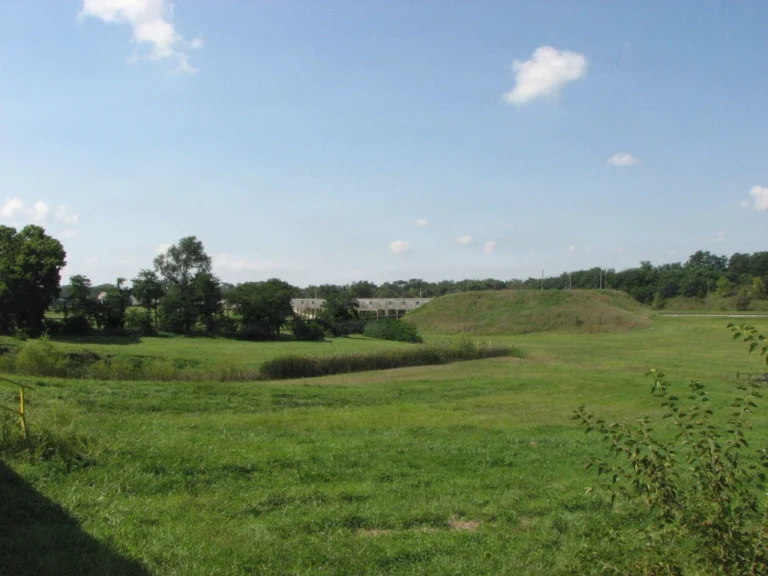
The United States military destroyed approximately 4.4 tonnes of unstable explosives in Iowa on Wednesday, including material manufactured more than three-quarters of a century ago.
The Army carried out two controlled detonations shortly after 9 a.m. local time at the Iowa Army Ammunition Plant in Middletown. Witnesses reported two loud explosions and brief white plumes rising above the facility before dissipating. Military officials subsequently described the operation as successful.
The military had kept the explosives for a reason: the United States had lost its domestic manufacturing capacity for lead azide, leaving it dependent on ageing reserves while researchers struggled to develop a replacement.
Some of the material was already more than 60 years old and showing signs of deterioration when the military consolidated its supplies in Iowa in 2009. That places its manufacture before approximately 1949, around the end of the Second World War or possibly earlier.
Lead azide is a primary explosive used in detonators that initiate larger explosions in artillery shells, grenades and other military ammunition. Its sensitivity makes it useful for that purpose, but also dangerous and expensive to manufacture. Its lead content presents additional health and environmental hazards.
By the early 2000s, American manufacturers had stopped producing the compound domestically.
A September 2010 Army publication acknowledged the loss of domestic production and predicted that the military’s remaining lead azide supplies would last another three to five years.
Preserving the existing stockpile therefore served a practical purpose. The material could support ammunition production while researchers worked toward a reliable substitute.
But the Army had recognized the deterioration problem years earlier.
In a 2014 publication, the military described replacement research launched in 2004 partly because of concerns about a 40-year-old lead azide stockpile deteriorating at the Iowa facility.
The military was therefore documenting concerns about ageing lead azide more than two decades before Wednesday’s destruction.
Researchers pursued alternatives, including DBX-1, a copper-based explosive intended to perform the same function without toxic lead.
The replacement showed promising results, but qualifying it for different military applications and establishing industrial production proved a lengthy process.
In a November 2, 2026 update, the Army reported extensive successful testing of DBX-1 while acknowledging that inconsistent funding had complicated development. Full-scale pilot production was not expected until late 2027 or early 2028.
Meanwhile, the old lead azide remained in storage.
The material was kept in drums containing a stabilizing water-and-ethanol mixture and underwent periodic inspection and maintenance.
By March 2026, however, inspectors had discovered extensive crystallization. Crystals had formed around the drums’ lids and other surfaces, making the material increasingly sensitive to shock and friction.
The Army warned that even opening a container could trigger an explosion, potentially setting off neighbouring drums.
Documents examined by Iowa Public Radio revealed that the plant’s operator, American Ordnance, had sought a disposal proposal from MuniRem Environmental in September 2025, months before the emergency was publicly identified.
MuniRem proposed chemically neutralizing the explosive rather than detonating it. The company reported successful small-scale tests, and the Army initially contracted it to investigate the treatment.
But on May 8, the Army secretary selected controlled detonation instead.
MuniRem maintained that chemical treatment remained feasible. The military argued that the danger was not whether the chemicals could neutralize lead azide, but whether workers could safely introduce them into the deteriorated drums.
Officials concluded that opening or moving the containers created an unacceptable risk. They also warned that falling temperatures and the inability to replenish the stabilizing mixture made further delays dangerous.
Environmental organizations challenged the decision, questioning whether safer alternatives had been adequately considered.
A federal appeals court denied an emergency request to stop the operation on November 23, allowing the Army to proceed.
Wednesday’s detonations were carried out in two reinforced, earth-covered ammunition magazines. Authorities had installed large sand barriers, water systems and foam intended to reduce the spread of lead-containing dust.
Federal officials recommended temporarily relocating residents near the plant and arranged environmental monitoring to assess potential contamination.
Lead is toxic, particularly to children, and contamination can persist in soil and water. The Army acknowledged that the explosions would release lead-containing particles, some potentially travelling beyond the military installation.
Initial environmental monitoring showed no detectable airborne lead at four Environmental Protection Agency monitoring stations southwest of the plant during the hour after the explosions. Other measurements detected some airborne lead, while testing of soil, water and surrounding surfaces continued to assess the extent of any contamination.
The facility is approximately 800 kilometres southwest of Sarnia–Lambton. Pre-detonation modelling projected the principal airborne plume toward parts of Iowa and Missouri, with no identified threat to southwestern Ontario.
The military maintained that controlled destruction presented less danger than allowing the unstable material to remain in storage.
That explains the final decision, but leaves questions about the decades that preceded it.
The Army’s own records show that ageing explosives and the loss of domestic manufacturing capacity were recognized problems as early as 2004. Some material was already more than 60 years old and deteriorating when consolidated in 2009.
The explosives were preserved because the military considered them too important to lose. More than three-quarters of a century after some were manufactured, officials concluded they had become too dangerous to keep.
More to read
 Business licence fees frozen, outdoor rink considered among new Sarnia council’s first decisions
 Sarnia council orders land reviews, building on years of development planning
 Sarnia council agrees to study data-centre rules but stops short of development moratorium


Events
Nov26
EarlyON-Nature Park Program
Thu, Nov 26 · 9:30 am
Bridgeview Park 4241-4299 Petrolia Line Petrolia, ON
Nov26
Nov26
BURGER BINGO/NAME THAT TUNE at Refined Fool
Thu, Nov 26 · 5:00 pm
Refined Fool Brewing Co. Refined Fool Brewing Co Kids with Fur, 1308 London Rd, ON N7S Sarnia, ON
Nov26