Oct31
From tragedy to tank: How the Dane Nisbet homicide became justification for Sarnia’s armoured vehicle
In Nathan’s latest column, he analyzes the acquisition of a discounted tactical asset from Bruce Nuclear exposes a deeper contradiction within Sarnia’s heavily strained police budget. While baseline facilities face historical stagnation, resources continue to flow toward a militarized posture.
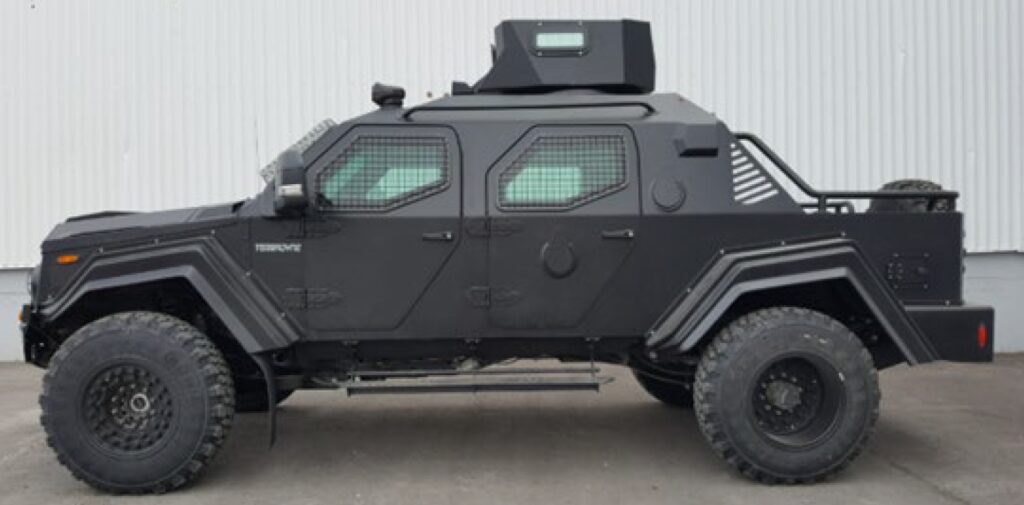
The Sarnia Police Service Board has unanimously approved buying a 13-year-old Terradyne Gurkha armored rescue vehicle from Bruce Nuclear for $20,000. Board members and police leadership described it as a forward-thinking safety upgrade for high-risk situations. Yet the deal leaves key long-term costs undisclosed at a time when the service flags strains in fleet maintenance, IT systems, facilities, and overall budgets.
The vehicle, previously used by Bruce Nuclear security as a patrol asset, provides ballistic protection and serves primarily as a defensive platform: shielding officers during rescues of injured personnel, closer containment in barricaded incidents, and high-risk warrants. In the May 21 board meeting, officials highlighted its potential in scenarios like the recent Dane Nisbet homicide investigation and everyday risks in a border community.
The board’s discussion showed strong enthusiasm and quick approval. Board members responded with praise that framed the purchase as an unmissable bargain. One member stated: “I absolutely support this one.” Another described seeing a similar vehicle: “It is massive. Absolutely massive… I found it very impressive.” A third added: “This makes sense that we have something like this… something as simple as a domestic dispute can go down very quickly and the last thing we want to do is go to the cemetery on Memorial Day and have more graves… for the money it’s an amazing purchase so totally in.”
Enthusiasm continued: “What an opportunity to modernize our police force for such an affordable price… these are big wins these are big wins.” And: “I think this is a very wise purchase a very forward thinking purchase and a very very um for the money it’s an amazing purchase.”
It is particularly striking that the discussion leaned on the Dane Nisbet tragedy to justify this purchase. The case has drawn public questions about whether earlier warnings could have been issued after gunfire at Lambton College’s Lion’s Den Pub on April 10. Now that same incident is being cited as a reason for acquiring more militarized equipment.
The purchase taps an “evergreen” fleet rotation at Bruce Nuclear, offering the trade-in value to local agencies. Similar vehicles cost hundreds of thousands new, and several Ontario services operate them. Board members called it a “big win” and “amazing opportunity.”
However, the open agenda report flags “some initial investment” required for cosmetic work, SPS branding, interior retrofitting (including rear seating), emergency lighting, communications integration, and mechanical inspection — with no dollar figures provided. The board signed off on what amounts to a blank cheque for these modifications. The $20,000 comes from police equipment reserves, but ongoing maintenance for armour, specialized parts, and a Ford F-550 chassis on a 2013 vehicle remains uncosted publicly. This arrives amid the Q1 financial report’s notes on historical budget pressures affecting fleet and facility upkeep, plus temporary leases for operational space while long-term headquarters deficiencies (custody, range) persist.
This decision sits within broader structures of policing resource allocation. In 2022, when Chief Derek Davis was sworn in, the Sarnia Police Service operated with a budget of $27.36 million. Three years later, that figure is set to hit $38.7 million. That’s $9.3 million spent in just three years. Imagine what other city departments could have done with $9.3 million. It sounds unbelievable, but the numbers are real and I'm still not sure how we are better off today than before all that money got spent.
Yet the absurdity of chasing ballistic “bargains” becomes clear when we look at how tactical assets already shape responses here. In the April 18 Mitton Street South incident in the Five Corners area — an intimate partner violence call — the Emergency Response Team, Crisis Negotiators, Canine Unit, and others deployed after a suspect confirmed he had a real firearm. Negotiators resolved it peacefully after about an hour. Firearms were seized and charges laid. Such calls are serious, but they also illustrate how readily specialized teams roll out heavy presence for contained situations. A Level 6 ballistic armoured vehicle parked outside the house instead of what they already had there would just make an even bigger spectacle — and always lead to calls for more budget, more gear, more escalation.
This pattern echoes what journalist Radley Balko documented in Rise of the Warrior Cop: The Militarization of America’s Police Forces: how tools justified for rare extreme threats gradually reshape culture, budgets, and public perception, blurring the line between community policing and military-style operations. That is the core problem here in Sarnia.
The local irony is stark. In the same meeting, the Q1 financial update revealed IT systems, fleet maintenance, and facility upkeep already over budget due to “historical budget stagnation.” Just last month, the board approved temporary off-site leases (estimated $70,000 in the first year) plus up to $200,000 for setup because headquarters cannot adequately handle basic prisoner custody, cells, and range needs. We cannot properly maintain baseline infrastructure for everyday operations, yet resources flow for a discounted tactical asset with hidden future costs.
The board’s swift approval, with repeated emphasis on the “amazing” price and forward-thinking nature, raises questions about how decisions on major equipment purchases are weighed against other pressing community needs. Independent scrutiny requires full transparency on total ownership costs — retrofitting, annual maintenance, training, and integration — before the vehicle arrives (potentially Q3). Residents footing municipal taxes deserve clear projections on how this fits finite resources alongside everyday service delivery and prevention.
More to read

 The election is over. What happens to Sarnia’s police board now?
 For Pattie Urry, hosting students turns spare rooms into lasting connections