Landscaping in Vaughan: 5 Costly Mistakes Homeowners Make When Renovating Their Outdoor Spaces
A backyard renovation can completely change how a property looks and functions.

A backyard renovation can completely change how a property looks and functions. A new patio creates space for outdoor dining, interlocking walkways improve access around the house, and retaining walls can transform uneven ground into practical living areas. However, landscaping projects do not always deliver the expected results. Some homeowners discover uneven paving, drainage problems or deteriorating materials just a few seasons after construction. In many cases, these issues begin with decisions made before the first excavation takes place.
For homeowners in Vaughan, Ontario, local conditions make careful planning particularly important. Winter frost, spring thaw, heavy rainfall and changing soil moisture can all affect outdoor structures. Working with an experienced landscaping company Vaughan homeowners can rely on helps address these challenges through appropriate site preparation, construction methods and material selection. Whether the property is in Woodbridge, Maple, Thornhill or another Vaughan neighbourhood, landscaping improvements should be adapted to the site's individual characteristics.
The most expensive landscaping mistakes are not always immediately visible. A beautiful patio may conceal an inadequate foundation, while an attractive retaining wall may lack proper drainage. Other problems arise when homeowners focus on individual features without considering how the entire outdoor space will function. Understanding these risks before construction begins can help protect the renovation budget and prevent unnecessary repairs. Here are five common mistakes worth avoiding when planning a landscaping project in Vaughan.
Backyard Landscaping in Vaughan Without a Clear Plan
One of the most common landscaping mistakes is starting construction without a complete layout for the property. Homeowners may decide to install a patio, replace a walkway or build a retaining wall without considering how these elements will connect. The result can be an outdoor space that looks attractive in individual sections but feels inconvenient during everyday use.
Effective backyard landscaping begins with understanding how the area will be used. A family with children may need open recreational space, while homeowners who regularly entertain guests may prioritize a larger patio and comfortable access from the house. The property's dimensions, sunlight exposure and existing elevations also influence the final design.
Before construction, several questions should be addressed:
- Purpose of each area. Determine where outdoor dining, relaxation, recreation and planting spaces will be located.
- Movement around the property. Plan comfortable walkways between entrances, patios, gardens and other features.
- Available space. Select structures that fit the property without overcrowding the backyard.
- Existing elevations. Account for slopes and changes in ground level before deciding where to install hardscaping.
- Future improvements. Consider whether additional structures, lighting or outdoor features may be introduced later.
For example, installing a large patio in the centre of a relatively small backyard may leave insufficient room for planting or recreation. Similarly, a walkway positioned without considering the most frequently used routes may encourage people to cross the lawn instead.
TIP: Before choosing materials, create a basic layout showing the house, existing structures, access points and proposed outdoor features. Check whether each area serves a practical purpose and whether movement between spaces feels natural.
A coordinated landscape plan allows construction elements to work together. It also helps reduce the expense of relocating features or modifying completed surfaces when new improvements are added.
Landscaping Drainage Problems That Lead to Repairs
Water management is one of the most important aspects of landscape construction, yet it is frequently overlooked when homeowners focus on decorative improvements. Poor drainage can contribute to standing water, soil erosion, unstable paving and moisture accumulation near foundations.
In Vaughan, these problems may become especially noticeable during spring thaw or after heavy rainfall. Water naturally follows changes in elevation, so modifying the layout of a backyard can alter existing drainage patterns. Installing new patios, retaining walls or raised planting areas without evaluating runoff may unintentionally direct water towards the house or neighbouring properties.
Several mistakes can create drainage problems:
- Ignoring existing slopes. Failing to assess where water currently flows can lead to unwanted accumulation after construction.
- Installing paving without appropriate grading. Flat or incorrectly sloped surfaces may allow water to collect near buildings.
- Overlooking retaining wall drainage. Water trapped behind a wall can increase pressure and contribute to structural problems.
- Changing ground elevations without proper planning. Adding soil or raising patio levels may interfere with established drainage routes.
- Assuming paving joints provide sufficient drainage. Conventional interlocking surfaces are not automatically equivalent to engineered permeable paving systems.
The City of Vaughan has specific grading requirements for residential construction projects, and proposed changes may require municipal review depending on the scope of work. Homeowners should not assume that every landscaping improvement can be completed without considering existing drainage arrangements.
TIP: Inspect your property after substantial rainfall. Identify areas where water accumulates, flows towards the foundation or remains for an extended period. These observations can help a contractor assess drainage conditions before construction starts.
Drainage should be incorporated into the initial landscape design rather than treated as a separate problem after the project is finished. Correcting water-related issues once patios or retaining walls are installed can involve removing completed construction.
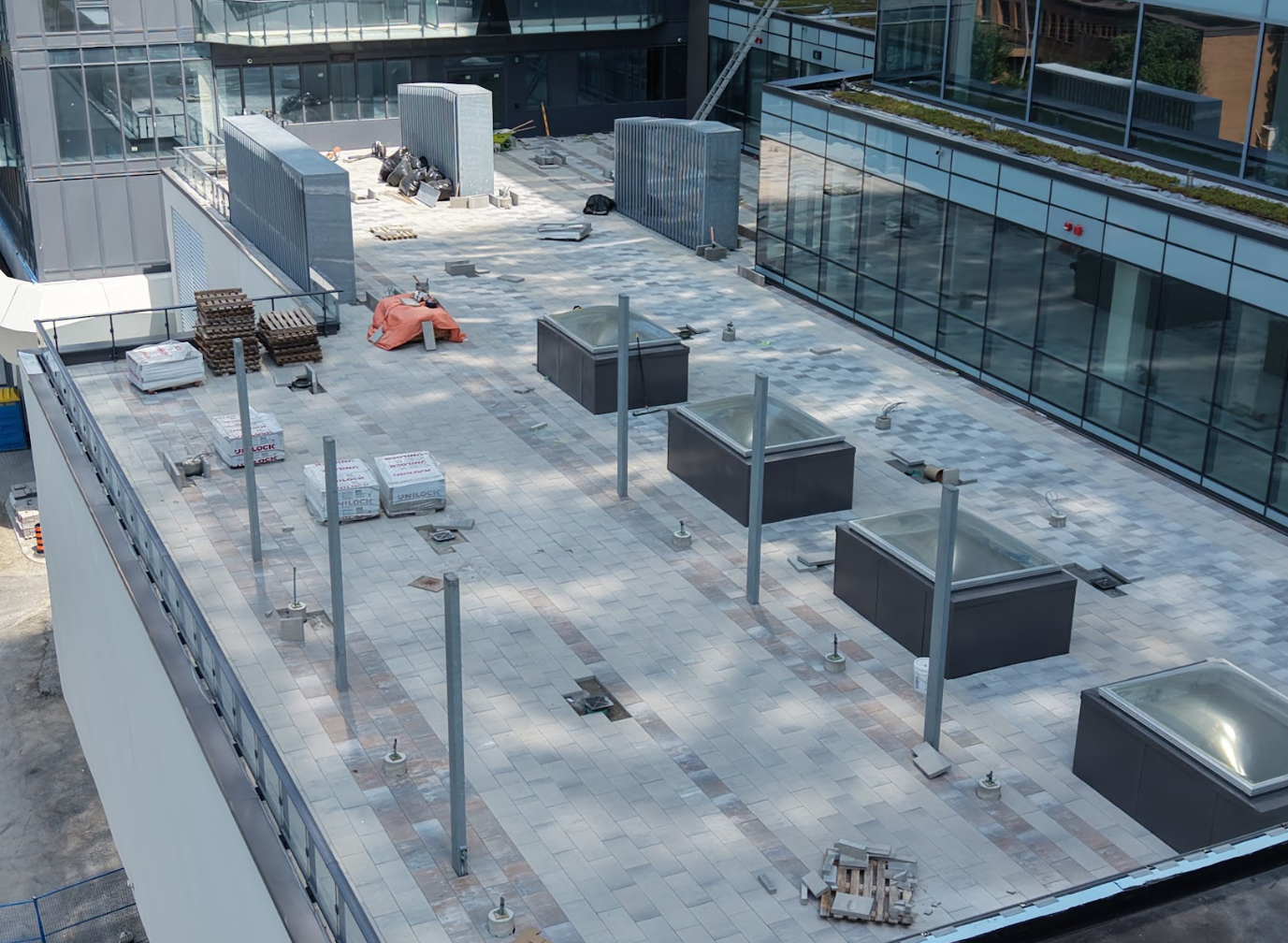
Interlocking Installation With Inadequate Base Preparation
A newly installed interlocking patio or walkway can look excellent even when important construction steps have been missed. The problems often appear later, when paving stones begin to settle, joints widen or sections of the surface become uneven.
The underlying foundation is responsible for supporting the finished paving and distributing expected loads. If excavation is insufficient, unsuitable soil remains beneath the surface or granular materials are poorly compacted, the installation may become unstable over time.
The consequences of inadequate preparation can vary depending on the affected feature:
|
Landscaping feature |
Common preparation mistake |
Possible consequence |
|
Interlocking patio |
Insufficient base compaction |
Uneven surface and localized settlement |
|
Driveway pavers |
Foundation unsuitable for vehicle loads |
Depressions and movement under traffic |
|
Flagstone walkway |
Inconsistent support beneath stones |
Rocking stones and uneven walking surfaces |
|
Retaining wall |
Inadequate foundation or drainage |
Tilting, movement or structural deterioration |
|
Landscape steps |
Poorly prepared supporting ground |
Uneven steps and unstable connections |
Ontario's freeze-thaw conditions make foundation quality particularly important. Moisture within susceptible soil can contribute to movement during freezing, while poorly compacted materials may settle under repeated use.
For example, a driveway installed over an inadequate base may initially appear identical to a properly constructed surface. After repeated vehicle traffic and seasonal temperature changes, however, depressions can develop around wheel paths or areas of weaker support.
TIP: When comparing landscaping estimates, ask what excavation, granular base preparation, compaction and drainage work is included. Two quotations may describe the same finished paving surface while proposing very different construction methods.
Choosing a contractor based exclusively on the visible design or the lowest initial price can therefore be misleading. The durability of most hardscaping features depends heavily on the quality of the work completed beneath them.
Landscaping in Vaughan With the Wrong Materials
Material selection affects the appearance, maintenance requirements and service life of outdoor features. Homeowners sometimes choose paving stones, natural stone or timber based entirely on colour, texture or price without considering whether the materials are appropriate for the intended application.
A decorative stone that performs well on a garden pathway may not be suitable for a driveway carrying regular vehicle loads. Similarly, materials used for retaining walls must meet the structural requirements of the installation rather than simply matching the property's architectural style.
Common material selection mistakes include:
- Choosing unsuitable paving stones. Materials should be selected according to expected pedestrian or vehicle loads.
- Ignoring surface texture. Outdoor walkways and steps require finishes appropriate for changing weather conditions.
- Selecting materials without considering maintenance. Different surfaces have different cleaning, sealing and repair requirements.
- Overlooking structural requirements. Retaining wall products must be compatible with the height, loads and construction design.
- Focusing exclusively on price. Inexpensive materials may not represent good value if they require frequent replacement or repairs.
For homeowners planning landscaping in Vaughan, professional landscape construction services are available through Landschaft Construction. The company works on residential projects involving interlocking patios, driveways, walkways, retaining walls and custom outdoor features across Vaughan and the Greater Toronto Area. Homeowners can consult its team regarding material options, project requirements and installation.
An important part of selecting materials is understanding how they interact with the underlying construction. For instance, even high-quality interlocking pavers may perform poorly if placed over an unsuitable base. Likewise, properly prepared foundations cannot compensate for paving products that are not designed for their intended loads.
Material selection should therefore be considered alongside the property's drainage, expected use and construction specifications.
A successful landscape renovation balances visual appeal with durability. Materials should complement the home while remaining appropriate for the environmental conditions and everyday demands of the outdoor space.
Landscaping Contractors and Poor Construction Practices
The final mistake involves choosing a landscaping contractor without sufficiently examining how the project will be executed. A visually appealing portfolio is useful, but homeowners should also understand the proposed construction methods, project responsibilities and scope of work.
Landscape construction requires several interconnected stages. Excavation, grading, base preparation, drainage, material installation and finishing all contribute to the final result. Problems can develop when these stages are rushed, poorly coordinated or excluded from the original estimate.
Before hiring a contractor, homeowners should review:
- Relevant experience. Look for completed projects involving similar materials, structures and property conditions.
- Detailed estimates. Confirm that excavation, materials, drainage and installation are clearly described.
- Construction specifications. Understand how foundations, edge restraints and other structural elements will be installed.
- Permits and approvals. Determine whether the proposed work requires municipal review or permits.
- Project scheduling. Clarify the expected construction sequence and arrangements for delays.
- Workmanship and aftercare. Ask about applicable warranties, maintenance guidance and procedures for addressing defects.
For example, a retaining wall project may require more than installing decorative blocks. Depending on the height and loading conditions, professional engineering and municipal approvals may be necessary. In Vaughan, retaining walls exceeding certain thresholds are subject to additional requirements, including engineered design in relevant circumstances.
Another common issue involves comparing quotations that include different amounts of work. One contractor may provide a detailed estimate covering demolition, excavation, base installation and site cleanup, while another offers a lower price but excludes essential preparation.
TIP: Request a written breakdown of the proposed work before approving a landscaping project. Make sure the quotation explains what will be constructed, which materials will be used and which additional costs might arise.
Good workmanship is not limited to precise paving patterns or clean finishing. It also involves following suitable construction procedures, protecting existing property features and ensuring the completed landscape functions as intended.

Creating Long-Lasting Landscaping in Vaughan
A successful landscaping renovation requires more than attractive materials and a well-designed patio. Careful planning, appropriate drainage, properly constructed foundations and suitable materials all influence how an outdoor space performs over time. When these elements are overlooked, homeowners may face repairs that could have been avoided during the initial construction process.
For Vaughan properties, seasonal temperature changes and local site conditions make technical preparation especially important. Understanding the property's existing drainage, selecting hardscaping materials for their intended purpose and reviewing contractor specifications can help homeowners make more informed decisions. These considerations are relevant whether renovating a small backyard in Maple, upgrading a driveway in Woodbridge or developing a larger outdoor living area elsewhere in Vaughan.
The best landscape improvements combine practical function, structural reliability and visual appeal. A properly constructed outdoor space should feel comfortable to use, complement the home and remain manageable through changing seasons. By prioritizing thoughtful planning and quality workmanship from the beginning, homeowners can create landscapes that provide lasting enjoyment rather than unexpected maintenance problems.