Nov8
Walpole Island First Nation re-elects Chief Leela Thomas
Bkejwanong voters returned Leela Thomas as chief on Sept. 19, with 504 of 982 ballots. A mixed new council takes the next two-year term under the Indian Act.
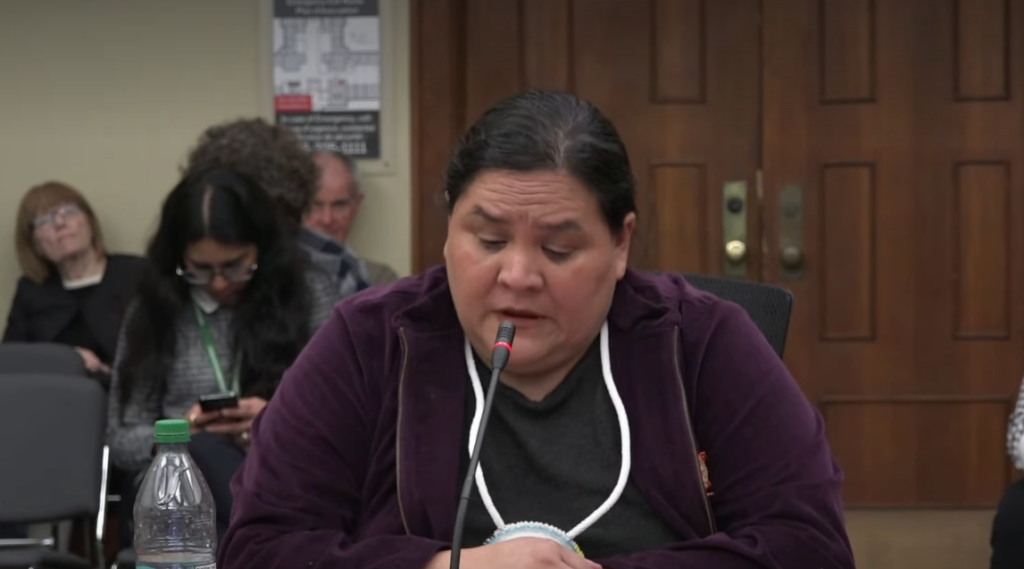
Bkejwanong voters returned Leela Thomas as chief on Sept. 19, with 504 of 982 ballots. A mixed new council takes the next two-year term under the Indian Act.
Chief Leela Thomas has been elected to a second two-year term at Walpole Island First Nation.
Voters went to the polls Saturday, Sept. 19, at the Governance Building on Tahgahoning Road. The official count gave Thomas 504 votes of 982 ballots cast for chief — just over half the vote, and more than double the total for runner-up Kennon M.L. Johnson, who received 208. Former chief Daniel Miskokomon finished third. Five other candidates were on the chief ballot.
Thomas first won the office in September 2024 with 607 votes after then-chief Miskokomon withdrew late in that campaign. In a social media post after Saturday’s count, she said she looked forward to serving the community again and working with the new council “in unity, respect, and shared purpose.”
Twelve people were elected to council from a field of 36. They are Charlene Altiman, Lee Kicknosway, Larissa Wrightman, Trenton Soney, Valarie Waboose, Jeffery Drew Isaac, Harmony Blackbird, Ava Williams, Kyle Dane Isaac, Carl H. Smith Sr., Sharon Elaine Coyle and Jason Sword.
Five of those names sat on the outgoing council: Altiman, Kicknosway, Soney, Blackbird and Sword. Seven are new to the table. Councillors in 2024-26 who do not appear on the new list include Anika Altiman, Clint Jacobs, Elaine Wrightman, Matthew Nahdee, Amy White, Judy Peters and Bruce Sands.
On the council ballot, 988 people voted and 17 ballots were rejected. Voting ran from 9 a.m. to 8 p.m. Electoral officer Vaughn Johnston ran the election. Details of a swearing-in ceremony had not been posted when the count was released.
The vote was held under the Indian Act, the 1876 federal statute that still sets two-year terms and the nomination rules for Walpole Island First Nation. Through the winter and spring, chief and council told members there was not enough time to finish a custom election code before this contest. They floated a possible move to the First Nations Elections Act — which would stretch terms to four years, stop candidates from running for chief and council at the same time, and change how mail-in ballots are issued — as a bridge until a community code could be written. That change was not in place for Saturday’s poll.
Two years is a short clock for the files already on the table. Walpole Island First Nation — Bkejwanong Territory, “where the waters divide” at the mouth of the St. Clair River — spent the last term fighting the proposed Dresden landfill on the Sydenham River, a fight the Journal covered when Bill 5 stripped the environmental assessment and when paddlers launched from Dresden in ceremony. The same term saw the community push toward a self-administered police service, commission the Sanjgon battery storage project near Tilbury, and watch the federal riding that now includes the territory get named, nearly stripped, and then kept as Sarnia–Lambton–Bkejwanong after Thomas said she had not been consulted on the attempt to drop the Anishinaabemowin name.
Those files do not reset with a new council. They sit with a leadership still bound to Ottawa’s election calendar, and with a community that has already said it wants longer terms and its own rules. Saturday’s result keeps Thomas in the chair. The next two years will show whether council can move the governance question as far as the work already in front of it.
More to read
 Former Salvation Army thrift store plans free merchandise giveaway Saturday
 County plans Nov. 9 opening celebration for Kathleen Avenue housing
 Indwell wins George Street appeal after years of resistance to supportive housing

Events
Nov8
cineSARNIA presents The President’s Cake
Sun, Nov 8 · 2:00 pm
Sarnia Public Library Theatre 124 Christina St. S Sarnia, ON
Nov8
Nov8
Nov8