


Nov24
Sarnia issues more permits, but they account for 54% fewer new homes
Sarnia issued more building permits through the first eight months of 2026 than during the same period last year, but those permits represented less than half as many new homes. The biggest change was multi-residential development, where permitted units fell from 64 to just seven.
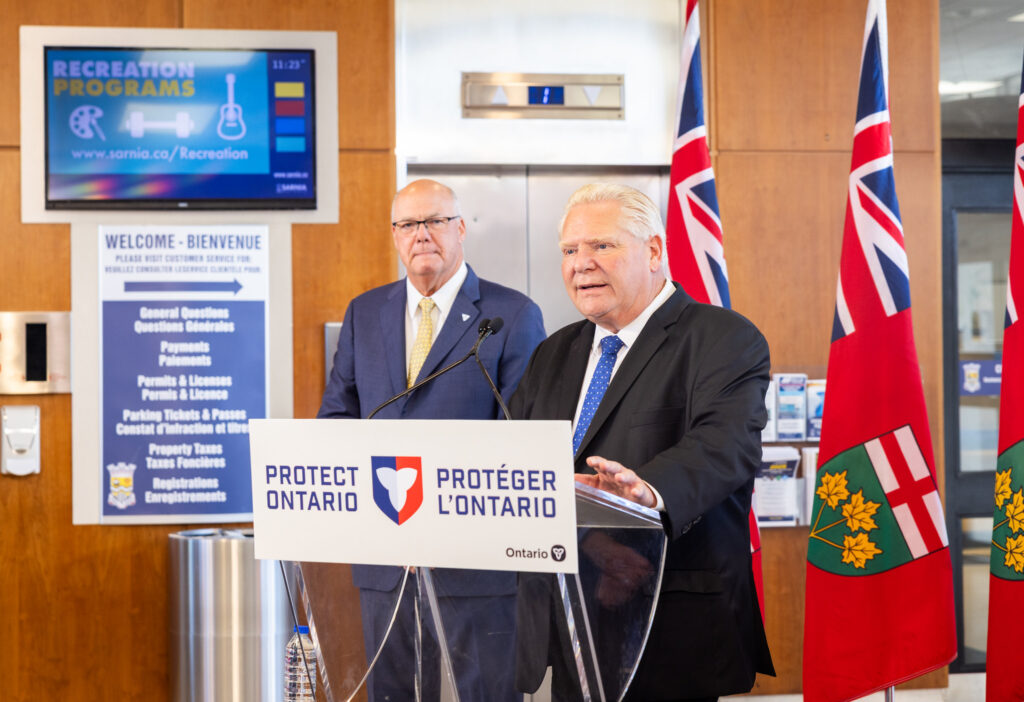
Sarnia has issued more building permits this year, but considerably fewer new homes are represented in those permits.
Between January and August, the City issued 309 building permits, up from 275 during the same eight months of 2025. Despite that 12 per cent increase, the number of new residential units represented by those permits fell from 89 to 41, a decline of about 54 per cent.
The largest change is in multi-residential housing.
Through August 2025, the City had issued eight multi-residential permits accounting for 64 new units. Six were townhouse or row-house units, while another 58 came from two apartment or other multi-residential permits.
During the same period this year, Sarnia issued just one multi-residential permit, accounting for seven units. No new units were recorded in the semi-detached, duplex, townhouse or row-house categories.
That amounts to an 89 per cent year-over-year decline in the number of multi-residential units reaching the building-permit stage.
Detached housing has moved in the opposite direction.
The City issued permits for 26 single-detached homes through August, more than double the 11 permitted during the same period last year. Additional dwelling units fell from 14 to eight.
Together, detached homes and additional dwelling units account for 34 of the 41 new residential units represented in this year's permit numbers. Multi-residential development accounts for the remaining seven.
A year earlier, the balance looked very different: 64 of the 89 units permitted through August were multi-residential.
The change comes as the City's own housing research points to demand for smaller and more varied forms of housing.
Sarnia's 2025 Housing Needs Assessment found the average household contains 2.2 people. Of the city's 32,190 households, 10,790 consist of one person and another 11,790 contain two people, together accounting for about 70 per cent of local households.
The report says those numbers show demand for smaller housing units, including one- and two-bedroom apartments, condominiums and townhouses.
The assessment also says Sarnia's planning policies target 45 per cent of new development within the existing built-up area, while calling for greater housing diversity.
Looking toward 2031, the assessment projects Sarnia's population will reach 80,843, an increase of about 12 per cent. It anticipates a housing stock of 36,529 units by then, including 8,613 apartments, 1,953 row-house units and 1,507 semi-detached units.
Building-permit statistics, however, can change dramatically when a single large development reaches the permitting stage.
That was evident last year.
By the end of 2025, Sarnia had issued 400 building permits representing 296 new residential units. Of those units, 251 were multi-residential. Four apartment or multi-residential permits alone accounted for 243 units.
That means about 85 per cent of all residential units recorded in Sarnia's 2025 permit report came from just 11 multi-residential permits.
It also helps explain why the City's permit numbers should not be directly compared with the housing figures used by the provincial government.
Ontario announced in June that Sarnia had achieved 654 new homes toward its 2025 provincial housing target, more than six times its annual target of 100, earning another $400,000 through the Building Faster Fund.
The provincial measurement is broader than conventional housing starts. Ontario's housing tracker counts housing starts alongside additional residential units, long-term-care beds, licensed congregate retirement-home suites and post-secondary student beds when measuring municipalities against their targets.
Global News reported earlier this month that almost half of the 654 homes credited to Sarnia were new student housing.
The City's latest permit statistics therefore do not show that housing construction itself has fallen by 54 per cent. They show that substantially fewer new residential units reached the building-permit stage during the first eight months of 2026 than during the same period last year.
The value of all construction represented by building permits has also declined.
Through August 2025, permits represented about $68.5 million worth of construction. During the first eight months of this year, that figure was $59.6 million, a decrease of about 13 per cent, despite the City issuing 34 more permits overall.
A large apartment development receiving a permit before the end of the year could quickly change the numbers.
But through August, Sarnia's permit records show a distinct shift in what is reaching the building-permit stage: more permits overall and more detached houses, but far fewer new homes coming through multi-residential projects.
More to read
 Ontario restricts housing around Cargill after years of local planning

 Sarnia’s aviation community celebrates its past with eyes on the future

Events
Nov24
SARNIA’S BEST TRIVIA at Refined Fool
Tue, Nov 24 · 5:00 pm
Refined Fool Brewing Co. Refined Fool Brewing Co Kids with Fur, 1308 London Rd, ON N7S Sarnia, ON
Nov24
Meat Raffles @ Black Gold Brewery
Tue, Nov 24 · 6:00 pm
Black Gold Brewery 395 Fletcher St Petrolia, ON
Nov24
Building a business plan for artists
Tue, Nov 24 · 6:00 pm
Nov24
Artist talk with Will Graham
Tue, Nov 24 · 6:00 pm
The Lawrence House Centre for the Arts 127 Christina St. South Sarnia, ON