Nov20
Social Issues Are Business Issues
Fri, Nov 20 · 8:00 am
Four Points by Sheraton 1498 Venetian Blvd Point Edward, ON
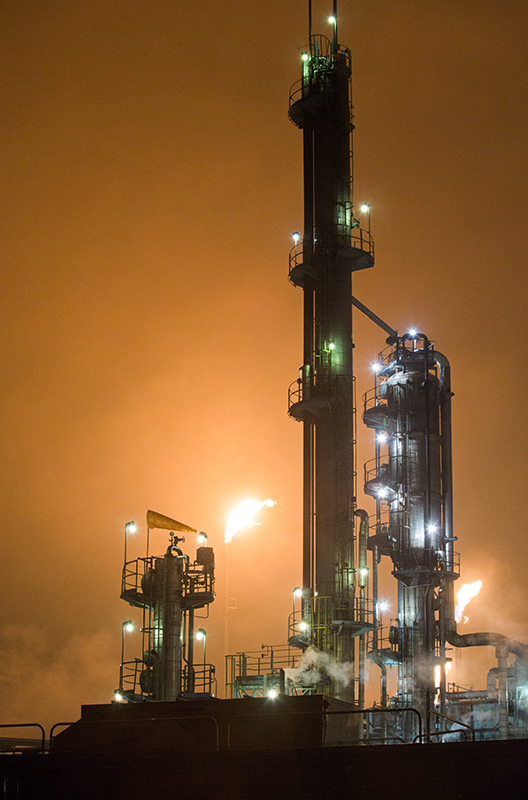
Flares serve an important safety function. Understanding their emissions takes chemistry, air monitoring and information residents should be able to access.

Diamond Petrochemicals’ maintenance notice tells neighbours to expect possible increased flaring and noise between Sept. 25 and Oct. 8. Flares are important safety devices, it explains. The notice says no community action is required.
For people living around these facilities, understanding that safety function is a starting point. There is still a flame burning industrial gases at industrial facilities near homes. Wanting to know what comes out of it is a reasonable response.
The chemistry helps. Hydrocarbons contain hydrogen and carbon. When they burn completely, they combine with oxygen to produce water and carbon dioxide. The flare transforms the gases, and even efficient combustion produces carbon dioxide that contributes to climate change.
When combustion is incomplete, other substances can leave the flame. Matthew Johnson, a Carleton University professor and scientific director of its Energy and Emissions Research Lab, explained that these can include carbon monoxide, unburned gases and soot, which contains black carbon. Black carbon contributes to warming, too.
What goes into the flare helps determine what comes out. The composition of the gas, its energy content, wind and the speed at which it leaves the equipment all affect combustion. Steam or air added at the flare tip can help suppress smoke, Johnson said, but too much can interfere with the completeness of the burn.
Flares can operate quite efficiently under suitable conditions. The difficulty for someone watching from their backyard is that the flame offers limited evidence of how well that is happening.
Significant black smoke would be concerning, Johnson said, but “it is difficult to glean much about flare performance by eye.” His explanation concerns flares generally; assessing a particular facility requires its operating information.
At Diamond, recovery equipment directs mixed butylene feedstock into storage for processing after operations restart, according to health, safety and environment manager Craig Journeay. That recovery process is not completely efficient, leaving material for the flare to handle.
Diamond also operates six monitors measuring 1,3-butadiene, which Journeay identified as the majority component of its feedstock. Health Canada identifies the substance as a carcinogen, making measurements of what reaches the surrounding air especially important.
These measurements describe concentrations in the surrounding air; they do not directly measure the flare’s exhaust or establish its combustion efficiency.
Diamond’s public monitoring reports identify sampling periods of roughly two weeks, alongside year-to-date averages. Those results describe conditions over time but cannot show when concentrations rose or fell within each sampling period. Whether additional, shorter-interval monitoring is available is a useful question for the company and regulator.
The 2026 report reviewed by the Journal ends with the Aug. 26–Sept. 9 sampling period, before this maintenance began. Journeay said previous shutdowns had not produced meaningful increases at the six monitors.
Residents can also follow the broader regional picture through the Clean Air Sarnia & Area dashboard.
Tracy Krull of the Bluewater Association for Safety, Environment and Sustainability, or BASES, said the regional network includes 15 stations. Different stations measure different pollutants, including benzene, 1,3-butadiene, sulphur dioxide and fine particulate matter. The network covers pollution from multiple sources.
The website updates hourly, with the latest readings generally appearing 15 to 20 minutes after the hour, Krull said. The near-real-time readings are preliminary and subject to quality checks. Station location and wind direction help provide context for elevated readings. A monitor measures the air where it stands; identifying the source can require further investigation.
Ontario’s environment ministry says the network helps it identify and respond to elevated emissions. Diamond must continue meeting applicable environmental approval, air-quality, noise and reporting requirements during maintenance, spokesperson Gary Wheeler said. The ministry can require corrective action or take enforcement measures.
That is useful infrastructure. Public access to the information behind a company’s performance claims matters alongside it.
Journeay said Diamond’s flaring rates on Sept. 25 were below the average for the rest of September up to that point, and that the company “achieved design combustion efficiency.” Asked for the quantities, efficiency percentage and supporting measurements or checks, he declined to provide the technical details.
“Our concern regarding answering with detail is our foreign competitors will use this information to their advantage,” he wrote. Diamond remained willing to answer further questions in plain language.
The company’s commercial concern deserves an explanation of what can still be disclosed about environmental performance. Residents should be able to see the basis for claims about the gases being burned near their homes. The Journal has asked the ministry what information it receives about Diamond’s flaring and what it can make public. Those answers would help residents understand how the oversight works in practice.
We have equipment to burn the gases, monitors to measure pollutants and a regulator empowered to act. Making the relevant results understandable and accessible should be part of that system. A maintenance notice could tell neighbours what is happening and give them a clear way to examine the evidence for themselves.


Fri, Nov 20 · 8:00 am
Four Points by Sheraton 1498 Venetian Blvd Point Edward, ON
Fri, Nov 20 · 10:00 am
Corunna Legion 350 Albert/Beckwith Streets Corunna, ON