Nov21
Trinity Ladies Guild CHRISTMAS MARKET
Sat, Nov 21 · 9:00 am
Trinity Anglican Church 1194 Murphy Rd Sarnia, ON
Stop Datacentres Sarnia wants council to impose temporary restrictions on new developments amid growing interest in the region and concerns over electricity demand, water use and environmental impacts.

A local advocacy group is urging Sarnia City Council to impose an immediate moratorium on data-centre development when the newly elected council holds its first regular meeting on Monday, November 23.
Stop Datacentres Sarnia is encouraging residents to contact councillors and demand temporary restrictions on new developments, warning that the city needs to act before potential projects advance and provincial legislation changes.
“This cannot wait,” the group declared in a public Facebook post promoting the campaign.
The request comes as Sarnia-Lambton attracts interest from prospective data-centre developers, raising questions about how the region would accommodate facilities requiring substantial electricity supplies, cooling infrastructure and industrial land.
In September, the Sarnia-Lambton Economic Partnership confirmed to The Sarnia Journal that developers considering Ontario had made inquiries about the region.
The agency declined to identify or confirm individual projects but said it had identified locations and infrastructure corridors across Sarnia-Lambton suitable for industrial investments requiring 100 megawatts of electricity or more. Those locations were identified for multiple industries, not specifically for confirmed data-centre developments.
The information provided by SLEP did not establish that a particular data-centre developer had selected a site, submitted a grid-connection application or secured municipal approvals.
Nevertheless, the prospect of large facilities locating in the region has raised questions about the demands they could place on local infrastructure.
Data centres house computer servers used for everything from online services to artificial intelligence. Their equipment operates around the clock, consuming electricity and generating heat that must be continuously removed.
The potential scale is considerable. A facility drawing 100 megawatts continuously would consume approximately 876 million kilowatt-hours of electricity annually. That is an illustrative comparison, not a confirmed requirement for any Sarnia-Lambton proposal.
Ontario’s Independent Electricity System Operator projects that data centres could account for 8.6 per cent of provincial electricity demand by 2050, reflecting their growing importance in long-term energy planning.
Water consumption is another consideration, although requirements vary considerably depending on the technology used.
Some facilities rely on evaporative cooling systems that consume water, while others use air cooling or systems designed to recirculate coolant with limited water losses. The design of any future Sarnia facility, including whether it would draw from municipal water supplies, remains unknown.
Large developments could also bring substantial construction activity and investment. However, permanent employment levels depend on the facilities involved, and the long-term economic benefits to surrounding communities cannot be determined from construction costs alone.
Lambton County Council has already directed planning staff to examine these potential impacts.
In September, then-mayor Mike Bradley introduced a motion, unanimously supported by county council, directing staff to prepare a report examining land use, zoning, electrical capacity, water consumption, environmental impacts, employment opportunities and municipal infrastructure requirements.
That report is expected in early 2027.
Other Ontario municipalities have already taken steps to restrict data-centre development while studying its potential consequences.
In August, Oakville council adopted a one-year interim control by-law, temporarily restricting new facilities in designated areas while municipal staff examine potential impacts and review local planning policies.
Oakville had not received a formal data-centre development application when it introduced the restrictions.
Under Section 38 of Ontario’s Planning Act, municipalities can temporarily restrict certain land uses while conducting planning studies. Such measures can initially remain in place for up to one year, with provisions allowing an extension to a maximum of two years.
Before adopting an interim control by-law, a municipality must direct a review or study of its land-use planning policies. Lambton County’s ongoing impact study would not automatically satisfy that requirement for the City of Sarnia.
A motion brought forward Monday could initiate the municipal process, but simply introducing a motion would not itself impose development restrictions.
Any eventual moratorium would depend on the terms of the by-law, including its duration, geographic coverage and the types of facilities affected. A Sarnia by-law would also apply only within city boundaries, rather than throughout Lambton County.
The advocacy group has also pointed to Bill 140, the provincial government’s proposed Building Ontario Faster Act, as a reason for urgency. Although the legislation proposes changes to Ontario’s planning laws, its published amendments do not explicitly remove municipalities’ authority to impose interim control by-laws.
The group is asking council to act at Monday’s meeting despite the issue not appearing on the published agenda.
Under Sarnia’s current consolidated Procedure By-law, a councillor may introduce a motion without advance notice if a majority of members present agree to allow it.
Monday’s meeting will be the first regular council session of the new term under Mayor Carrie McEachran, who defeated Bradley in October’s municipal election.
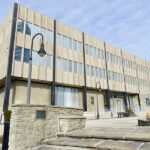
The meeting begins November 23 at 1 p.m. in council chambers at City Hall and will be livestreamed through the city’s website.
The group’s campaign information is available at sarnia.stopthedatacentre.ca/council.
Sat, Nov 21 · 9:00 am
Trinity Anglican Church 1194 Murphy Rd Sarnia, ON
Sat, Nov 21 · 12:00 pm
Refined Fool 1326 London Road Sarnia, ON