Nov21
Trinity Ladies Guild CHRISTMAS MARKET
Sat, Nov 21 · 9:00 am
Trinity Anglican Church 1194 Murphy Rd Sarnia, ON
Transit losses, emergency repairs and weaker interest revenue are adding pressure as the new council prepares to replace one-time funding used to hold down taxes.
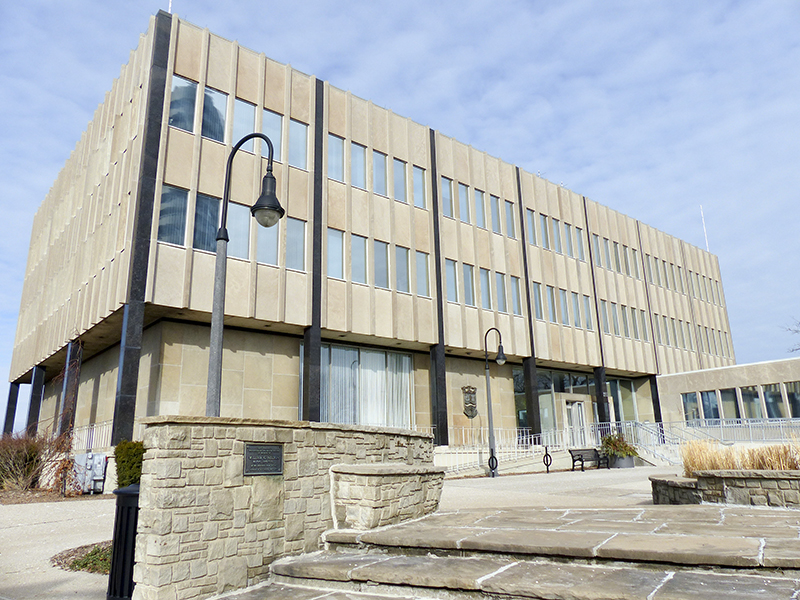
Sarnia’s new council faces a projected $2.3-million year-end operating deficit as it prepares a 2027 budget that must also replace one-time funding used to hold down this year’s tax increase.
The forecast, going to council Monday, combines a nearly $1-million transit shortfall with unexpected repairs, winter maintenance costs and lower interest revenue.
The third-quarter report, prepared using financial results through Sept. 30, projects a combined deficit of $2,297,774, or 1.17 per cent of the city’s $196.4-million operating budget. The figure remains an estimate and could change before the books close.
Monday’s recommendation is to receive the report, rather than approve a tax increase, service cut or plan to cover the shortfall.
The general operating budget, which includes policing but excludes transit, water and sewer, is forecasting a $1.27-million deficit. Transit accounts for another $993,088.
Water operations are forecasting a $178,189 deficit, while sewer operations expect a $146,078 surplus. Those water and sewer results will be handled separately through their respective reserves, rather than treated as money freely available to balance other city services.
The general and transit deficits together total about $2.27 million. Staff warn that covering them will put additional pressure on available reserves and could reduce funding for capital projects.
Transit’s shortfall is 11.19 per cent of its $8.87-million budget.
Staff attribute more than half a million dollars in lost fare revenue primarily to fewer international students attending Lambton College, reducing sales of passes and tickets as well as cash fares. The report says lower fare revenue is expected to remain a pressure in 2027.
The Journal has previously reported on the enrolment decline at Lambton College.
Transit salaries and benefits are also forecast to be $230,898 over budget, reflecting overtime and accounting allocations between conventional transit and Care-A-Van, while gasoline costs are expected to exceed budget by $130,827.
Staff identify $458,865 in additional arena maintenance costs, including equipment and building repairs at Clearwater and Progressive Auto Sales arenas, and emergency roof repairs and mould remediation at Pat Stapleton Arena.
Council approved approximately $210,000 from the Capital Infrastructure Reserve for Pat Stapleton roof work in July.
Winter maintenance is forecast to run $315,134 over budget, primarily because of weather early in 2026. The final amount will depend partly on conditions during November and December.
Park maintenance is expected to exceed budget by $200,808, reflecting unbudgeted repairs and installations and higher material costs.
Emergency work on the airport terminal’s exterior wall adds another $261,633. Staff say brick had separated from the building and required repairs for safety.
Utilities are forecast to exceed budget by $211,537, primarily because water use at the new Tecumseh and Germain park splash pads was not budgeted. Staff say the 2027 budget should account for that ongoing expense.
The city also expects net interest revenue to fall $411,640 short of budget, reflecting lower interest rates and the revenue assumptions in the approved spending plan.
Some savings offset those pressures. General operating salaries and benefits are forecast to come in $597,694 below budget because of vacancies and leaves.
The 2026 budget adopted under the previous council used money already accumulated in reserves, while reducing the amount set aside for infrastructure, to limit the property-tax increase.
The approved budget book lists one-time measures including a $3-million reduction associated with the Capital Infrastructure Reserve, a $2.5-million transfer from the general WSIB self-insurance reserve and approximately $2.1 million from the self-insurance reserve.
It also provided about $4.94 million to recover a forecast 2025 operating deficit, explaining that this reduced the infrastructure contribution. That earlier forecast is not an additional amount that can simply be added to the new 2026 shortfall.
The original reserve plan projected the Capital Infrastructure Reserve would end 2026 with no balance after planned funding and commitments. That is a budget projection, not confirmation of the account’s current balance or a statement that all city reserves are empty.
When the city announced adoption of the budget in December 2025, it put the increase in the city portion of residential property taxes at 3.95 per cent inside the transit levy area and 3.82 per cent outside it.
The report says future budgets must replace that temporary support while addressing service costs and infrastructure needs.
“These measures provided short-term relief but do not provide a recurring source of funding for ongoing expenditures,” the report states.
Staff explain that any deficit left unfunded by reserves or other available sources must be provided for in the following year’s budget. That means raising additional revenue, reducing expenditures or finding a combination that balances the plan.
Council will also consider proposed 2027 fees Monday. Individual transit tickets would rise from $2.85 to $2.95 and standard monthly passes from $88.50 to $90, while the $3.25 cash fare would remain unchanged. The quarterly report does not establish that those proposed increases would cover transit’s shortfall.
Police operations are forecast to finish on budget this year. Separately, the Journal reported in September that the police board had forwarded a roughly $41-million operating budget for 2027 and a separate $3.5-million headquarters repair request to the city. Those requests concern next year’s funding, rather than explaining this year’s projected shortfall.
Coun. Terry Burrell is seeking a broader accounting before the 2027 budget. His motion Monday asks for a four-year comparison of departmental budgets and actual results from 2023 through 2026, capital spending and its funding sources, reserve withdrawals and contributions, and opening and closing balance-sheet amounts.
Coun. Brian White separately proposes a one-year committee-of-the-whole pilot, meeting at least seven times annually, to review finances, capital projects, funding opportunities and community partnerships. Both proposals remain subject to council’s decision.
The $2.3-million forecast does not establish the size of a 2027 tax increase. Council must still decide how to cover the year-end shortfall and replace temporary funding in next year’s budget.
The public council meeting begins at 1 p.m. Monday, Nov. 23.
Sat, Nov 21 · 9:00 am
Trinity Anglican Church 1194 Murphy Rd Sarnia, ON
Sat, Nov 21 · 12:00 pm
Refined Fool 1326 London Road Sarnia, ON