A Guide to Online Gambling Laws Across Canadian Provinces
Canada’s gambling regulation is rather fragmented. Offshore gambling sites are broadly tolerated in a grey area across the country, but each province has their own take on internal rules. This article will break those differences down precisely, across open markets and provincial-backed models.
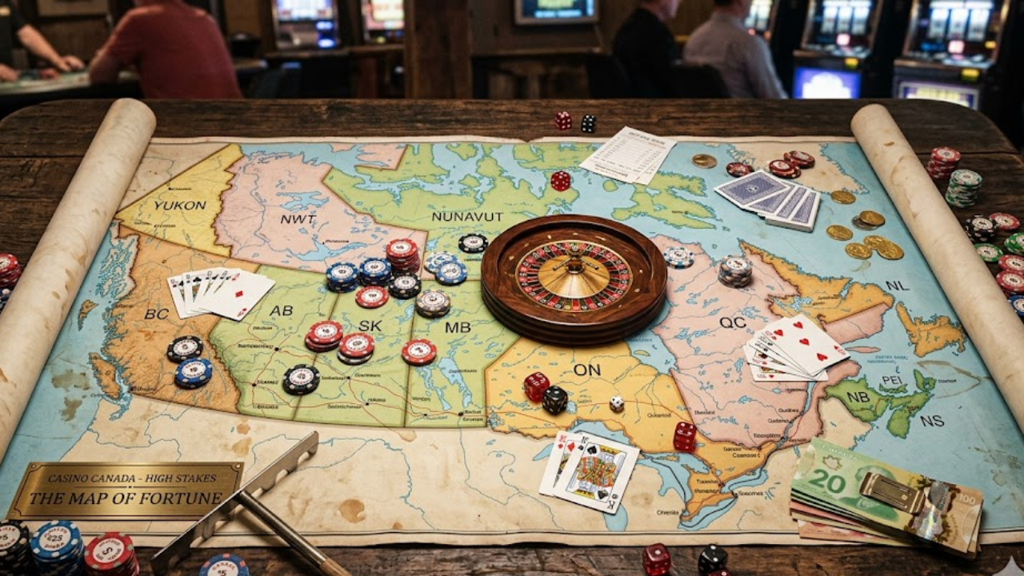
Ontario is the Most Open Market
Ontario was the first Canadian province to open a licensed and regulated market for online casinos, thereby excluding offshore operators. It is regulated by the Alcohol and Gaming Commission of Ontario and iGaming Ontario.
You only need to visit a comparison site for Ontario casinos like onlinecasino.ca to see how competitive the market is. These resources also show the amount of variance in bonus offers, game collections, payment options and other factors casino fans like to dig into before making a choice.
There are now over 70 licensed online casinos active in the province, including international operators and Canadian companies. Ontario's gamblers wager billions a year and the provincial government made hundreds of millions in taxes in 2025.
Gamblers must be 19 or over to participate. Gamblers' winnings aren't taxed. Operators must provide responsible gambling tools as a condition of license.
Alberta Will be Following Ontario's Lead Very Soon
Alberta has had its provincial PlayAlberta online casino and sportsbook since 2020. However, it failed to capture as much of the market from offshore operators as politicians wanted. Therefore in 2025 Alberta began preparations to follow Ontario's model.
Its fully regulated online casino and sportsbook market is set to open on July 13 2026. Some 32 operators are already in various stages of the license application process, with some already taking account pre registrations. Expectations are the market could take in more than a billion CAD in wagers in 2027.
Operators will have to provide responsible gambling features in a similar way to Ontario. Players must be 19 or older to take part.
B.C and Manitoba's Provincial Backed Operations
British Columbia and Manitoba share the PlayNow gambling platform operated by the British Columbia Lottery Corporation. It has operated as a provincial monopoly in BC since 2004, and Manitoba since 2013.
However, in recent years offshore gambling sites have increased their market share against the provincial operator. Manitoba Liquor & Lotteries has attempted to get courts to ban offshore operators in the province but to little success.
Gamblers using PlayNow or online lottery services must be 18 years of age. Gambling winnings are not taxed.
Saskatchewan's Indigenous-Led Market
Saskatchewan launched PlayNow Saskatchewan in 2022. It is operated through a partnership involving the indigenous-backed Saskatchewan Indian Gaming Authority.
Although it uses the same tech and platform as PlayNow in B.C and Manitoba, so gamblers can use the same account in all three, it is run under a bespoke revenue sharing model that was agreed after long consultations with indigenous groups.
Gamblers must be 19 years of age. The Saskatchewan Indian Gaming Authority also operates online lotteries and land-based casinos in the province.
Quebec's Distinct French Language Market
Quebec regulates online gambling through Loto-Québec and its Espacejeux provincially backed platform. Out of all the provinces Quebec has pushed back the most against offshore operators serving its citizens, but it too has had little success forcing national courts to take action.
LotoQuebec was founded way back in 1969. It started its provincial online casino operation Espacejeux in 2010. Loto-Québec is one of the more successful provincial operations, bringing in billions of dollars a year in revenue for the province.
Gamblers must be 18 or over to play. There are strong advertising controls, and offshore casinos often don't appeal as much to a specifically French-speaking market.
Atlantic Canada Shares a Regional Model
Nova Scotia, New Brunswick, Prince Edward Island and
Newfoundland and Labrador all share a single provincially-backed online gambling operation run by the Atlantic Lottery Corporation.
These smaller provinces (total population of around 2.6 million people) decided to split their infrastructure and regulatory costs by combining their market into one. The Atlantic Lottery Corporation runs its own online casino games, under that name.
Gamblers must be 19 or over. The Atlantic provinces have some of the more restrictive gambling laws of any Canadian region and they have few land-based casinos in the region either.
A Note on Offshore Casinos
Across all Canadian provinces except Ontario and soon to be Alberta, players can use grey area offshore casinos. That's because under Canada's Criminal Code players are not criminalised for gambling while casinos not based in the country are legally difficult to enforce bans on.
This is why Ontario changed to a regulated model, which makes it de facto illegal for any operator not licensed in the province to offer its services to Ontarian players.
Outside of that though, players are free to wager at offshore casinos for the most part. These are often licensed in places like Malta or Curacao. While they can offer strong consumer protections, they don't always – and Canadian laws have no power to enforce any on them. Therefore customers choose to play at their own discretion. As they do, to the tune of billions of CAD a year.