From Storage Room to Living Space: How GTA Homeowners Are Rethinking Their Basements
For decades, the average GTA basement held Christmas decorations, a treadmill no one used, and maybe a sump pump quietly doing its job. That’s changing fast. Homeowners across the region are converting these forgotten spaces into rental suites, home offices, and multigenerational living quarters, and the math behind it is hard to ignore.
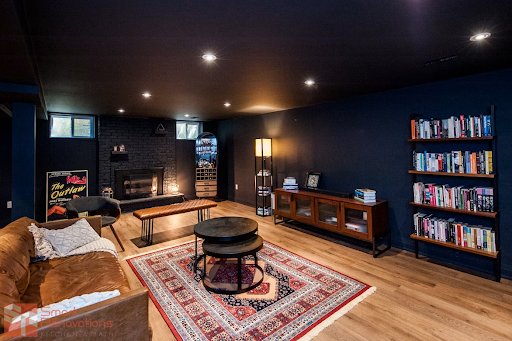
The Mortgage Problem That Started It All
Ontario's housing market has made homeownership expensive enough that owning a home often requires finding a way to make the home pay back. As of April 2025, the average cost of a home in the GTA sat at just over $1.1 million. That's a number that tends to focus the mind. A finished basement with a separate entrance stops being a "nice to have" and starts looking like a financial strategy.
Basement rental suites in Toronto and the surrounding municipalities can bring in anywhere from $1,400 to over $2,200 per month, depending on size and location. For a homeowner carrying a large mortgage, that figure can cover a meaningful chunk of monthly costs. It also explains why one in five Ontarians now lists a separate entrance as a key feature when searching for a home to buy, according to Wahi's 2025 homebuyer survey. People aren't just thinking about where they'll live. They're thinking about who else might live there, and what that arrangement could be worth.
Before any framing or drywall goes up, though, there's a step most contractors will bring up immediately: the condition of the foundation. For homeowners in dense urban neighbourhoods, basement waterproofing North York specialists often get called before the renovation crew, because moisture problems discovered mid-build don't just delay the project, they can erase the budget for it entirely.
What "Finishing the Basement" Actually Involves
The phrase sounds simple. It rarely is. A legal secondary suite in Ontario has to meet the provincial building code, local zoning rules, and fire safety requirements. Getting it wrong can mean fines between $25,000 and $50,000, and in some cases, loss of home insurance coverage. That's the part the Instagram renovation accounts tend to skip.
The typical checklist before a basement becomes a livable, rentable unit includes:
- Waterproofing and moisture barrier installation
- Proper ceiling height (Ontario Building Code requires a minimum of 1.95 metres in most cases)
- Egress windows for emergency exit compliance
- Separate electrical panel and meter where required
- Smoke and carbon monoxide detectors wired to code
None of this is impossible. But it's also not a weekend project, and the sequence matters. Waterproofing has to happen before insulation. Permits have to be pulled before walls close. Homeowners who reverse the order usually find out why that was a mistake.
Who's Actually Doing This
The profile of the GTA homeowner converting a basement has broadened considerably. It's not just landlords looking to build a portfolio. It includes:
- Young families who bought more house than they could comfortably afford and need rental income to stabilize
- Homeowners in their 50s creating a suite for an aging parent who wants proximity but not cohabitation
- Empty nesters who no longer need the space and see an obvious income opportunity sitting underneath them
The federal government noticed the trend too. In late 2024, Ottawa doubled the Canada Secondary Suite Loan Program limit to $80,000, offering 15-year terms at two percent interest. Whether or not that program moves quickly enough to matter is a separate conversation, but the policy direction is clear: more governments at more levels are actively trying to make basement conversions easier to finance.
The Numbers That Make It Worth the Disruption
A basement renovation in the GTA typically runs between $50,000 and $100,000 for a full legal suite, depending on scope and existing conditions. At $1,800 per month in rental income, that investment pays itself back in roughly four to five years. After that, the income continues and the property value has increased.
Sound like a straightforward calculation? It mostly is, once the foundation is sound, the permits are in order, and the contractor is licensed. The homeowners who end up regretting the process are usually the ones who skipped one of those three things, often the first one.
The GTA's housing crunch isn't resolving itself anytime soon. Average rents across the region remain well above $2,000 per month for a one-bedroom unit. The demand for basement suites as an affordable alternative to apartment renting is real and steady. For homeowners sitting on unfinished square footage, the question isn't really whether the space could be worth something. It's whether the foundation underneath it is ready for what comes next.