Nov17
Rotary Club of Sarnia online auction
Tue, Nov 17 · 12:00 am
Sarnia’s police-reported Crime Severity Index fell nearly 29 per cent last year, a dramatic decline that far exceeded Ontario’s 6.2-per-cent decrease, but does not mean the city recorded 29 per cent fewer crimes.
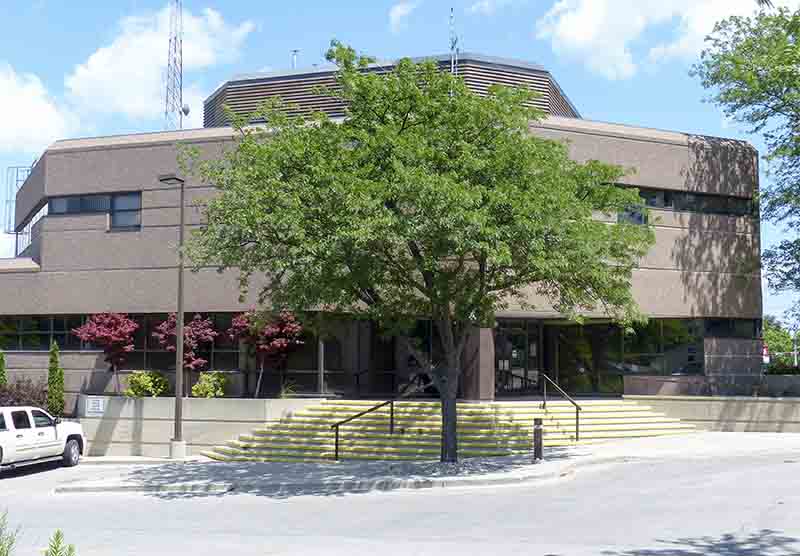
Sarnia’s police-reported Crime Severity Index fell nearly 29 per cent last year, a dramatic decline that far exceeded Ontario’s 6.2-per-cent decrease, but does not mean the city recorded 29 per cent fewer crimes.
Statistics Canada placed Sarnia’s overall Crime Severity Index at 62.26 in 2025, down 28.9 per cent from the previous year. The city’s violent index fell 31.5 per cent to 83.93, while its non-violent index fell 27.2 per cent to 54.12.
Sarnia Police said the overall and non-violent readings were the lowest the service has recorded, while the violent index returned to approximately its 2019 level.
Across Ontario, the overall index fell 6.2 per cent, the violent index declined 8.7 per cent and the non-violent index dropped 4.7 per cent.
But the Crime Severity Index does not measure crime in the way many readers may assume.
Unlike a conventional crime rate, which measures the volume of police-reported crime relative to population, the index assigns each offence a weight reflecting how often people convicted of that offence are imprisoned and the average length of their prison sentences.
A homicide, robbery or serious assault therefore has a much greater effect on the index than shoplifting, mischief or minor theft.
That makes Sarnia’s unusually severe 2024 an important part of the story.
The city recorded four homicides in 2024 after recording none the year before, helping push its violent Crime Severity Index to a record 121.41. Police acknowledged at the time that the homicides contributed to the increase.
The sharp decline in 2025 therefore came from an elevated starting point. A reduction in only a few of the most serious offences could drive the index down substantially even if more common crimes, calls for assistance or visible street disorder did not decline by nearly as much.
Sarnia Police did not identify which individual offences contributed most to the 2025 decrease. Its release also did not include Sarnia’s conventional crime rate for 2025, the measure that more directly tracks the volume of police-reported crime.
The Police Service’s own annual report shows a mixed pattern among its operational call classifications.
Break-and-enter calls fell from 366 in 2024 to 253 in 2025, a decline of nearly 31 per cent. Theft calls dropped from 1,072 to 826, mischief declined from 505 to 383 and fraud fell from 405 to 339.
Weapons-related calls also declined from 181 to 108.
Other categories moved in the opposite direction.
Assault calls rose slightly from 402 to 408, while shoplifting calls nearly doubled, increasing from 424 to 822.
Those figures are not directly comparable with the finalized offence data submitted to Statistics Canada. Calls for service can include reports that are later determined not to involve a crime, while several calls may concern the same incident.
Police also warn in the annual report that some of the large year-to-year changes resulted from work to “properly classify events.”
That qualification may be significant.
The report shows mental-health calls rising from 254 to 1,030 and motor-vehicle-collision calls increasing from 638 to 1,721. Meanwhile, missing-person calls fell from 275 to 55, impaired-driving calls dropped from 300 to 112 and disturbing-the-peace calls declined from 1,182 to 661.
Some of those movements may reflect genuine changes in demand, but the scale of the differences suggests that changes in how incidents were recorded or categorized also played a role.
The report contains another unresolved discrepancy involving intimate-partner violence.
Its general calls-for-service table lists 1,491 intimate-partner-violence calls in 2025, up from 1,372 in 2024.
But a separate section says police recorded 1,470 IPV occurrences in 2025, representing an 8.1-per-cent decrease from the previous year.
The figures may come from different datasets, such as initial dispatch classifications compared with incidents later confirmed as intimate-partner violence, but the report does not explain the distinction.
The decline in the 2025 Crime Severity Index also does not contradict more recent reports of increased arrests and charges.
Between Jan. 1 and June 1 of this year, Sarnia Police recorded 16,760 occurrences, made 1,501 arrests and laid 2,850 charges. Charges were up 27 per cent compared with the same period in 2025, while arrests increased five per cent.
Those numbers concern 2026, while the newly released Crime Severity Index covers 2025. They also measure different things.
An occurrence can involve a traffic stop, welfare check, ambulance assist, unwanted person or other request for police that does not result in a confirmed criminal offence. One incident can produce several charges, while an arrest may relate to an outstanding warrant, bail violation or offence reported during an earlier period.
Sarnia Police also reported that its weighted clearance rate rose 25.5 per cent to 70.28 in 2025. Its violent weighted clearance rate reached 92.54, while its non-violent rate climbed to 56.48.
The weighted clearance rate is not simply the percentage of crimes committed in 2025 that police solved during the same year.
Like the severity index, it gives greater weight to more serious offences. It can also include older cases cleared during the reporting year.
Cases may be cleared by charge or “cleared otherwise,” meaning police identified an accused and had sufficient grounds to proceed, but no charge was laid for a recognized reason.
A small number of serious or linked investigations can consequently have a disproportionate effect on the weighted result.
There is also evidence that Statistics Canada revised Sarnia’s 2024 figures before calculating the latest percentage changes.
The Police Service’s annual report, released in June, listed Sarnia’s 2024 overall index as 86.98, its violent index as 121.41 and its non-violent index as 73.96.
The percentage changes in the new release do not calculate exactly from those figures, even after accounting for ordinary rounding.
Statistics Canada accepts revisions to the previous year’s Uniform Crime Reporting data before the next annual release and calculates percentage changes using unrounded values.
The figures suggest the latest release used a revised 2024 baseline, but Sarnia Police has not explained what produced the difference from the numbers published in its annual report.
Those apparent revisions are relatively small and do not explain most of Sarnia’s 29-per-cent decline.
Deputy Chief Michael Van Sickle said the results reflected the work of police members and the community, while cautioning that one year’s statistics do not define the overall public-safety picture.
That caution is warranted.
The available figures support the conclusion that the statistical severity of Sarnia’s police-reported crime fell substantially in 2025, particularly after an exceptional four-homicide year.
They do not establish that every form of crime declined, that residents experienced 29 per cent fewer incidents or that demand on police fell by a similar amount.
A complete explanation will require offence-level figures showing what happened to homicide, robbery, serious assault, sexual assault, break-and-enter, vehicle theft, fraud and other major categories, and how much each contributed to the change.
 Lambton County seeks help assessing risks from legacy oil and gas wells
 Sarnia Semper: Mike Bradley’s 41 years in public life


Tue, Nov 17 · 12:00 am
Tue, Nov 17 · 6:00 pm
Black Gold Brewery 395 Fletcher St Petrolia, ON
Tue, Nov 17 · 7:00 pm
Cogeco Your TV Channel 6 – HD Channel 700 [OR] Stream with Epico App Sarnia, ON