


Nov24
Guest Column: It’s the unseen part of poverty that damages families
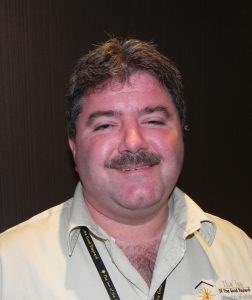
Myles Vanni Poverty is much like an iceberg – 10% is above the surface and visible and 90% is hidden and poses the greatest risk. Myles Vanni It was the hidden part of the iceberg that ripped a hole in the Titanic and sank it.

Myles Vanni
Poverty is much like an iceberg – 10% is above the surface and visible and 90% is hidden and poses the greatest risk.
It was the hidden part of the iceberg that ripped a hole in the Titanic and sank it. Likewise, it’s the everyday things we don’t see that can do damage to a family.
Which is why the Poverty Reduction Network of Sarnia-Lambton each year recognized Oct. 17 — a day the United Nations General Assembly designated to promote the eradication of poverty.
We think about hunger and we think about homelessness, as these are visible things. But what about a child’s birthday, or back-to-school time, or winter coats and Christmas?
What do you do when the car breaks down and you have to get it fixed to get to your part-time job? How do you manage when a family member gets sick and needs medication or dental work or glasses, and you can only find part-time work with no benefits?
Many local residents are working two and three part-time jobs to make ends meet. When an everyday life crisis hits, they face some gut-wrenching decisions – medicine or food, fix the car or pay rent, provide school supplies or pay the hydro bill.
Food banks, which started in the early ‘80s, were only supposed be a temporary measure until the economy improved. Yet, decades later, they’ve become a mainstay in our society.
A single person on social assistance receives a maximum of $733 a month. How does one possibly live on that? A single person on disability receives just over $1,100 a month. Punishing assistance rates like those guarantee the ongoing need for community resources and food banks!
Each month, 1,700 people access The Inn of the Good Shepherd’s food bank. And 65% of them are employed, recently lost their job, or are on a retirement pension or disability pension. Think of that – they’re working, lost a job, have worked a lifetime, or physically can’t work. That certainly dispels that myth that people are just too lazy to get a job!
Each night, The Inn cares for more than 200 people in its shelter programs. Before the pandemic, it was 35 to 40 people nightly. That’s a 500% increase.
Drastic increases in apartment rents and lack of availability and affordability of units have made it extremely difficult to find housing.
What can be done? Increasing the minimum wage to a living wage (see www.ontariolivingwage.ca), adding affordable housing benefits, building more affordable housing, increasing social assistance rates, and providing adequate community supports would be steps in the right direction towards addressing poverty in our community.
Myles Vanni
On behalf of the
Poverty Reduction Network
Executive Director,
Inn of the Good Shepherd
Sarnia
More to read
 Ontario restricts housing around Cargill after years of local planning

 Sarnia’s aviation community celebrates its past with eyes on the future

Events
Nov24
SARNIA’S BEST TRIVIA at Refined Fool
Tue, Nov 24 · 5:00 pm
Refined Fool Brewing Co. Refined Fool Brewing Co Kids with Fur, 1308 London Rd, ON N7S Sarnia, ON
Nov24
Meat Raffles @ Black Gold Brewery
Tue, Nov 24 · 6:00 pm
Black Gold Brewery 395 Fletcher St Petrolia, ON
Nov24
Building a business plan for artists
Tue, Nov 24 · 6:00 pm
Nov24
Artist talk with Will Graham
Tue, Nov 24 · 6:00 pm
The Lawrence House Centre for the Arts 127 Christina St. South Sarnia, ON