Nov13
Sarnia City/County Council Candidate Questionnaire
Every certified candidate for Sarnia City/County Council received the same 11 questions. Five answered in writing. One submitted a video. Eleven did not respond. Replies appear in the candidates’ own words. This is not an endorsement. It is a public record for voters ahead of the Oct. 26 election.

The Sarnia Journal offered every certified City/County Council candidate the same published space before election day. The point is simple: voters should be able to read what each person running for city and county council actually said, side by side, before they mark a ballot on Oct. 26. That is due diligence. It is also the work the Sarnia Journal is here to do — put the questions, the numbers and the answers in front of the public and let readers judge.
City/County Council candidates answered an 11-question survey on housing, policing, BACE, the waterfront, downtown, Bluewater Power, county housing numbers, homelessness and how the city and county work together. Responding candidates are listed first, alphabetically, followed by candidates who did not return a questionnaire.
Click here for Sarnia City Council Candidate Questionnaire
Click here for Sarnia Mayoral Candidate Questionnaire
Candidate 1
Patrick Coutu
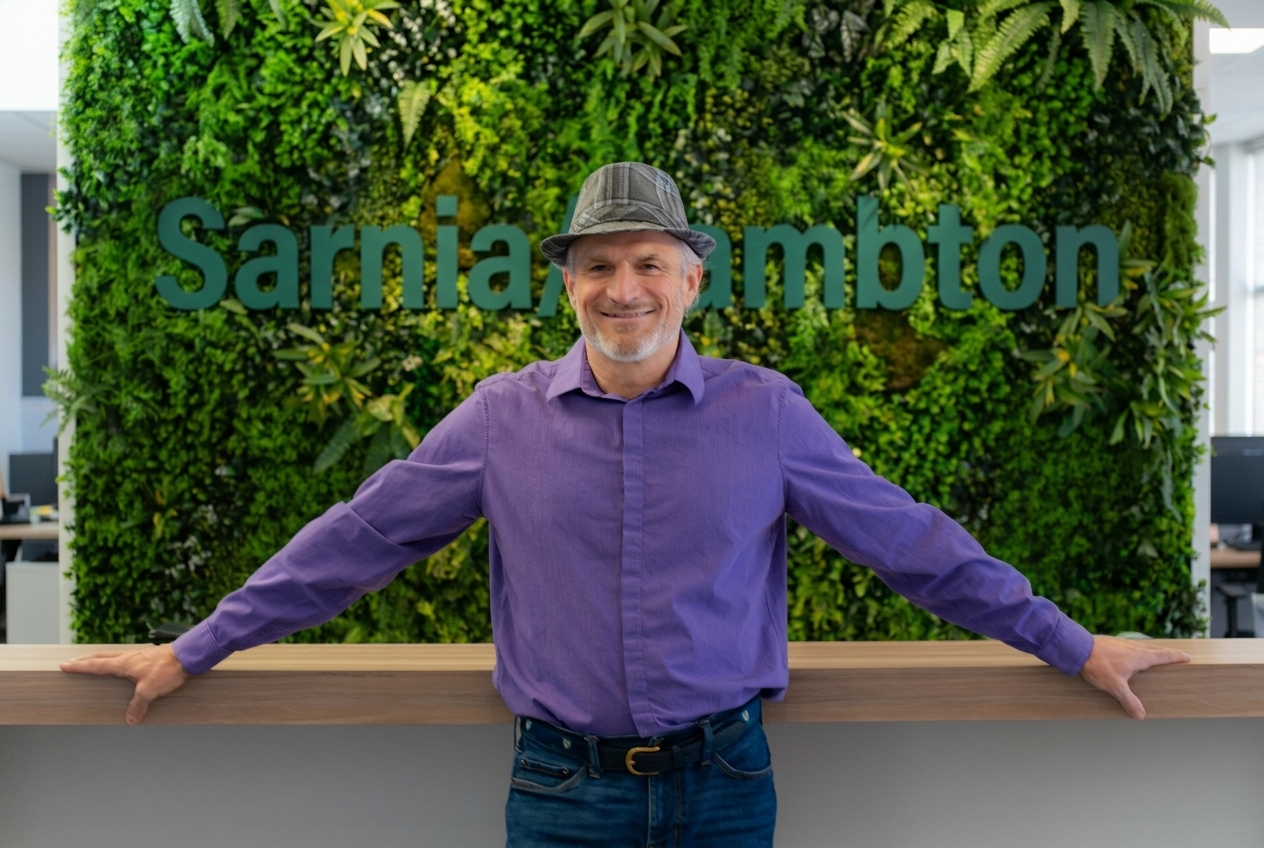
I have lived in Sarnia since 1975 and I am proud to call this city my home. I am dedicated to helping improve our city for all community members, including my 16-year-old daughter. Sarnia has many challenges but more opportunities. I believe bringing in more revenue for the city and creating more local jobs for the citizens should be the priorities for the next Council.
1. Housing — Sarnia recorded 654 housing starts in 2025 and collected another $400,000 from Ontario’s Building Faster Fund. Lambton’s own plan says the county still needs 1,096 affordable and specialized homes over 10 years, including 412 rent-geared-to-income units. About 1,000 households are on the community-housing wait list. Rents have risen 38 to 42% since 2020, and the county lost a net 190 affordable rentals between 2016 and 2021. What city tools will you use so new supply includes homes people who already live here can afford — not only market units that clear a provincial scoreboard?
To create more affordable housing, we need a system that is viable for the builders that are developing these units. One option is offering tax increment grants or rebates to make affordable housing projects financially viable. Waiving or reducing steep municipal building fees specifically for rental housing is another option. Additionally, we need to attract good jobs to the community – that will help with affordability.
2. Police spending — When Derek Davis became chief in 2022, the Sarnia Police Service operating budget was $27.36 million. The board has now sent a 2027 operating figure of about $41 million to city council — roughly $14 million more per year than that 2022 baseline. Percentage increases have been getting smaller. The dollar total has not. If you are elected, will you push the police board to freeze or cut operating spending, and what number would you accept? If you now sit on that board, or recently did, say how you voted on these budgets and whether you would vote differently next term.
The City’s budget should be approached in the same way that the people and businesses of Sarnia approach their own budgets. What are our priorities and musthaves and how much do we have to spend on them before we can choose to spend the rest of our income on other things? The Sarnia Police Service budget is no different. Policing is very important and requires proper funding relative to the other priorities of the City.
3. The police headquarters — Financing for a new headquarters in the $91-million range was pulled from the 2026 city budget. The service is leasing two off-site locations. Christina Street remains headquarters. What should happen next: a new central building, a cheaper distributed model, a real repair-and-reuse plan for the station that exists, or something else?
The next step for deciding the best way forward should be a full ‘cost vs. benefit’ analysis for all of the options available. This is an important step in all major decisions facing the City and allows leaders to make informed decisions. This process includes being clear about what our actual needs are as well as a discussion about what we can afford today and into the future. One option to consider is to renovate the existing building to house the “jail and policing operations” and to acquire or build an additional small building to house the “administrative” activities of the Sarnia Police Service.
4. The armoured vehicle — In May 2026 the police board approved buying a used 2013 Terradyne Gurkha armoured rescue vehicle from Bruce Nuclear for $20,000. New versions cost hundreds of thousands. The service says it is a defensive vehicle for high-risk calls, not daily patrol. Do you support Sarnia owning this vehicle? What limits would you put on when it can be deployed, and who should publish the real cost of upfitting and maintaining it?
The Sarnia Police Service needs to determine what their operational needs are to effectively protect our community. Every capital investment made by the City needs to be connected to the strategic plan and clearly demonstrate how it supports our goals and objectives. All City departments need to be accountable for the choices that they make on investments and major spends – the budgeting and reporting processes are designed to ensure that citizens of Sarnia understand the costs of the services being provided.
5. Sarnia BACE — Council has already put city money behind the BACE sport and activity campus. The Curran family donated the 27 acres. What is your position on the city’s remaining capital role, on operating risk if revenues fall short, and on guaranteed public and low-barrier access so this does not become a private-club facility with a municipal invoice?
I believe that Sarnia needs more infrastructure when it comes to sports facilities and fun spaces for kids and families. The BACE facility is a great opportunity to deliver more facilities and programs to the community and we should take full advantage of the generous donation made by the Curran family. By exploring different operating models and partnerships and developing this asset in the right way, the City can ensure that the BASE facility is something that all families can benefit from and all of Sarnia can be proud of.
6. The waterfront — Council adopted the Downtown Waterfront Master Plan in 2022 — about 3.5 kilometres of public shoreline, a 15-year horizon, and a $55-million (2021 dollars) capital and operating program. Ferry Dock Hill is the first major piece. Are you committed to moving that plan forward in the next term? What is the first project you would fund, and what would you refuse to let private towers or industrial conflict quietly replace?
Sarnia’s waterfont has always been one of our greatest assets and biggest opportunities. We need to move the waterfront master plan forward but it was never designed to be completed all at once. It needs to be reviewed through a 2026 lens in terms of what we can afford and what is our biggest priority right now. The work should start with those projects that will provide income/revenue back to the city – these projects will help to fund the rest of the items on the plan. If we wait for the perfect time, nothing will ever happen. Yes, I would like to see the Ferry Dock Hill project move forward asap. I made a proposal to council in 2025 outlining a business case for why the Ferry Dock Hill project should be funded. My request was denied.
7. Downtown vacancies, small business and public art — Vacant storefronts on Christina and Front are an ownership and grant-design problem, not a branding problem. Murals and other public art in Sarnia have been paid for by a patchwork of Creative County grants, city facade money, nuSarnia, property owners and volunteers. Studies of mural streets elsewhere link them to higher foot traffic when they sit next to restaurants and shops — not when a painting is dropped onto a dead block. Would you expand or redesign the downtown / Mitton Village Community Improvement Plan grants, and should the city create a dedicated multi-year public-art budget with artist pay standards?
I believe that attractive public spaces draw visitors, shoppers, and tourists who support nearby businesses. I have some good experience with this. My partner and I funded an epic mural on Front St. which was installed in 2025 by 2 amazing local artists Kennady Rayn and Taryn Henry. We also received funding contributions from the city, the county and NuSarnia. The Community Improvement Plan grants are a great tool but could benefit from better promotion.
8. Bluewater Power — Sarnia owns about 86% of Bluewater Power. The 2000 shareholders’ agreement kept politicians off the operating board. Council, as majority shareholder, annually confirms the directors on a slate recommended by Bluewater’s own nominating committee. The utility returned just over $3.3 million to Sarnia in 2024. Should a city councillor sit on that board, or should the independent-board model stay? What extra public reporting, if any, do you want from a company the city already owns?
Yes I believe it is in the best interests of the City for a council member to sit on the board of Bluewater Power. As the major shareholder, the City should be at the table and should have visibility to the strategy and the performance of Bluewater Power.
9. The county housing numbers — Lambton is the housing and homelessness service manager. The county still needs 1,096 affordable and specialized homes over 10 years, including 412 rent-geared-to-income units. About 1,000 households are on the wait list, and the county’s own assessment counts roughly 700 suppressed households already living here. If you sit on county council, what number will you accept being measured on this term — units approved, units opened, or shelter beds closed — and what city-side zoning or process change would you make so those projects do not die at Sarnia’s planning table?
As a county councillor I will want to be measured on increasing the overall income to the city. I want to use that additional revenue to reduce the tax burden on all citizens and have housing that is affordable for the approximately 16,000 members of our community who are struggling with paying basic essentials like housing, groceries and utilities.
10. Homelessness is a housing issue — Supportive and affordable housing files in Sarnia have repeatedly hit neighbourhood opposition, extra conditions and delay even when they meet the official plan and the building code. Encampments and overflow shelters remain the visible edge of the shortage. How would you stop a project that meets the rules from being delayed to death, and what should happen when people are living in parks?
Homelessness is a complicated issue that is not only solved with housing. Many departments and agencies need to have input and provide their expertise. Additionally, residents have the right to have their say in a zoning applications. At the end of the day, Council needs consider all of the information available and make decisions that are in the best interests of the entire community.
11. City and county — Sarnia has five votes on Lambton County council. Housing, homelessness and social services sit at the county table; planning and policing sit at the city. What is underfunded at the county, what Sarnia habit makes the county’s work harder, and what would you change first in how the two councils work together?
Sarnia has strong representation on the county council with 5 voting members. Having members on council who are collaborative will be the best way to solve any deficiencies that might exist or arise in the future. I would like see the City and the County work together on their priorities for roads and infrastructure to maximize the funding and to see if more is required.
Patrick Coutu
Candidate 2
Mario Fazio
Mario Fazio submitted a video response instead of written answers.
Mario Fazio
Candidate 3
Ed Gresham
1. Housing — Sarnia recorded 654 housing starts in 2025 and collected another $400,000 from Ontario’s Building Faster Fund. Lambton’s own plan says the county still needs 1,096 affordable and specialized homes over 10 years, including 412 rent-geared-to-income units. About 1,000 households are on the community-housing wait list. Rents have risen 38 to 42% since 2020, and the county lost a net 190 affordable rentals between 2016 and 2021. What city tools will you use so new supply includes homes people who already live here can afford — not only market units that clear a provincial scoreboard?
I will use tools such as the waiving of municipal development fees that are funded by the province. I will work closely with provincial, county and city representatives in order to meet provincial goals for affordable housing. This means connecting Sarnia with more funds from the province in order to build more affordable housing.
2. Police spending — When Derek Davis became chief in 2022, the Sarnia Police Service operating budget was $27.36 million. The board has now sent a 2027 operating figure of about $41 million to city council — roughly $14 million more per year than that 2022 baseline. Percentage increases have been getting smaller. The dollar total has not. If you are elected, will you push the police board to freeze or cut operating spending, and what number would you accept? If you now sit on that board, or recently did, say how you voted on these budgets and whether you would vote differently next term.
Our front line police officers are a crucial asset to our community. They must be fairly compensated relative to other municipalities. However, the portion of the police budget that is not spent on personnel and essential resources, but rather on paramilitary equipment (which is not necessarily suited to our community’s needs), is obviously a driving force in the annual budget increases.
3. The police headquarters — Financing for a new headquarters in the $91-million range was pulled from the 2026 city budget. The service is leasing two off-site locations. Christina Street remains headquarters. What should happen next: a new central building, a cheaper distributed model, a real repair-and-reuse plan for the station that exists, or something else?
Sarnia deserves a simple, transparent and inexpensive cost-benefit analysis of these options, in order to assist Council in coming to the proper conclusion.
4. The armoured vehicle — In May 2026 the police board approved buying a used 2013 Terradyne Gurkha armoured rescue vehicle from Bruce Nuclear for $20,000. New versions cost hundreds of thousands. The service says it is a defensive vehicle for high-risk calls, not daily patrol. Do you support Sarnia owning this vehicle? What limits would you put on when it can be deployed, and who should publish the real cost of upfitting and maintaining it?
Sarnia Police need equipment that is suited to the needs of the community. Items such as a Gurkha armoured rescue vehicle are not appropriate to the needs of the Sarnia police force and the community it serves. The rationale provided for its purchase is one of the reasons for the increase in the police budget.
5. Sarnia BACE — Council has already put city money behind the BACE sport and activity campus. The Curran family donated the 27 acres. What is your position on the city’s remaining capital role, on operating risk if revenues fall short, and on guaranteed public and low-barrier access so this does not become a private-club facility with a municipal invoice?
In order to create a self-sustaining facility, that does not drain City coffers, I propose BACE follow a YMCA model that gears fees and memberships according to individuals’ and families’ needs. Obviously, BACE must be easily accessible by the Sarnia Transit System.
6. The waterfront — Council adopted the Downtown Waterfront Master Plan in 2022 — about 3.5 kilometres of public shoreline, a 15-year horizon, and a $55-million (2021 dollars) capital and operating program. Ferry Dock Hill is the first major piece. Are you committed to moving that plan forward in the next term? What is the first project you would fund, and what would you refuse to let private towers or industrial conflict quietly replace?
As Ferry Dock Hill is the first segment of the waterfront/shoreline plan, Council needs to expedite this project, as it is a gateway and an attraction to downtown businesses. As a source of revenue, a balance of taxpaying properties in the industrial, commercial and residential sectors needs to be a part of waterfront development. Many port cities around the world and Canada have been able to achieve a balance of lifestyle, industry and financial sustainability on their waterfronts. Clearly, there are models that Sarnia can learn from and adapt to our community.
7. Downtown vacancies, small business and public art — Vacant storefronts on Christina and Front are an ownership and grant-design problem, not a branding problem. Murals and other public art in Sarnia have been paid for by a patchwork of Creative County grants, city facade money, nuSarnia, property owners and volunteers. Studies of mural streets elsewhere link them to higher foot traffic when they sit next to restaurants and shops — not when a painting is dropped onto a dead block. Would you expand or redesign the downtown / Mitton Village Community Improvement Plan grants, and should the city create a dedicated multi-year public-art budget with artist pay standards?
Artists have historically been associated with guilds that provide their environs with local talent that is held to standard, not only in quality but in proper compensation for the work rendered. Such an organization would be mutually beneficial for Mitton Village, Sarnia and its local talent. It would facilitate access to federal, provincial and municipal funds. I support anyone who wishes to liaise with the City Council in order for such an organization to be formed and completed.
8. Bluewater Power — Sarnia owns about 86% of Bluewater Power. The 2000 shareholders’ agreement kept politicians off the operating board. Council, as majority shareholder, annually confirms the directors on a slate recommended by Bluewater’s own nominating committee. The utility returned just over $3.3 million to Sarnia in 2024. Should a city councillor sit on that board, or should the independent-board model stay? What extra public reporting, if any, do you want from a company the city already owns?
It goes without saying that any company or corporation that the taxpayers of Sarnia have an ownership in, should have an elected official represent their interests on the board. Why is the question “should there be an elected representative on the board?” when the question should be “Why isn’t there an elected official on the board?”
9. The county housing numbers — Lambton is the housing and homelessness service manager. The county still needs 1,096 affordable and specialized homes over 10 years, including 412 rent-geared-to-income units. About 1,000 households are on the wait list, and the county’s own assessment counts roughly 700 suppressed households already living here. If you sit on county council, what number will you accept being measured on this term — units approved, units opened, or shelter beds closed — and what city-side zoning or process change would you make so those projects do not die at Sarnia’s planning table?
The ultimate goal is housing people in a safe and sustainable environment for all. A measure of success is clearly a need for less shelter beds. As a councillor, my goal is stated in the above answer to question 1, where I will work closely with provincial, county and city representatives, through its funds, in order to meet provincial goals for affordable housing. In this process, I will ensure that my fellow elected representatives follow all applicable guiding statutes to their fullest, with transparency, in order to meet the needs of all Sarnia residents.
10. Homelessness is a housing issue — Supportive and affordable housing files in Sarnia have repeatedly hit neighbourhood opposition, extra conditions and delay even when they meet the official plan and the building code. Encampments and overflow shelters remain the visible edge of the shortage. How would you stop a project that meets the rules from being delayed to death, and what should happen when people are living in parks?
The building code is the building code. It applies to every permit application. When we build residences for homeless or hard to house people, they need to follow standard building codes. This includes setbacks, green space, front entryway and rear maintenance accessibility. This is not only for safety but for the enhancement and wellbeing of its residents. History has shown that if you cut corners on building codes, people get hurt.
11. City and county — Sarnia has five votes on Lambton County council. Housing, homelessness and social services sit at the county table; planning and policing sit at the city. What is underfunded at the county, what Sarnia habit makes the county’s work harder, and what would you change first in how the two councils work together?
First off, whatever decisions are made by a Sarnia City/County Councillor need to be communicated with the rest of Sarnia Council before, during and after the deliberation and voting process at the county level. City of Sarnia maintains county roads within city limits such as Michigan Ave./Line, London Road/Line, Wellington, Conderation… County has benefited from this service. County continues to provide services mandated by provincial goals within Sarnia, which connects this with all residents’ needs.
Ed Gresham
Candidate 4
John Richardson
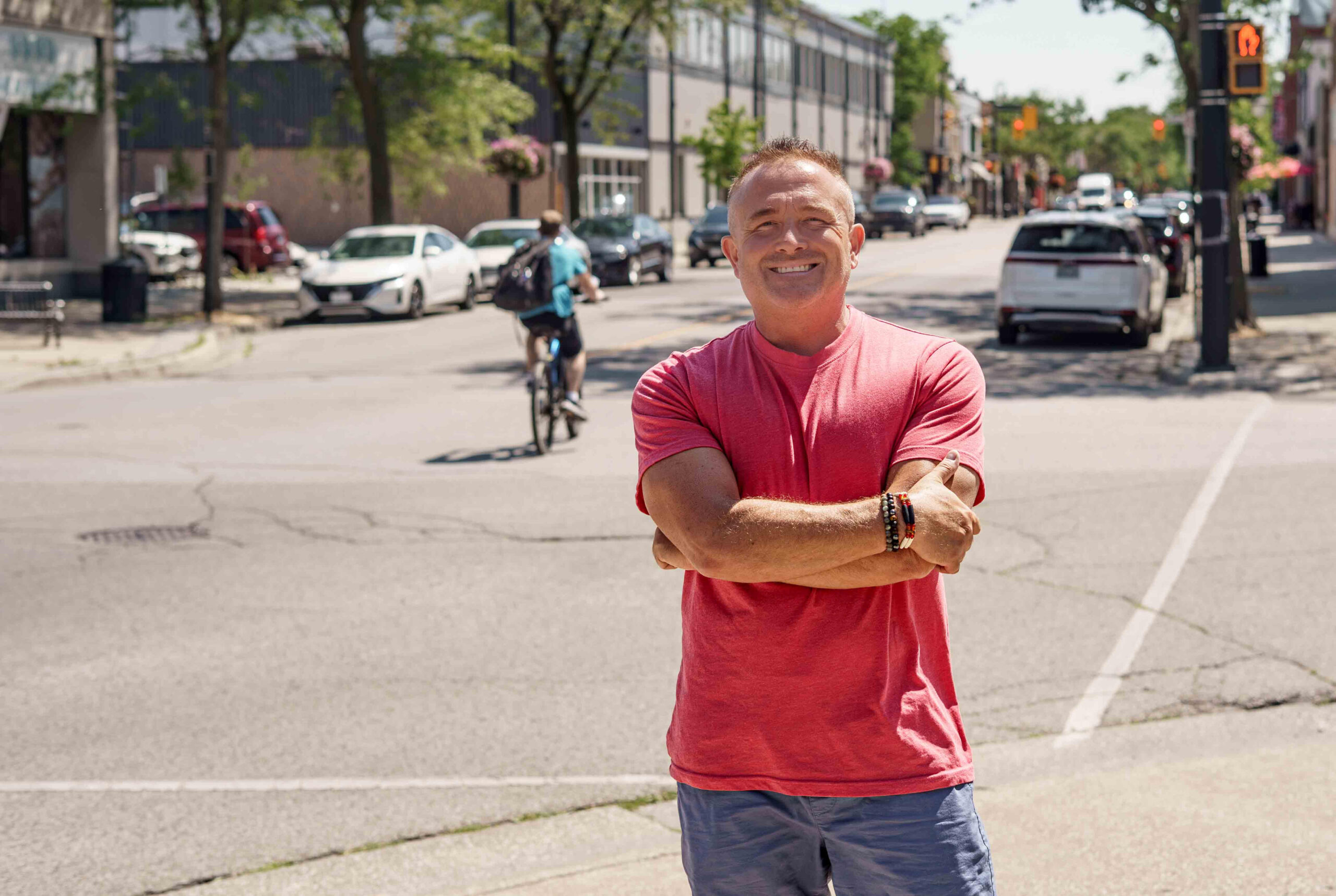
John Richardson was born and raised in Sarnia, left in his early thirties to build a leadership career across hospitality, brewery operations, retail, and organizational development, then returned 3.5 years ago to be closer to family. He is running for Sarnia City and County Council after three years listening to residents and a deep dive into the city’s finances and files. He believes Sarnia’s growth problem comes down to shared vision not aligning with actions.
1. Housing — Sarnia recorded 654 housing starts in 2025 and collected another $400,000 from Ontario’s Building Faster Fund. Lambton’s own plan says the county still needs 1,096 affordable and specialized homes over 10 years, including 412 rent-geared-to-income units. About 1,000 households are on the community-housing wait list. Rents have risen 38 to 42% since 2020, and the county lost a net 190 affordable rentals between 2016 and 2021. What city tools will you use so new supply includes homes people who already live here can afford — not only market units that clear a provincial scoreboard?
The city’s strongest tool is as-of-right zoning for infill, and Sarnia is not using it fully. The bylaw allows a triplex, then requires an 18 metre frontage on lots that average 15 metres. That is the city saying yes while forcing almost everyone into a variance. No one invests with confidence in a maybe. I will push for clear zoning that closes that gap and makes infill as-of-right in practice. That hands the decision back to the people who live here. A widow or widower could add a unit to keep their housing solvent. A retiree could add a suite to fund retirement instead of relying on a pension that is not keeping pace. A first-time buyer with a down payment but not enough income could buy a duplex and rent part of it. A small local builder could take on a rundown property knowing in advance what they are allowed to build, instead of gambling on a committee vote. Provincial funding rewards unit counts. As-of-right zoning makes sure new supply works for the people already here.
2. Police spending — When Derek Davis became chief in 2022, the Sarnia Police Service operating budget was $27.36 million. The board has now sent a 2027 operating figure of about $41 million to city council — roughly $14 million more per year than that 2022 baseline. Percentage increases have been getting smaller. The dollar total has not. If you are elected, will you push the police board to freeze or cut operating spending, and what number would you accept? If you now sit on that board, or recently did, say how you voted on these budgets and whether you would vote differently next term.
This was the first number that stopped me when I started studying the city’s finances. The board’s own numbers show the operating budget moving from $27.36 million in 2022 to roughly $41 million requested for 2027, with no marked improvement in outcomes to show for it. And this pattern predates Chief Davis. Back in 2020 and 2021, police budget growth already outpaced the city’s own tax levy increase, the same dynamic, just smaller numbers. Supporting our officers matters. But a city has finite resources, and budget priorities have to reflect that. I would push the board to index annual operating increases to the same percentage growth as the city’s overall budget, not a flat freeze or an arbitrary cut. That keeps police funded fairly as the city grows, without letting one line item consume a larger share of the budget every year regardless of the reason. I do not currently sit on the board. I would pursue a seat to bring this forward and hold the budget to it. Capital spending, including the headquarters, is a separate question.
3. The police headquarters — Financing for a new headquarters in the $91-million range was pulled from the 2026 city budget. The service is leasing two off-site locations. Christina Street remains headquarters. What should happen next: a new central building, a cheaper distributed model, a real repair-and-reuse plan for the station that exists, or something else?
The headquarters financing was pulled from the 2026 budget, and for good reason. Most decisions this size deserve real options for council to weigh, not a single number to accept or reject, and council got none. Ninety-one million dollars was never the right number for what Sarnia can afford. The 2023 report found $4.4 million in repairs would bring Christina Street up to code. That number needs updating for inflation and any changes since, but it is the right starting point, not ninety-one million. Refurbish Christina Street to house secure operations, records, evidence, cells, dispatch, the functions that genuinely need one controlled building. Everything else should move to a hub-and-spoke model: smaller community precincts placed where increased police presence actually helps, high-need areas and downtown, rather than concentrated in one oversized building. This model also supports community policing, improving visibility and building trust where it is needed most. That is the direction I would hope the board takes once it has the full, updated picture in front of it, a facility plan the city can actually afford.
4. The armoured vehicle — In May 2026 the police board approved buying a used 2013 Terradyne Gurkha armoured rescue vehicle from Bruce Nuclear for $20,000. New versions cost hundreds of thousands. The service says it is a defensive vehicle for high-risk calls, not daily patrol. Do you support Sarnia owning this vehicle? What limits would you put on when it can be deployed, and who should publish the real cost of upfitting and maintaining it?
On paper, twenty thousand dollars for this vehicle beats paying hundreds of thousands for a new one, and that part is a good deal. But the purchase price is not the real cost. A good price up front does not answer how and when it gets used, or what it costs to keep running over time. Before I would fully support keeping it, I want the board’s actual deployment criteria in front of the public, not a general statement that it is for high-risk calls. At minimum, its use should be limited to situations involving an active, known firearm threat, not lower-risk calls. The board also needs to publish the full ongoing cost, not just the purchase price. Upfitting, storage, training, and maintenance over its service life is the real number taxpayers are on the hook for. This sits inside a bigger pattern, not just a policing one. It is the same problem as our infrastructure: things get added without a real plan for what they cost to keep running, the same as our roads and pipes.
5. Sarnia BACE — Council has already put city money behind the BACE sport and activity campus. The Curran family donated the 27 acres. What is your position on the city’s remaining capital role, on operating risk if revenues fall short, and on guaranteed public and low-barrier access so this does not become a private-club facility with a municipal invoice?
I support the city’s capital role in BACE. This is strategic growth debt, the kind any community serious about building its future should be willing to take on, and it should not be confused with the operating shortfalls and deferred maintenance behind the city’s broader fiscal strain. Those problems come from years of not managing revenue and expenses well, not from investing in what makes Sarnia appealing to residents and to businesses evaluating where to locate. Two things I would insist on. Public access has to be written into the funding agreement in plain, enforceable language, not left as a stated intention from leadership. If it is meant to have no barriers to entry, that commitment belongs in the contract, not just a quote. Clear contracts are good for relationships too, they set expectations everyone can rely on. I would also want the city to fold this borrowing into a broader, structured repayment plan alongside its other capital debt, rather than treating each project as a separate hit to the annual levy.
6. The waterfront — Council adopted the Downtown Waterfront Master Plan in 2022 — about 3.5 kilometres of public shoreline, a 15-year horizon, and a $55-million (2021 dollars) capital and operating program. Ferry Dock Hill is the first major piece. Are you committed to moving that plan forward in the next term? What is the first project you would fund, and what would you refuse to let private towers or industrial conflict quietly replace?
The waterfront will eventually be rejuvenated. The question is how much it costs and how many years of quality of life and commerce we lose while it sits idle. Ferry Dock Hill already proved that price: a $440,000 estimate is now $6.6 million, and if that inflation is real, it outstrips what borrowing sooner would have cost. I am committed to moving Market District or Ferry Dock Hill forward first, whichever is ready, since both have the most potential to create the downtown harmony this city sorely needs. From what I have heard from residents, there is little appetite for heavy residential here, and the city needs to take that seriously. This is ours to sort out, not the province’s. Pushing ahead without broad public support risks an MZO that takes the decision out of our hands. Any city land sold or leased for development should require public, entertainment-focused ground-level space, not private lobbies facing the water. A waterfront hotel and conference centre is the anchor I would pursue, solid assessment value and accommodation tax revenue, not another residential tower.
7. Downtown vacancies, small business and public art — Vacant storefronts on Christina and Front are an ownership and grant-design problem, not a branding problem. Murals and other public art in Sarnia have been paid for by a patchwork of Creative County grants, city facade money, nuSarnia, property owners and volunteers. Studies of mural streets elsewhere link them to higher foot traffic when they sit next to restaurants and shops — not when a painting is dropped onto a dead block. Would you expand or redesign the downtown / Mitton Village Community Improvement Plan grants, and should the city create a dedicated multi-year public-art budget with artist pay standards?
Too many owners may not know these grants exist or how to use them, which undermines the program no matter how well it is designed. What happens to a facade is the owner’s call, but the city can do more to make that call an informed one. What downtown needs is autonomy, not another grant tweak. The Downtown Business Collective already fills the role a Business Improvement Area would normally play, and I support formalizing that if businesses want it, giving them real representation over their future instead of an informal arrangement. That matters more with real waterfront money moving. Sarnia needs that consensus built before spending starts, not after. On public art, yes. It deserves a dedicated, multi-year budget with real artist pay standards, not a patchwork of grants and volunteers. Kennady Osborne’s mural inside city hall proves it. In all my years in business, I have never seen an interior transformed that effectively for that little investment.
8. Bluewater Power — Sarnia owns about 86% of Bluewater Power. The 2000 shareholders’ agreement kept politicians off the operating board. Council, as majority shareholder, annually confirms the directors on a slate recommended by Bluewater’s own nominating committee. The utility returned just over $3.3 million to Sarnia in 2024. Should a city councillor sit on that board, or should the independent-board model stay? What extra public reporting, if any, do you want from a company the city already owns?
Bluewater Power functions well. But when that much money is involved, having real transparency is not a bad thing. The independent-board model has not hurt performance, and one cannot ignore the returns we get. What is actually missing is direct public access to the documents, and that is not unique to Bluewater Power. The information usually exists, it is just siloed across individual PDFs and takes real effort to track down and piece together. That is the same problem I speak to across my platform under open books and straight answers, and Bluewater Power is simply one more example of it. Bluewater Power is also the chief sponsor of a large share of the events that happen in Sarnia every year. On that alone, the city should have some representation. Whether that is a rotating seat held by an elected official who may lack the expertise, or a city-appointed person working from the objective advice of city economic development, that person needs a clear fiduciary duty to the city, not just a symbolic presence.
9. The county housing numbers — Lambton is the housing and homelessness service manager. The county still needs 1,096 affordable and specialized homes over 10 years, including 412 rent-geared-to-income units. About 1,000 households are on the wait list, and the county’s own assessment counts roughly 700 suppressed households already living here. If you sit on county council, what number will you accept being measured on this term — units approved, units opened, or shelter beds closed — and what city-side zoning or process change would you make so those projects do not die at Sarnia’s planning table?
My first-term target is units approved, but real approvals that hold up, not paper approvals that later get buried in variance requests or committee delay. That distinction matters more than the number itself. The bigger goal is setting the stage for long-term course correction, not just moving one term’s worth of numbers. As-of-right zoning for infill is the tool that gets us there. It removes the discretionary steps that let a technically permitted project die anyway. There is a number worth putting in front of people. The county’s own housing needs assessment counts roughly 700 suppressed households already living here, adult children stuck with parents, people with roommates who would rather live alone, who could be housed through infill and missing middle development without the city attracting a single new resident. That is assessment base growth sitting in plain sight. On the city side, the zoning move is the same one running through every housing answer I have given: as-of-right infill, so affordable, specialized and market rate projects don’t die at Sarnia’s planning table.
10. Homelessness is a housing issue — Supportive and affordable housing files in Sarnia have repeatedly hit neighbourhood opposition, extra conditions and delay even when they meet the official plan and the building code. Encampments and overflow shelters remain the visible edge of the shortage. How would you stop a project that meets the rules from being delayed to death, and what should happen when people are living in parks?
The fix for neighbourhood veto is the one from the previous question: as-of-right zoning for infill removes the discretionary step where a project meeting every realistic modern standard can still be delayed to death. Create realistic norms that developers can work within. One mechanism kills market and affordable projects alike: outdated parking minimums that add $30,000 to $100,000 in real construction cost per spot, regardless of who is building. A developer and a non-profit both eat that cost, and it prices out the small, affordable builds this county needs most. On the numbers, I take the official By-Name List seriously, but street level understanding is that the real total runs closer to double. That gap is itself evidence of the crisis, the same way baby formula locked behind glass in a grocery store is evidence of food insecurity nobody needed a study to confirm. Encampments and overflow shelters are the visible edge of a housing shortage that an increasing number of people get closer to every year as the gap between housing costs and earnings grows.
11. City and county — Sarnia has five votes on Lambton County council. Housing, homelessness and social services sit at the county table; planning and policing sit at the city. What is underfunded at the county, what Sarnia habit makes the county’s work harder, and what would you change first in how the two councils work together?
What I would change first is the relationship itself. I want to actively build relationships with the mayors and councillors who sit at that table, not just show up for scheduled votes, so I actually understand what I am voting on for them, and they understand what Sarnia needs from them in return. That groundwork matters more than any single policy fix. Housing and homelessness funding is the underfunded service, but that answer is almost too easy. You could double the county’s housing budget and it still would not be enough on its own, because the deeper problem is not just money. The city habit that makes the county work harder is how much we let housing and development projects get politicized once they land here. What should be a planning decision on the merits turns into an entrenched fight, and that division has a real cost: it is county and city emergency response teams who end up working overtime to keep tabs on everything that division leaves unresolved.
John Richardson
Candidate 5
Mike Stark
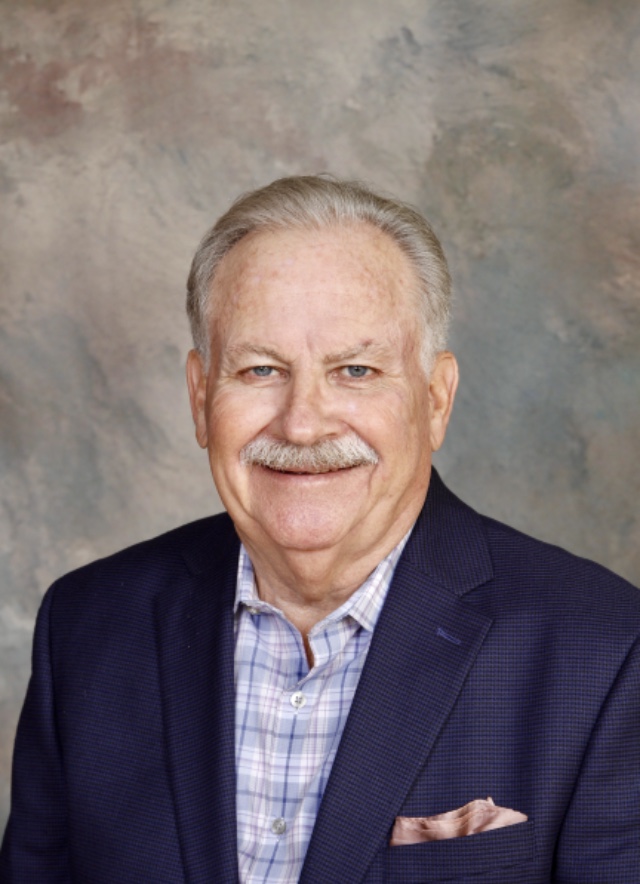
Mike Stark has extensive elected experience as a former Sarnia City Alderman (1985 – 1988), Town of Clearwater Reeve (1988 -1990) and City of Sarnia City/County Councillor (2018 – 2022). He brings vast business experience as owner of three Stark’s Jewellers retail outlets, jewellery repair and manufacturing facilities. He has a financial planning background utilizing an Economics degree from Western University. His local volunteering experience is equally impressive and diversified.
1. Housing — Sarnia recorded 654 housing starts in 2025 and collected another $400,000 from Ontario’s Building Faster Fund. Lambton’s own plan says the county still needs 1,096 affordable and specialized homes over 10 years, including 412 rent-geared-to-income units. About 1,000 households are on the community-housing wait list. Rents have risen 38 to 42% since 2020, and the county lost a net 190 affordable rentals between 2016 and 2021. What city tools will you use so new supply includes homes people who already live here can afford — not only market units that clear a provincial scoreboard?
The responsibility to increase affordable housing depends upon a co-operative approach with the public and private sector. From the public sector we can implement easier zoning requirements (i.e. reduced parking restrictions) and offer vacant unusable excess public land holdings. While it is currently illegal to offer financial incentives to the private sector, the local government can provide increased administrative assistance to those developers that commit to an affordable housing option with defined price parameters.
2. Police spending — When Derek Davis became chief in 2022, the Sarnia Police Service operating budget was $27.36 million. The board has now sent a 2027 operating figure of about $41 million to city council — roughly $14 million more per year than that 2022 baseline. Percentage increases have been getting smaller. The dollar total has not. If you are elected, will you push the police board to freeze or cut operating spending, and what number would you accept? If you now sit on that board, or recently did, say how you voted on these budgets and whether you would vote differently next term.
When I sat on the Sarnia Police Services Board from 2018 – 2020, I opposed the budget that was sent to Sarnia City Council for inclusion in the current budget. I would support the final budgeted amount that I supported during 2022 plus any inflationary adjustment per annum for each subsequent year. Each year the provincial government requires additional equipment and program upgrades that must be included in the next budget. Add to that the negotiated contracts that are part of the necessary budget submissions. The upper management increases in staff cannot be justifies and should be rejected by the Sarnia Police Services Board. The final budget approval should be limited to this ceiling.
3. The police headquarters — Financing for a new headquarters in the $91-million range was pulled from the 2026 city budget. The service is leasing two off-site locations. Christina Street remains headquarters. What should happen next: a new central building, a cheaper distributed model, a real repair-and-reuse plan for the station that exists, or something else?
I do NOT support the construction of a new police station. The current station has space limitations and the province has ordered repairs to be undertaken to make the current station usable into the future. Those repairs are mandated and must be completed. To address the space limitations, I would suggest a conversion of the Wellington at Lambton Mall Road fire station into a sub-Police site. This would eliminate the rental accommodations for the current Police Services and provide adequate space for a firing range. A new fire station should be built in an a new location more appropriately located to future housing. The current fire hall at Wellington and Lambton Mall Road is less than 5 kilometres from the Main Station on East Street and there proximity is too close. I was pleased to champion the new Colborne Road Fire Station which cost approximately 7.5 Million Dollars and was supported by grants from the senior levels of government by some 6 Million Dollars leaving the local government to fund the difference of 1.5 Million Dollars. This is a good example why reserve accounts must be maintained at healthy levels.
4. The armoured vehicle — In May 2026 the police board approved buying a used 2013 Terradyne Gurkha armoured rescue vehicle from Bruce Nuclear for $20,000. New versions cost hundreds of thousands. The service says it is a defensive vehicle for high-risk calls, not daily patrol. Do you support Sarnia owning this vehicle? What limits would you put on when it can be deployed, and who should publish the real cost of upfitting and maintaining it?
I do NOT support the purchase or replacement of the armoured vehicle for Sarnia. We do not live in a war zone and we should not be practicing or playing war games. Sell the armoured vehicle and get out of the War business.
5. Sarnia BACE — Council has already put city money behind the BACE sport and activity campus. The Curran family donated the 27 acres. What is your position on the city’s remaining capital role, on operating risk if revenues fall short, and on guaranteed public and low-barrier access so this does not become a private-club facility with a municipal invoice?
I first would like to acknowledge and thank the Curran family for their generous gift of the future campus. I genuinely support the citizen driven multi-use facility, as I did in 2021 when I called on City Council to construct such a facility at Mike Weir Park. I spoke to the Seaway Kiwanis club and suggested this as a complement to our recreational asset base, which would assist in attracting new employers who seek out these types of facilities for their new staff complements. With respect to on-going operational costs, I would suggest an endowment fund be established with the City being the first contributor to such a fund. A public call to recruit a benevolent party to undertake such a project. This could be an individual or a service club.
6. The waterfront — Council adopted the Downtown Waterfront Master Plan in 2022 — about 3.5 kilometres of public shoreline, a 15-year horizon, and a $55-million (2021 dollars) capital and operating program. Ferry Dock Hill is the first major piece. Are you committed to moving that plan forward in the next term? What is the first project you would fund, and what would you refuse to let private towers or industrial conflict quietly replace?
I do support moving forward with the Waterfront Masterplan and begin funding it with current dollars. I was the Councillor that drew attention to this issue of zero funding of waterfront projects after the Council approved the plan. If you’re not going to fund the project you have effectively denied it and are hypocritical in discussing it as an approved project. My first proposal would be to construct satellite kiosks for rental by current Downtown, Mitton Street and Northgate eateries and merchants to utilize for marketing their products. It will help make the waterfront an inviting spot for residents, boaters and tourists of all types. Similar facilities to this are available all through the southern coast of Spain and are popular.
7. Downtown vacancies, small business and public art — Vacant storefronts on Christina and Front are an ownership and grant-design problem, not a branding problem. Murals and other public art in Sarnia have been paid for by a patchwork of Creative County grants, city facade money, nuSarnia, property owners and volunteers. Studies of mural streets elsewhere link them to higher foot traffic when they sit next to restaurants and shops — not when a painting is dropped onto a dead block. Would you expand or redesign the downtown / Mitton Village Community Improvement Plan grants, and should the city create a dedicated multi-year public-art budget with artist pay standards?
I would not increase any grants associated with beautification of privately owned vacant property. I would make stricter the property standard provisions that incorporate minimum criteria for vacant properties that incorporate beautification criteria so that neighbouring businesses do not suffer negative impacts from poorly maintained buildings. We currently have a fiscal management problem that sees virtually no discretional reserves. You can’t tap into reserves that do not exist.
8. Bluewater Power — Sarnia owns about 86% of Bluewater Power. The 2000 shareholders’ agreement kept politicians off the operating board. Council, as majority shareholder, annually confirms the directors on a slate recommended by Bluewater’s own nominating committee. The utility returned just over $3.3 million to Sarnia in 2024. Should a city councillor sit on that board, or should the independent-board model stay? What extra public reporting, if any, do you want from a company the city already owns?
The question of lack of transparency regarding Bluewater Power finances has been a source of concern of mine for years. The City of Sarnia taxpayers own 86.05% of the utility and should demand full transparency including executive compensation, executive travel expenses, general travel expenses of all Board members and full reporting by the Bluewater Power Board of Directors. Reporting and public answering of questions cannot be limited to the CEO. The appointed Board must be accountable and subject to dismissal if they refuse to publicly answer questions from their major shareholder. With respect to the $3.3 Million dollar dividend. What is the percentage return on investment and why has the dividend only increased when the City’s budget has required it to be increased? Where were the higher dividends going in previous years? Why does a monopoly require an advertising budget? Why does the utility have a promotional expense? The CEO states that the donations given out by Bluewater Power makes it a good corporate citizen. Shouldn’t the owner of the utility be the one to support local businesses, festivals and yearly award events. It is after all taxpayers money, yet they have no say in who should or should not be supported.
9. The county housing numbers — Lambton is the housing and homelessness service manager. The county still needs 1,096 affordable and specialized homes over 10 years, including 412 rent-geared-to-income units. About 1,000 households are on the wait list, and the county’s own assessment counts roughly 700 suppressed households already living here. If you sit on county council, what number will you accept being measured on this term — units approved, units opened, or shelter beds closed — and what city-side zoning or process change would you make so those projects do not die at Sarnia’s planning table?
The only area that a Councillor has any impact on is setting budget allocations and ultimately approval of projects. As in the past, I have insisted upon constant reporting of projects measured against established targets. Targets are only meaningful when they are realistic and attainable. We currently see three projects in Sarnia, one on London Road which is currently operational, the Indigenous project on Confederation Street currently operational and the soon to be opened Kathleen Avenue project. The only project that appears to be coming on stream in the expected completion time is the Kathleen Street project. This has to change if we expect to meet our projected needs. We need to insist upon tight contracts that have significant penalties for lack of performance and missed deadlines.
10. Homelessness is a housing issue — Supportive and affordable housing files in Sarnia have repeatedly hit neighbourhood opposition, extra conditions and delay even when they meet the official plan and the building code. Encampments and overflow shelters remain the visible edge of the shortage. How would you stop a project that meets the rules from being delayed to death, and what should happen when people are living in parks?
Homelessness is a problem that affects the entire population and is closely tied to the drug epidemic. I would follow the City of St. Thomas model for housing, utilizing a variety of smaller homes designed for one and two people that can accommodate one pet. This type of permanent home gives inhabitants the first experience of personal dignity on their road to recovery. This can be a first step towards larger homes when the residents decide they’re ready to move up, thus freeing up space for the next resident. As a society, we need to accept this responsibility. In the City of London, the creation of spider style modular shelters located south of Hwy. 401 is a good example of temporary “out of the cold” housing with central kitchen, central shower facilities and central washrooms. This type of development can eliminate encampments.
11. City and county — Sarnia has five votes on Lambton County council. Housing, homelessness and social services sit at the county table; planning and policing sit at the city. What is underfunded at the county, what Sarnia habit makes the county’s work harder, and what would you change first in how the two councils work together?
I believe the largest and most difficult issue that the County Councillors need to deal with is the drug epidemic involving fentanyl. The County Council acts as a parallel Board of Health and is tasked with co-ordinating a strategy to combat this societal dilemma. There needs to be a balanced approach considering policing and health care and utilizing both elements without excluding the other. Funding of this approach requires co-operation as two funding ministries are involved. Councillor involvement through AMO (Association of Municipalities of Ontario) is the best lobbying opportunity for the County which leads to follow-up meetings with the various ministries for implementation of new approaches that may have had positive results in other parts of the province.
Mike Stark
Candidate 6
Paul Wiersma
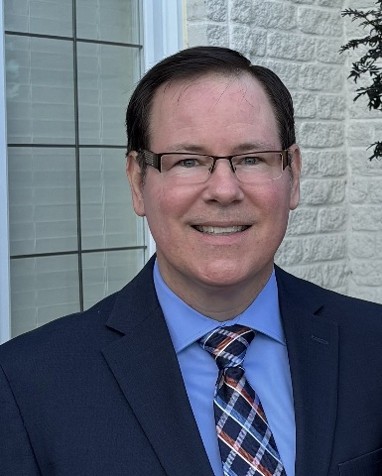
I am married and have lived in Sarnia for 27 years. With degrees in math, physics and a M.Ed., I have worked as a teacher/principal for 32 years. Community involvement includes volunteering with the Canadian Cancer Society (19 years), Board director/chair for Bluewater Health (10 years), the Sarnia Police Service (7 years), and the Sarnia Concert Association (6 years). With such knowledge, skills, and experience, I believe that I can contribute to City/County Council.
1. Housing — Sarnia recorded 654 housing starts in 2025 and collected another $400,000 from Ontario’s Building Faster Fund. Lambton’s own plan says the county still needs 1,096 affordable and specialized homes over 10 years, including 412 rent-geared-to-income units. About 1,000 households are on the community-housing wait list. Rents have risen 38 to 42% since 2020, and the county lost a net 190 affordable rentals between 2016 and 2021. What city tools will you use so new supply includes homes people who already live here can afford — not only market units that clear a provincial scoreboard?
Require new developments to include a specific percentage of units to be affordable. Use financial incentives to encourage the building of affordable units. Provide surplus city land for affordable housing. Incentive greater density in existing neighbourhoods to allow for additional residential units and multiple dwellings. Make it easier to sever a portion of your property for additional housing. Modify the by-law to allow for infill and reduce mandatory parking capacity. Encourage the development of co-operative housing where costs can be lowered through co-op governance and resident participation in building and property maintenance. Incentivize the building of modest smaller homes and less expensive rental units so that there is a greater supply of affordable housing. City Council recently approved the elimination of residential development charges for three to five years conditional on receiving provincial funding. This will lower the cost of homes and increase the supply, which will result in downward pressure on prices. People that move to new homes will vacate older homes which can be available.
2. Police spending — When Derek Davis became chief in 2022, the Sarnia Police Service operating budget was $27.36 million. The board has now sent a 2027 operating figure of about $41 million to city council — roughly $14 million more per year than that 2022 baseline. Percentage increases have been getting smaller. The dollar total has not. If you are elected, will you push the police board to freeze or cut operating spending, and what number would you accept? If you now sit on that board, or recently did, say how you voted on these budgets and whether you would vote differently next term.
I served on the Sarnia Police Service Board for seven years and was chair for the last three years. My provincial appointment ended in February 2026. Our police service had been underfunded for years. The Board supported budget increases that would allow the service to modernize, to mitigate inflationary pressures, to implement the requirements of the new Community Safety and Policing Act, and to respond to the needs of the community. Both municipal and provincial police services across Ontario had significant budget increases during this period. Early stakeholder meetings suggested that people did not feel safe in their community, particularly the downtown. Funding was used for front line initiatives such as two mental health/addictions teams (MHEART), a vulnerable person/homelessness team (IMPACT), downtown patrol, traffic unit, dedicated officer for Aamjiwnaang, expanded special constable roles, a volunteer auxiliary unit, canine units, etc. Funding was also used to improve analytics capabilities which resulted in a more efficient and cost-effective deployment of resources. I believe that the police service is adequately funded, and so I would only support inflationary budget increases.
3. The police headquarters — Financing for a new headquarters in the $91-million range was pulled from the 2026 city budget. The service is leasing two off-site locations. Christina Street remains headquarters. What should happen next: a new central building, a cheaper distributed model, a real repair-and-reuse plan for the station that exists, or something else?
The SPS Board approved a new facility based on two engineering reports that addressed both the condition and functionality of the facility. Without a consensus on City Council to move ahead with a new facility, the Board proposed a first phase approach with a $25 million facility that would address some of the immediate needs such as the inadequate rifle range and the leased training facility. However, this was not approved. Currently, there is a MOL order requiring the front staircase to be replaced at a cost of $440 000 to $1 million. There are additional short-term costs in the amount of $4.45 million, and these won’t address the functionality of the facility. I recommend addressing the urgent facility needs. I support waiting until the internal investigation is completed and then take a fresh look at the state of the facility. I believe that the most cost-effective solution would be a phased-in new facility rather sink more money in an inadequate facility, but I believe that we need to wait until Sarnia deals with its fiscal challenges first.
4. The armoured vehicle — In May 2026 the police board approved buying a used 2013 Terradyne Gurkha armoured rescue vehicle from Bruce Nuclear for $20,000. New versions cost hundreds of thousands. The service says it is a defensive vehicle for high-risk calls, not daily patrol. Do you support Sarnia owning this vehicle? What limits would you put on when it can be deployed, and who should publish the real cost of upfitting and maintaining it?
An armoured rescue vehicle is used by mid to large police services across the province for high risk, low frequency incidents that threaten public safety and officer lives. Acquiring one for about 5% of the cost for a new vehicle was a cost-effective purchase. It can be used for rescuing people from active shooter zones, moving tactical teams into hazardous threat areas, and approaching properties with suspected armed suspects. The key to emergency preparation is to be ready in case there is a critical event that threatens lives. Similar to other emergency preparedness plans, we can be thankful if we never use it, and appreciative if we save lives using it. I support the SPS owning the vehicle and deploying it according to standards that flow from the Community Safety and Policing Act. The cost of upfitting and maintain the vehicle should be disclosed in accordance with police budget reporting and freedom of information requests.
5. Sarnia BACE — Council has already put city money behind the BACE sport and activity campus. The Curran family donated the 27 acres. What is your position on the city’s remaining capital role, on operating risk if revenues fall short, and on guaranteed public and low-barrier access so this does not become a private-club facility with a municipal invoice?
In general, I support municipal funding for community projects where there is community fund raising, multi-tier government funding, and potentially some private sector investment. However, public funding has to be commensurate with public access to a facility. Given Sarnia’s fiscal challenges (a looming 16% budget increase for 2027), Sarnia needs to review its spending as well as its revenue plan before making significant commitments. There also needs to be a clear understanding of what happens if construction costs exceed the budgeted project plan. I believe that a recreational facility should charge reasonable user fees so that the taxpayer is not liable for subsidizing ongoing operating costs while allowing for some user fee reductions for people who demonstrate need.
6. The waterfront — Council adopted the Downtown Waterfront Master Plan in 2022 — about 3.5 kilometres of public shoreline, a 15-year horizon, and a $55-million (2021 dollars) capital and operating program. Ferry Dock Hill is the first major piece. Are you committed to moving that plan forward in the next term? What is the first project you would fund, and what would you refuse to let private towers or industrial conflict quietly replace?
Since Sarnia is debt free, it has a debt capacity of over $304 million for infrastructure needs. However, there is a looming 16% budget increase for 2027, and the reserves are depleted having been used to artificially mitigate tax increases. As well, the maintenance/replacement of $4.8 billion in city assets is being underfunded by $20.8 million annually. Sarnia needs to address these issues first before committing to new massive capital projects. Within the early part of council’s next term, I support moving ahead on the downtown waterfront master plan. I would start with the Ferry Dock Hill redevelopment as it is the gateway to link the downtown with the waterfront. A year and a half go this was priced at $6.6 million. This is a more effective use of funds than funding the smaller features in the master plan. Proceeding with Ferry Dock Hill will also attract private sector investment in the community. I believe that we can have a balance between some residential towers while maintaining public access via the 3.5 km path to the waterfront.
7. Downtown vacancies, small business and public art — Vacant storefronts on Christina and Front are an ownership and grant-design problem, not a branding problem. Murals and other public art in Sarnia have been paid for by a patchwork of Creative County grants, city facade money, nuSarnia, property owners and volunteers. Studies of mural streets elsewhere link them to higher foot traffic when they sit next to restaurants and shops — not when a painting is dropped onto a dead block. Would you expand or redesign the downtown / Mitton Village Community Improvement Plan grants, and should the city create a dedicated multi-year public-art budget with artist pay standards?
I support expanded funding for the downtown and Mitton Village Community Improvement Plan. I support a redesign of the Plan to have tiered and targeted funding that has higher matching percentages for specific geographic clusters or consecutive vacant storefronts. Our efforts at community improvement need to have coordination. I support the development of a multi-year public art budget. This allows for greater stability of funding for multi-year installations. I support paying artists according to industry compensation standards. As we develop our city, let’s complement the natural beauty of the area with an attractive downtown and Mitton Village.
8. Bluewater Power — Sarnia owns about 86% of Bluewater Power. The 2000 shareholders’ agreement kept politicians off the operating board. Council, as majority shareholder, annually confirms the directors on a slate recommended by Bluewater’s own nominating committee. The utility returned just over $3.3 million to Sarnia in 2024. Should a city councillor sit on that board, or should the independent-board model stay? What extra public reporting, if any, do you want from a company the city already owns?
I support an independent board model for Bluewater Power. Changing the model would require a potentially lengthy negotiation with the five other municipalities that have minority ownership in Bluewater Power. As well, corporations such as Bluewater Power require board members who have expertise in the areas of business, legal, and energy. A skills matrix is used to select competent people to serve. Therefore, I do not support having a city councillor sit on the board. I do support a higher standard of public reporting. The Bluewater CEO could be asked to report quarterly to council. There would then be a responsibility of the part of city councillors to ask good questions in areas such as grid reliability, power outage stats, green initiatives, etc. There could be greater detailed reporting on how the utility balances reinvesting profits into infrastructure, investing profits in future projects, and profits given to the shareholders (i.e. municipalities). Finally, there could be greater reporting on executive compensation and bonuses.
9. The county housing numbers — Lambton is the housing and homelessness service manager. The county still needs 1,096 affordable and specialized homes over 10 years, including 412 rent-geared-to-income units. About 1,000 households are on the wait list, and the county’s own assessment counts roughly 700 suppressed households already living here. If you sit on county council, what number will you accept being measured on this term — units approved, units opened, or shelter beds closed — and what city-side zoning or process change would you make so those projects do not die at Sarnia’s planning table?
Each of the three metrics (units approved, units opened, or shelter beds closed) have pros and cons. Council has the most control over the number of units approved. However, construction and other factors can delay the opening of units. Prematurely closing shelter beds can push people out on to the street. As a result, I would accept being held accountable for the approval of units with the expectation that such units will be opened in a reasonable time after and that shelter beds will be able to close. The city could adopt as-of-right zoning for multi-unit affordable housing on major transit corridors, downtown commercial zones, and institutional lands. Parking requirements for affordable housing can be reduced which reduce the overall capital costs. Sarnia can pre-zone city owned properties for high density so that once funding is available housing development can begin right away. Affordable housing can be incentivized through development charge waivers and building fee rebates. Additional residential units can be incentivized, and vacant properties can potentially be subdivided to increase density and affordability.
10. Homelessness is a housing issue — Supportive and affordable housing files in Sarnia have repeatedly hit neighbourhood opposition, extra conditions and delay even when they meet the official plan and the building code. Encampments and overflow shelters remain the visible edge of the shortage. How would you stop a project that meets the rules from being delayed to death, and what should happen when people are living in parks?
As-of-right pre-zoning can reduce/eliminate neighbourhood opposition to a project. Multi-unit housing can be built automatically in specific areas (downtown, transit hubs, institutional lands). Projects that comply with the rules don’t require a public zoning amendment vote. Greater consultation needs to occur with neighbourhoods about development in their communities. While allowing everyone the right to be heard, people also need to appreciate the benefits to the community when people have stable housing and food security. When basic human needs are met, there is less likelihood of homelessness, mental health/addictions, and crime. Evicting people from an encampment does not solve the problem since homeless people will simply move to another area of the city. There needs to be low barrier shelter spaces available. Shelters need to be truly temporary where people can have access to affordable and rent to geared income housing. The enforcement/transition process in the Encampment Protocol outlines how the city works with social services and outreach teams to assess individuals on a one-on-one basis to connect them with alternative emergency shelter beds or supportive housing pathways.
11. City and county — Sarnia has five votes on Lambton County council. Housing, homelessness and social services sit at the county table; planning and policing sit at the city. What is underfunded at the county, what Sarnia habit makes the county’s work harder, and what would you change first in how the two councils work together?
My observation is that city and county operate independently of each other and, on occasion, are in tension with each other. I support establishing operational, staff-level working groups across aligned departments (Sarnia Planning/Building and Lambton Housing/Social Services). Achieving early technical alignment on projects would prevent delays. I support formal service level agreements for shared initiatives that explicitly define lead responsibilities, capital/operating cost-sharing split, permitting timelines, and public communication protocols. I support the use shared physical spaces or digital portals to facilitate informal daily collaboration between city and county staff. I also support having periodic joint information sessions between Sarnia City Council and Lambton County Council on major shared priorities. I believe that affordable housing and mental health outreach are underfunded. On the flip side, the city habit that makes the county’s work much harder is Sarnia’s slow pace in pre-zoning and preparing municipal land for affordable housing. When the county secures funding to build new non-market units, they need to act quickly. However, the county doesn’t own Sarnia’s empty urban lots.
Paul Wiersma
Candidate 7
Bill Anning
No response received.
Candidate 8
Margaret Bird
No response received.
Candidate 9
Andy Bruziewicz
No response received.
Candidate 10
Al Duffy
No response received.
Candidate 11
Peter Goodman
No response received.
Candidate 12
Adam Kilner
No response received.
Candidate 13
Mark Lamore
No response received.
Candidate 14
Chrissy McRoberts
No response received.
Candidate 15
Charmaine Murray
No response received.
Candidate 16
George Vandenberg
No response received.
Candidate 17
Brian White
No response received.
The Sarnia Journal invited every certified candidate for Sarnia City/County Council to answer the same 11 questions. Answers are published as submitted, with questions reprinted for context. Responding candidates are listed first in alphabetical order, followed by candidates who did not return a questionnaire. This is not an endorsement.
More to read
 Sarnia council’s inaugural meeting set for Nov. 16

 Lambton College open house to offer look at new residence plans
 cineSARNIA presents Once Upon a Time in a Cinema on Nov. 22
Events
Nov13
Nov14
Nov14
Nov14
Dinosaur Bone Cleaning Demonstrations with PaleoJoe
Sat, Nov 14 · 10:00 am
Port Huron Museums Carnegie Museum