


Nov11
Ash denies Davis allegation about Norigen clients, provides May 7 email showing outside inquiry
Police Board chair Kelly Ash has rejected Derek Davis’s allegation that she told Norigen clients or prospective clients he had engaged in “improper and unauthorized conduct.” A May 7 email she provided to The Sarnia Journal shows her contacting an outside police service about allegations involving Davis’s secondary activities and asking for information about possible visits by Davis or a Norigen representative.
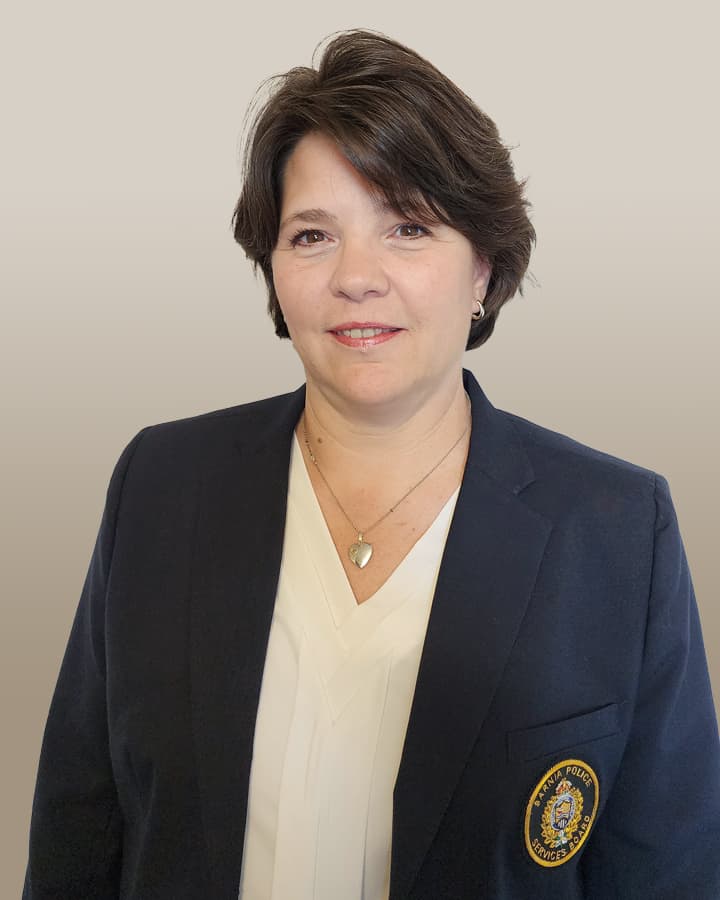
Sarnia Police Services Board chair Kelly Ash has directly denied suspended chief Derek Davis’s allegation that she told clients or prospective clients of his private consulting business that he had engaged in improper and unauthorized conduct.
Ash also provided The Sarnia Journal with a May 7 email documenting one of her outside inquiries concerning Davis and Norigen Management Consulting.
On its face, the email is consistent with Ash’s description of that particular communication as information-gathering.It tells an outside police service that allegations existed concerning Davis’s secondary activities and asks whether Davis or a Norigen representative had visited, when any visits occurred and for what purpose.
It does not state that Davis engaged in “improper and unauthorized conduct.”
“I did not make any allegations regarding Derek Davis to any client or prospective client of Norigen Management Consulting,” Ash told the Journal.
“Any communications I was involved in were limited to seeking factual information relating to visits and related matters that the Board was attempting to better understand.”
Davis alleges otherwise.
His July 22 Notice to Arbitrate, filed as part of his Ontario Superior Court application against the Police Board, alleges that in May and June Ash contacted clients and prospective clients of Norigen, advised them that Davis and the company were the subjects of an ongoing investigation, and told them Davis had engaged in “improper and unauthorized conduct.”
Davis further alleges Ash knew that characterization was false, or would have known it was false had she first sought particulars of the Police Association’s allegations and given him an opportunity to respond.
Those allegations have not been adjudicated.
Ash rejects that characterization.
“The allegation made in the statement of claim is not an accurate characterization of my communications,” she wrote in response to the Journal.
Ash said her inquiries “were information-gathering in nature and were not intended to characterize, prejudge, or make allegations regarding Chief Davis’s conduct.”
She specifically denied telling anyone that Davis had engaged in improper or unauthorized conduct.
“I did not make such statements,” she wrote.
The May 7 email Ash supplied provides the first publicly available example against which Davis’s broader allegation can be tested.
The recipient’s identity and police service were redacted.
In the email, Ash identifies herself as chair of the Sarnia Police Services Board and writes that she had “been made aware that there are allegations against our police chief and his secondary activities.”
“To this end,” she wrote, “it is alleged that our Chief Derek Davis has been offering services to the [redacted] Police Service.”
Ash then asks whether the recipient could ask their chief whether Davis, or “a representative on behalf of Norigen,” had visited the police service.
If so, she asks for “an outline of the dates and the purposes for such visits.”
The email was copied to Ian Johnstone, whom the Board later publicly identified as specialized legal counsel retained to provide it with legal and procedural advice.
The document therefore confirms that Ash communicated the existence of allegations concerning Davis’s secondary activities to an outside police service and sought information about possible Davis or Norigen visits.
But on the most serious point disputed between Ash and Davis, the email supports Ash’s account of this particular communication.
Ash did not tell the recipient in the email that Davis had committed misconduct or that his activities were improper or unauthorized. Instead, she described the existence of allegations and asked the service to provide factual information.
Ash similarly characterized the email in her response to the Journal.
“The communication speaks for itself and demonstrates that the purpose of the contact was simply to obtain information, not to advance allegations or conclusions,” she wrote.
The email cannot resolve Davis’s broader claim.
His filing alleges contacts with multiple “clients and prospective clients” during May and June. Ash has provided the Journal with one May 7 email.
The court filing does not identify this May 7 email as one of the communications Davis was referring to in his Notice to Arbitrate.
The identity of the recipient is also redacted, so the Journal cannot determine from the document whether the police service was an existing Norigen client, a prospective client or neither.
The application record does not identify which clients or prospective clients Davis says were contacted and does not separately exhibit the communications on which his allegation is based.
The available evidence therefore establishes at least one outside inquiry by Ash concerning Davis and Norigen. It does not establish that the recipient was a Norigen customer or prospect, and the email does not support Davis’s allegation that Ash told that recipient he had engaged in improper and unauthorized conduct.
Whether other communications went further remains unknown.
Davis has specifically asked for their disclosure.
Among the remedies in his Notice to Arbitrate is disclosure of written and verbal communications between Ash, the Board or anyone communicating on their behalf and several categories of third parties, including LECA and “clients or prospective clients of Norigen,” concerning Davis, Norigen and the allegations against him.
Davis alleges those communications breached his employment agreement and confidentiality requirements in the Police Board’s policy governing complaints against the chief or deputy chief.
His filing specifically invokes Articles 7.2 and 12.4 of his employment agreement.
Article 7.2 addresses confidential employment information concerning Davis and says it is not to be shared outside the Board without his prior written consent, subject to specified lawful-disclosure processes.
Article 12.4, part of the agreement’s legal-indemnification provisions, creates a presumption that Davis’s acts or omissions were undertaken in good faith unless the contrary is proven.
Davis alleges the outside communications breached both provisions. Whether either provision applies in the way he argues has not been determined.
The Board’s complaints policy also commits it to a “thorough, confidential, and respectful” process and requires Board members and employees to take steps to protect the identities of people involved.
The policy is not an absolute prohibition on disclosure of identities. Where disclosure is necessary to ensure fairness, it permits that after consultation and only to the extent necessary.
It does not expressly address the type of outside fact-gathering inquiry shown in Ash’s May 7 email. Whether communications of that kind breached the policy has not been determined.
Ash said the Board remains committed to conducting its affairs “fairly, lawfully, and in accordance with its governance and confidentiality obligations.”
“As this matter remains subject to ongoing legal proceedings, it would be inappropriate for me to comment further on specific allegations contained in arbitration materials,” she wrote.
Norigen is a private business Davis disclosed to the Police Board before he was hired as Sarnia’s police chief.
Article 14 of his February employment agreement records that Davis had disclosed his Norigen ownership and financial interest before his hiring and says the Board approved its continuation subject to several conditions.
Norigen cannot conduct business directly with SPS or the Police Board without prior written consent. Its activities cannot interfere or conflict with Davis’s duties as chief, and Davis cannot use his Norigen role to initiate or encourage a connection to SPS or the Board without consent.
Ontario law separately restricts secondary business activities by police officers.
Section 89 of the Community Safety and Policing Act prohibits a member of a police service from engaging in an outside activity that interferes or is likely to interfere with police duties, creates or is likely to create a conflict of interest, amounts to full-time outside employment, or provides an advantage derived from being a member of a police service.
For a police chief, an activity that may contravene those restrictions must be disclosed to the Police Board, which decides whether the chief may engage in it and under what conditions.
The Board’s contractual approval of Davis’s ownership interest in Norigen therefore does not determine whether every later activity involving the company complied with his contract or Ontario law.
Davis’s filing says one of the allegations later put to him concerned “misuse of Service resources for secondary employment,” including a complaint about his secondary-employment activities and his use of Sarnia Police services to further the company he owns.
Davis denies that allegation. His Notice says all allegations against him are without merit.
Public records independently establish that Norigen had police-sector business in Ontario around the period described in Davis’s filing.
On April 21, less than a month before Davis was suspended, the Greater Sudbury Police Service Board approved a sole-source procurement of the Norigen Core analytics platform from Norigen Management Consulting Inc.
The contract was valued at $292,112 plus HST from May 1, 2026 through Dec. 31, 2028, including a $105,792 annual subscription and $10,000 implementation fee.
The report described Norigen Core as a web-based analytics platform built specifically for Ontario police services, integrating police records-management and computer-aided-dispatch data and providing dashboards, mapping and other analytical tools.
Nothing in Davis’s filing, Ash’s response or the public records reviewed by the Journal establishes that Greater Sudbury was the police service contacted in Ash’s May 7 email.
The identity of that service remains redacted.
Davis’s Superior Court application does not ask the judge to determine whether Ash contacted Norigen clients or whether any communications breached his employment agreement or Board policy.
The Notice of Application asks the court to appoint an arbitrator, direct that the arbitration proceed and order the Board to provide a fully particularized response or defence, among other procedural relief.
The application, originally scheduled for Aug. 20, has been adjourned on consent to Sept. 24.
Ash’s response gives the public record something it did not previously contain: an actual communication that can be compared with Davis’s allegation.
The May 7 email confirms she contacted an outside police service concerning allegations about Davis’s secondary activities. It also supports her denial that, in that communication, she told the recipient Davis had engaged in improper or unauthorized conduct.
What remains unknown is whether Ash made other communications of the kind Davis alleges, whether the people contacted were Norigen clients or prospective clients, and what was said in any conversations or correspondence that have not been made public.
Davis is seeking disclosure of those records through arbitration.
About this reporting: This story is based principally on Davis’s July 22 Notice to Arbitrate and February 26 employment agreement, together with the Community Safety and Policing Act, Sarnia Police Service Board policies, public records documenting Norigen’s police-sector business, and a response and redacted May 7 email provided to The Sarnia Journal by Board chair Kelly Ash. Ash denies telling Norigen clients or prospective clients that Davis engaged in improper or unauthorized conduct. The May 7 email she supplied supports her account of that particular communication as an information-gathering inquiry, while confirming that she communicated the existence of allegations concerning Davis’s secondary activities to an outside police service. The court filing does not identify the May 7 email as one of the communications Davis was referring to, and the public record does not establish whether its recipient was a Norigen client or prospective client or what was said in any other communications.
About the documents: Court documents linked in this story are publication copies prepared by The Sarnia Journal. Redactions are limited to signatures, direct contact information and private family or beneficiary information. No substantive filing content has been removed or altered.
Disclosure: Davis previously sued Nathan Colquhoun, The Sarnia Journal and Sarnia Media Group Inc. The action was discontinued with prejudice.
More to read
 How did 24 apartments cost almost as much as 50?

 Remembrance Day in Sarnia: Vigil, parade, road closures and bus service
 Sarnia firefighters respond to two fires on Vidal and Devine streets
Events
Nov11
Nov12
EarlyON-Nature Park Program
Thu, Nov 12 · 9:30 am
Bridgeview Park 4241-4299 Petrolia Line Petrolia, ON
Nov12
Nov12
Music Night at Black Gold Brewery
Thu, Nov 12 · 7:00 pm
Black Gold Brewery 395 Fletcher St. Petrolia, ON