Nov13
Opinion
This column reflects the views of its author.
Wildfires and your health – How do wildfires affect our health and what can we do?
In the summer of 2023, my wife and I spent a week vacationing with our son and his family at Shuswap Lake in the BC interior. It was mid-July and many wildfires were burning out of control across Canada in what would become a record setting year.
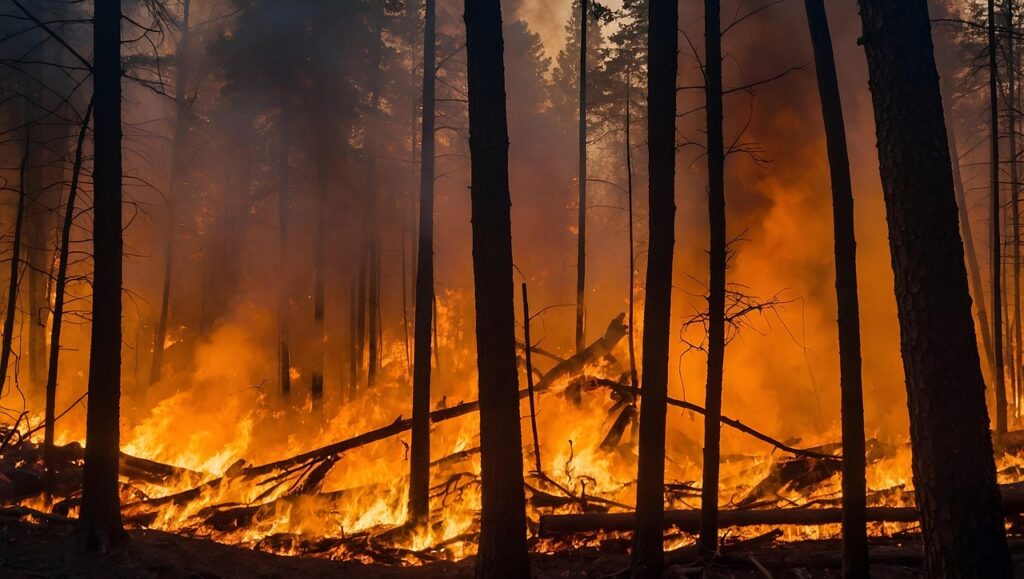
In the summer of 2023, my wife and I spent a week vacationing with our son and his family at Shuswap Lake in the BC interior. It was mid-July and many wildfires were burning out of control across Canada in what would become a record setting year.
While we were there, the Shuswap area was spared, and we were able to enjoy the area’s spectacular beauty. While hiking through the forest I noticed that the forest floor was covered with a lot of fallen timber and decaying plant material. It crossed my mind that should there be a fire, it would likely be impossible to contain due to the mass of “fuel”- all of it exceptionally “dry” due to a prolonged drought affecting Western Canada.
Unfortunately, not long after we returned to Ontario, a massive wildfire swept through the Shuswap area causing widespread destruction of homes and businesses, displacing many families and resulting in the death of a young boy from a severe asthma attack. He had been exposed to just a low level of wildfire smoke in his neighbourhood.
That terrible year was followed by record wildfire seasons in 2024, 2025 and now 2026, with Ontario reporting by mid-July that the Province is experiencing a record number of wildfires in the Province’s history and air quality documented to be among the world’s worst in a number of municipalities.
Wildfires are being “super-charged” by Climate Change, driven by rising concentrations of heat-trapping greenhouse gases (carbon dioxide and methane) in the atmosphere from burning fossil fuels as energy sources and from other activities. Along with longer wildfire seasons and record numbers of more intense and destructive fires, massive amounts of air pollution exposes many millions of people to its toxic health effects across Canada and beyond our borders.
Health Impacts of Breathing Wildfire Smoke
Those directly impacted by wildfires are commonly traumatized by the loss of their homes and communities. But even those living far from the disaster areas who witness orange skies and smoke-filled air may experience emotional distress, anxiety and depression.
The fear and uncertainty brought on by wildfires and other climate related disasters is fueling a pandemic of declining mental health in youth as they struggle with how their futures may look.
As well as the decline in mental health, health experts warn of many impacts to our physical health. Most obviously, children with asthma experience a greater risk of severe asthma attacks and death. And those who suffer from chronic respiratory diseases such as COPD or pulmonary fibrosis are also at increased risk of complications. The risk of developing lung cancer also increases.
Wildfire smoke contains a large number of toxic chemical pollutants and also “fine” (2.5 microns or less) particulate matter that can penetrate deep into the lungs, enter the blood stream and lodge in blood vessels and organs. Researchers have found that smokers, people with hypertension, those with chronic diseases such as heart disease or diabetes, the elderly and the very young are at greatest risk from breathing fine particulate matter. Children’s lungs are still developing in the first 5 years of life and research has shown that wildfire smoke is 10 times more harmful to these children.
Additionally, fine particulates can cross the placenta during pregnancy impacting the developing brain, lungs and liver of the baby. Health experts also warn that exposure to extreme heat and air pollution during pregnancy increases the risk of miscarriage, preterm delivery and stillbirth.
Fine particulates can cross the blood-brain barrier to affect brain function and may lower IQ scores. Research also suggests that they probably increase the risk of autism and other neurobehavioural conditions in children.
The bottom line is that air pollution is a leading cause of illness and death globally, killing millions of people every year. Wildfire smoke is one of the most hazardous forms of air pollution due to its “cocktail” of toxic chemicals and fine particulates. It is important to recognize that the harm caused by breathing polluted air is “cumulative”, so repeated exposures increase the risks over time.
What you can do to protect you and your family from wildfire smoke
There are ways to minimize the negative health impacts from wildfire smoke. Keep windows and doors shut tight and install a high efficiency furnace filter (minimum MERV 11) to improve indoor air quality. A good quality air cleaner with charcoal and HEPA filters in your living spaces will add additional protection. A HEPA filter will trap even the smallest particulates and the charcoal will help to absorb toxic chemical gasses which are plentiful in wildfire smoke.
Monitor the air quality index where you live and, if possible, avoid going outdoors when air pollution levels are moderate to high. Keep your pets indoors too. If you venture outdoors, avoid strenuous exercise and wear an N95 mask which fits tightly to your face. While offering little, if any protection against toxic chemicals, an N95 or KN95 mask will reduce your exposure to fine particulate matter.
What about schools and outdoor workplaces?
Outdoor workers have the challenge of being exposed to polluted air for prolonged periods. Wearing a respirator, or at a minimum an N95 or KN95 mask while working outdoors may not always be feasible but they should be available if needed. If workers also experience a summer heat wave their health is also threatened. Extreme heat is climate change’s greatest killer.
As young children are at increased risk from breathing polluted air it is incumbent on school boards to protect all students with effective ventilation systems that include HEPA filters and a policy to keep students indoors when air quality is poor.
Choosing our future course to better health and prosperity
In North America, wildfire season has become an all-year risk. What we call “fire season” now arrives sooner and lasts longer. Driven by record-setting global temperatures and prolonged periods of drought in many areas, devastating wildfires are battering numerous countries around the world with increasing frequency and intensity.
It can be tempting to believe that our future is bleak. However, we still have the ability to change course if we demand that our political leaders and industry titans show courage and leadership to transition to a low carbon future. This transition will take time, but it will have enormous potential to grow a clean energy economy, one which will create good jobs and bring cleaner air, better health, reduced health care costs and many fewer deaths.
Until that day comes, the planet will continue to heat up and remind us that our health, prosperity and happiness are directly related to the health and well-being of planet Earth, our only home.
Allan McKeown is a member of Climate Action Sarnia-Lambton.
Resources
For current information on wildfires in Canada: Canadian Wildland Fire Information System: https://cwfis.cfs.nrcan.gc.ca
Wildfire smoke, air quality and your health: resources. www.canada.ca/en/services/health/healthy-living/environment/air-quality/wildfire-smoke/resources.html
“Fire Weather – The Making of a Beast” by John Vaillant. The story of the 2016 Fort McMurray firestorm. Published by Alfred A. Knoft Canada. A New York Times bestseller.
More to read
 Sarnia council’s inaugural meeting set for Nov. 16

 Lambton College open house to offer look at new residence plans
 cineSARNIA presents Once Upon a Time in a Cinema on Nov. 22
Events
Nov13
Nov14
Nov14
Nov14
Dinosaur Bone Cleaning Demonstrations with PaleoJoe
Sat, Nov 14 · 10:00 am
Port Huron Museums Carnegie Museum